





Luna Moth
Actias luna
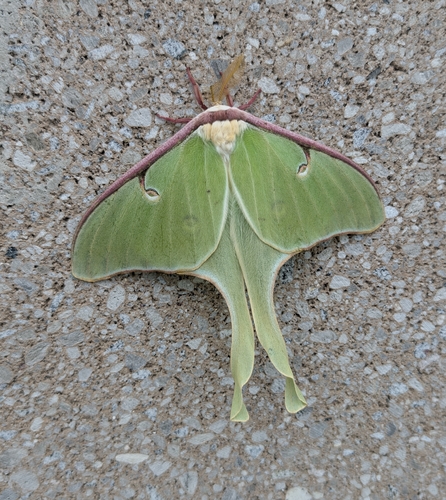
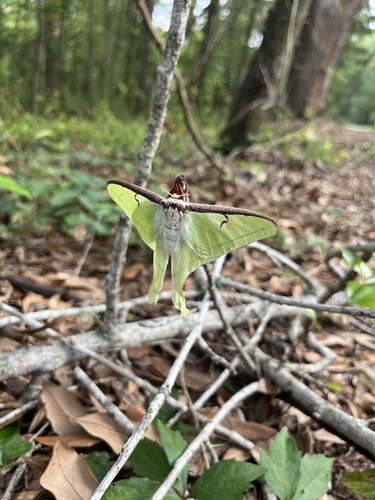
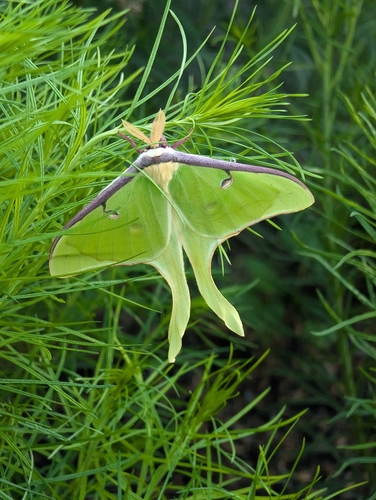
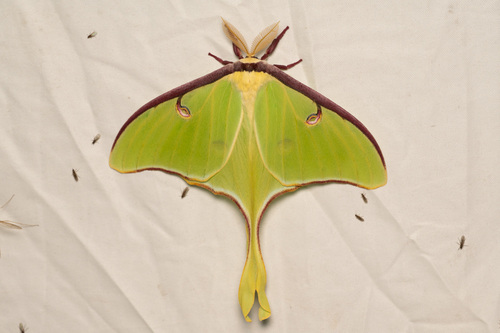
The Luna Moth is a large, pale green moth with long, flowing wings. It is a magical sight at night!
Habitat: Forests and woodlands
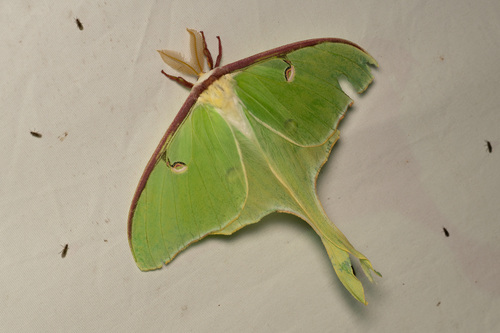
The Luna Moth has striking lime-green wings with a white furry body and long, flowing tails on its hindwings. Each wing features a distinct, transparent 'eye spot' (ocellus), and its antennae are feathery and often pale green.
Category
InsectsRarity
Common
Danger
2/5 · Low
Snaps
119
A male Luna Moth can smell a female from several miles away using his giant feathery antennae!
Adult Luna Moths don't have mouths or stomachs, so they never eat anything!
If a predator grabs its tail, the moth can sometimes break it off and fly away!
Instead of flying south, Luna Moths spend winter as a pupa inside a leaf-wrapped cocoon!
Luna Moths have bright green wings that help them blend perfectly with leafy surroundings, hiding from predators during the day.
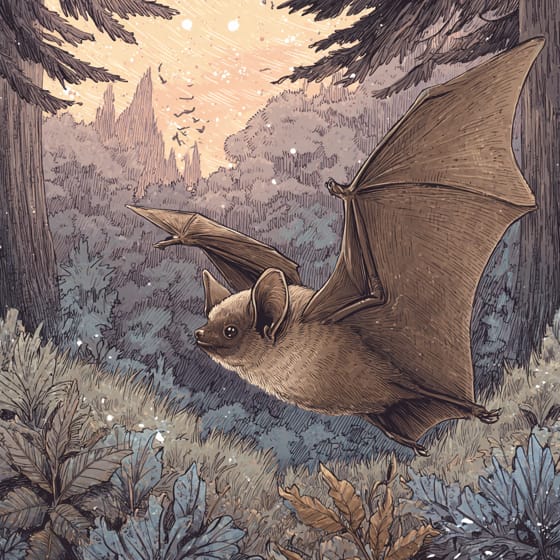
Luna Moths have long twisting tails on their hindwings that can confuse predators like bats, making them attack the wrong spot.
Luna Moths can detect the high-pitched sounds made by hunting bats, allowing them to perform evasive maneuvers and escape.
Adults don't eat at all! Caterpillars munch on tree leaves to grow big and strong.
Age differences: Adults do not eat, relying on energy stored from their caterpillar stage; caterpillars are voracious leaf-eaters.
Wildlife encompasses all undomesticated animal and plant life existing in their natural habitats.
This trait characterizes organisms whose diet consists entirely or primarily of plant material.
Forest habitats are terrestrial environments dominated by dense tree cover, supporting a high diversity of plant and animal life.
Nocturnal animals are primarily active during the nighttime hours, typically resting or sleeping during the day.

Describes organisms that transfer pollen, enabling the fertilization and reproduction of plants.
No aliases listed yet.
Danger
2/5 · Low
Do not touch or pick up. Some insects sting or bite. Ask an adult for help.
The easiest way to identify Luna Moth is to use the Snappit nature identifier app.
80-115 mm
35-45 mm
7-10 days
Adults don't eat at all! Caterpillars munch on tree leaves to grow big and strong.
Forests and woodlands
Foraging
6
Zoom in to split clusters and explore where this object has been snapped.
Jun 11, 2026
WilderPhoto attribution
(c) Nick Kleinschmidt, some rights reserved (CC BY)
License: CC BY 4.0 ↗
Image may be shown cropped inside the card frame.
Jun 9, 2026
Bainbridge Commercial Historic DistrictPhoto attribution
(c) Megan Herrmann, some rights reserved (CC BY)
License: CC BY 4.0 ↗
Image may be shown cropped inside the card frame.
Jun 4, 2026
Arboretum VillanovaPhoto attribution
(c) Connor McInerney, some rights reserved (CC BY)
License: CC BY 4.0 ↗
Image may be shown cropped inside the card frame.
Jun 4, 2026
CheshamPhoto attribution
(c) Jack Forrester, some rights reserved (CC BY)
License: CC BY 4.0 ↗
Image may be shown cropped inside the card frame.
Jun 4, 2026
CheshamPhoto attribution
(c) Jack Forrester, some rights reserved (CC BY)
License: CC BY 4.0 ↗
Image may be shown cropped inside the card frame.

Virginia, US
You might spot Cope's Gray Tree Frog and Basilica Orbweaver.
View guide →

Ontario, CA
You might spot Canada Jay, American Beaver, and Black-Capped Chickadee.
View guide →

Tennessee, US
You might spot Black Bear, Yellow Wakerobin, and Pipevine Swallowtail.
View guide →

Alabama, US
You might spot Anole, Eastern Gray Squirrel, and Asian Lady Beetle.
View guide →

Georgia, US
You might spot Gulf Fritillary, Anole, and American Beautyberry.
View guide →
Delaware, US
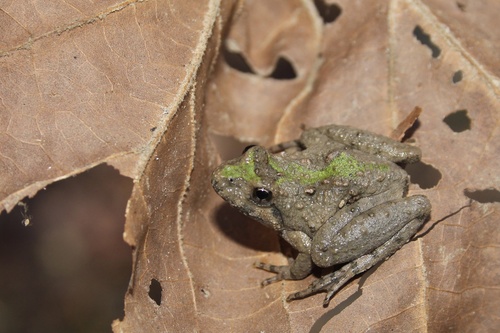
You might spot Northern Cricket Frog, Fan Clubmoss, and Fowler's Toad.
View guide →
Take the discovery with you
Snap it with Snappit to identify it, learn what makes it special, and add the discovery to your collection.




.jpg&width=800)






.jpg&width=800)



