Snappit logo
Snappit
Get App
Generic illustration, not a photograph of this venueIllustration
ParkExtremadura, Spain

Tajo Internacional Natural Park

The Tajo does much of the landscape-making here.

About

The Tajo does much of the landscape-making here. Beyond Alcántara, its valley cuts down through the plateau, gathering tributaries and, farther downstream, forming the Spanish–Portuguese border. The steep valley sides, locally called riberos, hold a patchwork of scrub, woodland and rock. From a viewpoint, take a moment to compare the sheltered slopes with the more open country above.

For a first visit, Alcántara makes the park easier to understand. Casa Natalio, a sixteenth-century house, introduces the wildlife, villages and river landscape through models, interactive displays and audiovisual material. Choose one question to carry outside: how does a broad plateau become a narrow valley, or why do so many large birds use this landscape?

The most satisfying family plan is usually modest. Combine the centre with a view over the Tajo, or add the signed Bajo el Puente circuit if everyone is comfortable climbing back uphill. Cedillo's boat departures and the more distant tributary valleys deserve their own plans. Trying to collect every viewpoint in a single afternoon would leave little time to enjoy any of them. Enhance your adventure: download the Snappit app to identify the local species you encounter.

Spain declared the natural park in 2006, alongside the Portuguese Parque Natural do Tejo Internacional, created in 2000. Cooperation across the border later developed into an international park and, in 2016, a much wider transboundary biosphere reserve. The Spanish park’s planning boundary was extended in 2018 to include land in Piedras Albas. Alcántara adds an older human story to the landscape. The Roman bridge and the town’s churches, convents and fortified edges make useful companions to a nature visit. Casa Natalio itself is a historic house reused to explain the protected landscape, helping connect the river’s ecology with the people who have lived beside it.

What to do here

Begin at Casa Natalio, ask which paths are currently open, and choose between a short town-based visit and the 2.55 km Bajo el Puente circuit. Outdoors, alternate looking at the river with scanning the sky. The contrast between the bridge, the valley sides and the water gives children plenty to notice even when wildlife is distant.

Seasonal info

Heat can make a short climb feel much longer. Carry water and avoid the middle of a hot day; after rain, take extra care on sloping paths. In unsettled weather, keep the plan close to town and ask the centre about access restrictions. Wildlife watching should remain quiet, especially during breeding season.

Accessibility

Casa Natalio is in a historic building: call about step-free entry, internal circulation and suitable toilets before relying on it for a wheelchair visit. Bajo el Puente is short but has 130 m of ascent, sloping paths and a road crossing. It is not a level riverside promenade. Ask staff to suggest a viewpoint approach that fits your wheelchair, pushchair or walking needs.

Don't miss

1

The interactive introduction to the river and its wildlife at Casa Natalio

2

Views linking Alcántara’s Roman bridge with the steep-sided Tajo valley

3

The compact but hilly Bajo el Puente walking circuit

4

Watching the open sky for large birds without leaving the visitor paths

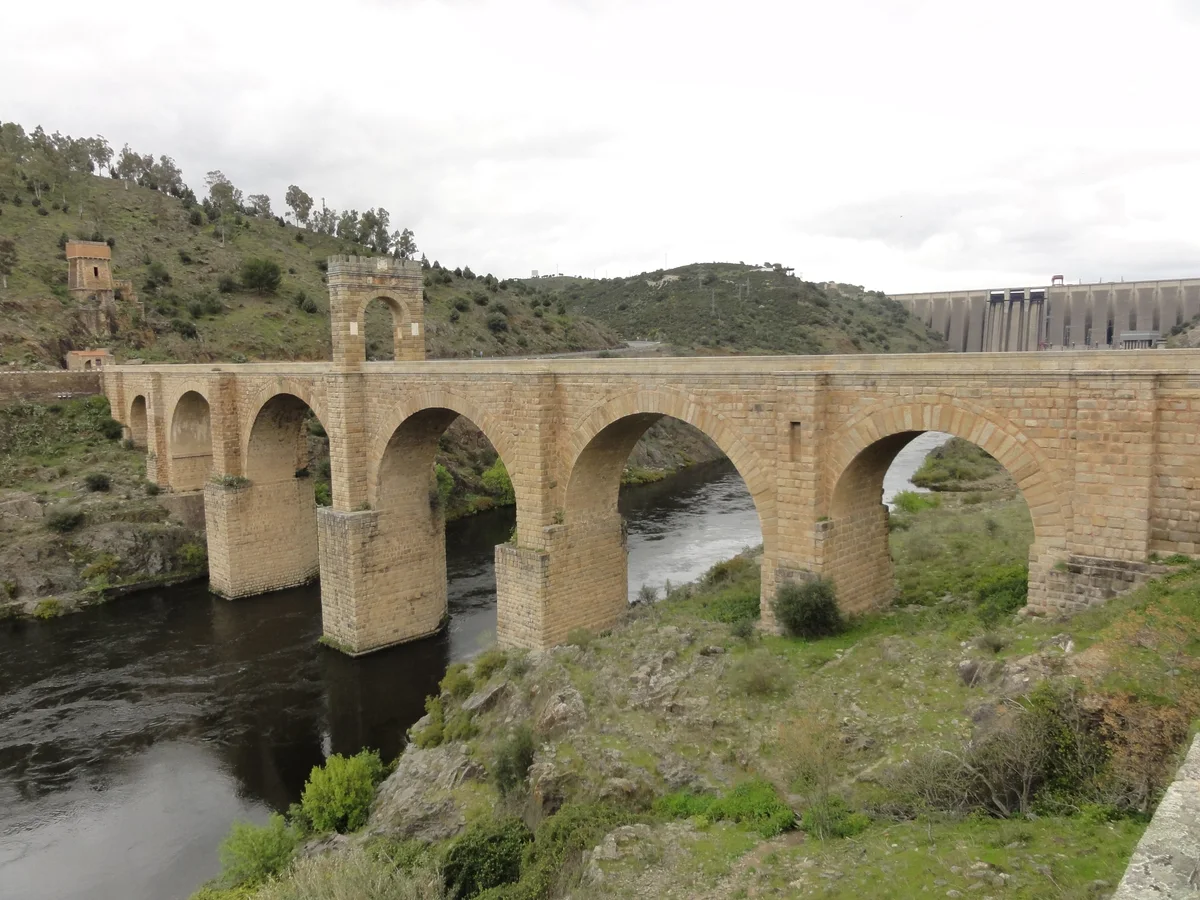
The stone arches and central monumental arch of Alcántara’s Roman bridge over the Tagus, with the modern dam behind.

Alcántara’s Roman bridge in March 2011: gateway context for a visit to Parque Natural del Tajo Internacional. This view predates the pedestrian deck opened in 2026.

Puente de Alcántara desde margen izquierda del río Tajo, aguas abajo del puente..JPG — CHIRIBEJE / Wikimedia Commons / CC BY-SA 3.0 ES · Creative Commons 1 · Creative Commons 2

Walks and routes

Bajo el Puente: a short walk with a real climb

The municipal sheet describes a 2.55 km circular walk from the Roman-bridge area, passing beneath the bridge, climbing into Alcántara and returning down the valley side. The official walking estimate is one hour; allow 1½–2 hours with looking stops. The sheet records 130 m of ascent and 130 m of descent. Use the route map to orient yourself and keep the town’s historic buildings as optional stops rather than trying to enter them all.

The mapped trail includes a road crossing and a climb from the river towards town. Take footwear with grip and leave enough energy for slopes. It is not presented here as suitable for an unassisted wheelchair or an ordinary pushchair.


Bajo el Puente: a short walk with a real climb

Balcón del Mundo: the longer town-and-valley option

For a longer outing, the municipal Balcón del Mundo leaflet sets out a 6.2 km circular walk from Arco de la Concepción, combining town landmarks, a descent to the Roman bridge, the viewpoint and the fortified edge of Alcántara. Its published estimate is three hours. Pick this instead of adding several walks together, and allow extra time if you want to visit Casa Natalio along the way.

Although the leaflet grades the route easy, it includes both descent and ascent and a mixture of streets and paths. The stated 143 m height figure is a useful reminder that this is not a flat stroll. Ask about surfaces and steps if mobility is a concern.

Balcón del Mundo: the longer town-and-valley option

A gentle introduction: about 1½–2 hours

Start with 45–60 minutes at Casa Natalio. Ask which town viewpoint approach suits your group, then take a short walk to the suggested public viewing area, allowing 20–30 minutes there and time to return. End in Alcántara rather than committing to a river descent. This is the best first choice when ages, energy or the weather vary.

A walking morning: around 3 hours

Visit the centre and ask staff where to join the signed Bajo el Puente circuit from town, so you avoid adding an extra descent to its bridge-side starting point. Give the walk 1½–2 hours including stops once staff have confirmed the route is usable. Take a break before the climb, look at the river from a safe standing place, and leave monument interiors for another visit if energy is running low. Reverse the order in hot weather so the walking comes first, while keeping the centre’s closing time in mind.

With another day in the area

Use a second day for a confirmed boat departure from Cedillo or for a different trail recommended by park staff. Book any guided activity independently and leave room for the drive, meals and unhurried stops. The shape of this long river park rewards returning to one area rather than racing between distant ends.

Things to try

Choose one question at Casa Natalio

Give the centre 45–60 minutes rather than rushing past every display. Try a model or interactive activity together, then ask staff to connect it with something you can notice outside. A child’s question about a bird, a rock or the river can make a better afternoon than a long checklist.

A view without the full river descent

The municipal walking panel identifies a river viewpoint at the former Convento de las Comendadoras, also called Sancti Spíritu, near the church of San Pedro. Ask for the current public approach from Casa Natalio and make this your outdoor stop if the lower path feels too much. Stay within the visitor area and allow 20–30 minutes to look and rest.

Watch the sky, then look again

Choose a safe stopping place with a broad view, stand still and scan slowly. Compare a bird’s wing shape and tail before trying to name it. Share binoculars one person at a time, keep the path clear, and finish with a sketch of the valley if birds are far away.

A separately booked river trip from Cedillo

Balcón del Tajo advertises a two-hour return sailing between Cedillo and Herrera de Alcántara, leaving from the Cedillo landing beside the dam. Treat this as another outing, with its own booking and travel time. Confirm the date, landing point, check-in time, total fare and cancellation terms with the operator; ask about boarding, wheelchair space, toilets and lifejackets for children before paying. The operator says there is no café on board.

Make Casa Natalio the main event

When the river paths are slippery or the weather is poor, take your time with the centre’s models, projections and interactive displays. Ask staff for a suitable short town option only if conditions improve. Do not rely on the boat or an exposed viewpoint as bad-weather shelter.

Wildlife and habitats

Black stork

Look for a long-necked silhouette and the contrast between dark upperparts and a white belly. Use binoculars from a comfortable stopping place, and leave a distant bird undisturbed.

Griffon vulture

A broad-winged bird circling over the valley is a good reason to pause. Notice the large wings and relatively short tail before reaching for a name. Stay on the path while watching.

Egyptian vulture

An adult combines pale plumage with dark flight feathers. If a bird is too distant to identify, enjoy its movement over the valley and compare your impression with the centre’s displays.

Golden eagle

The broad wings and longer tail are useful features to compare with a vulture’s silhouette. Distant raptors can be difficult: a brief sketch is often more useful than a hurried identification.

Eurasian otter

This semi-aquatic mammal belongs to the river’s quieter story. Use the centre to learn about its shape and habits, and observe the water from a safe path without following signs into bankside cover.

Enjoy the encounter without seeking out nests

The species below are documented wild inhabitants of the Spanish park. Sightings depend on season, weather and chance. Watch from established public paths, keep voices low and never approach nests, dens or roosts. The river landscape is worth the visit even when animals remain out of sight.

Stories and discoveries

The riberos are the valley sides

Ribero here means the steep slopes overlooking the river, not simply the flat water’s edge. Their difficult terrain helped retain valuable vegetation. Looking from above makes the contrast between the open plateau and the folded river valley much easier to see.

One river, several protected-area boundaries

Spain’s natural park, Portugal’s natural park and the transboundary biosphere reserve overlap as a conservation story but cover different ground. A destination map of the biosphere reserve can include villages and attractions far beyond the Spanish park itself.

A house that introduces a whole landscape

Casa Natalio is a sixteenth-century house adapted as an interpretation centre. Its exhibits connect natural and cultural heritage, making it a useful first stop before choosing which small part of the river country to explore.

When to visit

Spring: give the landscape time

A mild morning suits the centre-and-walk plan. Notice fresh growth and flowers from the path, then spend a few quiet minutes watching the sky. Keep a respectful distance from wildlife and avoid exploring rock ledges or vegetation for a closer view.

Summer: shorten the outdoor part

Start walking early, carry enough drinking water and use the centre’s morning opening. Skip the river descent if the return climb would fall in strong heat. A short viewpoint stop and an indoor visit can make a complete outing.

Autumn: check the ground as well as the forecast

After rain, pay attention to wet surfaces and the steeper connections. Choose the shorter circuit only when conditions suit your group; bring a layer for a breezy viewpoint and leave time to return before dusk.

Winter: favour a clear, settled day

Keep the walk flexible around wind, rain and daylight. The centre can give the visit a useful indoor focus, followed by a short view over the river if conditions are comfortable. Confirm afternoon opening before travelling.

Getting there and practical advice

Casa Natalio: your practical starting point

Centro de Interpretación del Tajo Internacional, Calle Cuatro Calles, 2, Alcántara. Telephone +34 927 390 132; email [email protected]. Ask about the day’s opening, current walking routes, suitable viewpoints and any group arrangements. Confirm admission conditions when contacting the centre.

Published centre hours

The Junta visitor page lists autumn–winter 09:00–14:00 and 16:00–18:00; spring 09:00–14:00 and 17:00–19:00; summer 09:00–15:00, with afternoons closed. Another destination listing extends the spring morning to 14:30. Call to confirm your day and the seasonal changeover, and plan to finish a spring morning visit by 14:00 unless staff say otherwise.

Alcántara tourist office

The destination directory lists the tourist office at Avenida de Mérida, 21, telephone +34 927 390 863. It is useful for town walks and transport enquiries if you want to add heritage visits. Check its opening separately from Casa Natalio.

Water, toilets and food

Buy or refill your water in town before the walk and carry a snack for children. Ask the centre where the nearest usable toilet is, including an accessible toilet if needed. Do not build the outing around finding a café, drinking fountain or toilet on the lower river path.

Arrive in Alcántara, then keep the plan compact

Use Alcántara as the destination for this first visit, and Calle Cuatro Calles, 2 for the interpretation centre. Follow local parking signs and walk into the historic centre rather than trying to reach every stop by car. Use signed pedestrian approaches around the bridges and keep access roads clear.

Check the return journey first

A town-based visit is manageable on foot once you arrive. If you depend on a bus or taxi, confirm the service for your exact day and your return time before descending to the river. Do not assume transport between park villages or a shuttle to Cedillo is included in a centre visit or boat ticket.

Ask about the whole centre visit

Before visiting Casa Natalio with a wheelchair, ask about the entrance threshold, accessible entrance route, any lift or stairs between exhibits, seating and toilet arrangements. A historic building with interactive displays is not by itself a guarantee that every part is step-free.

Match the walk to the return climb

For the two municipal circuits, consider slopes, walking surface and endurance as well as distance. Below town, the return climb is part of the outing. A shorter viewpoint visit may suit your group better; ask for a specific approach rather than relying on an overall easy grading.

Check access to the new pedestrian deck separately

The Junta’s June 2026 announcement describes a 3.5 m-wide deck separated from road traffic. Ask about the current approach, parking connection and any gradients before choosing it for a mobility-limited visit. The opening of the deck does not confirm every connecting path is complete.

Visitor information

Check the signs around the bridges

A new pedestrian deck beside Alcántara’s Roman bridge opened on 18 June 2026. That announcement described a future continuous circuit between the two bridges once the remaining connections were finished. Ask Casa Natalio or the tourist office which approaches are currently open, and use the signed pedestrian route. Do not extend an older walking map into unfinished or restricted ground.

Sources and useful links

Wildlife you might spot

5

Each card links to a full Explore page with photos, traits, and fun facts.

Snap map for this place

Start with the big picture, then zoom in to explore individual wildlife observations around this place.

Loading map…

Good to know before you go

Call Casa Natalio before travelling, particularly for a holiday, a group visit or an afternoon arrival.

Carry water, a sun hat and shoes with grip. The climb back to town matters more than the short distance suggests.

Download the municipal route sheet, then follow current signs and barriers around the bridges; the older map predates recent works.

Keep children close at river edges, viewpoints and road crossings. Never climb walls or barriers for a photograph.

Use binoculars from established paths. Leave birds space, avoid nests and do not use calls or food to attract them.

Keep dogs on a lead in the park and check admission separately with the centre or boat operator.

Leave flowers, rocks and other natural objects where they are, take rubbish home and bring a cold picnic rather than lighting a fire.

If booking a boat, check the exact departure point and date before setting off. Cedillo is a separate destination from Alcántara.

Frequently asked questions

The venue is the Spanish natural park in Cáceres, Extremadura. The Portuguese park is a separate protected area across the border, and the Tajo–Tejo biosphere reserve covers a much larger territory. The suggested first visit stays around Alcántara.
Visit Casa Natalio and ask for a suitable town viewpoint. You can keep the outing short without descending to the river. Choose the full Bajo el Puente circuit only if the return climb suits your group.
No. Bajo el Puente is the municipal 2.55 km circuit. The separately listed Ruta del Puente Romano is 20.3 km, with an official estimate of 5 hours 50 minutes. Check the route name and distance before following a download.
Arrange the visit around your specific needs. Ask Casa Natalio about entry and facilities, then choose a suitable viewpoint approach. The full walking circuits include slopes and are not verified step-free routes.
Check and book with the operator first. Balcón del Tajo advertises a two-hour Cedillo–Herrera de Alcántara return trip, departing at Cedillo by the dam. A published route is not a promise of a departure on your chosen day.
Black storks are among the park’s documented wild birds, but the best plan is to enjoy the river landscape and watch patiently. Use binoculars from public paths and let any close view be a bonus.
This itinerary is for walking and looking at the river. Do not treat access to the water as permission or proof that swimming is safe. Ask locally about designated bathing areas and their current conditions if you want a separate swimming outing.
You can keep the recommended centre-and-town visit on foot once in Alcántara. Reaching other parts of the park needs a separate transport plan. If arriving by bus, confirm the actual outward and return services for your day before committing to the walk.

Recent snaps at this place

Recent snaps will appear here as new observations are added.

View all ›

Take the discovery with you

Exploring Tajo Internacional Natural Park?

Identify the wildlife you spot, learn as you go, and keep a collection of the adventure.

  1. 1Spot it
  2. 2Snap it
  3. 3Keep the discovery