Snappit logo
Snappit
Get App
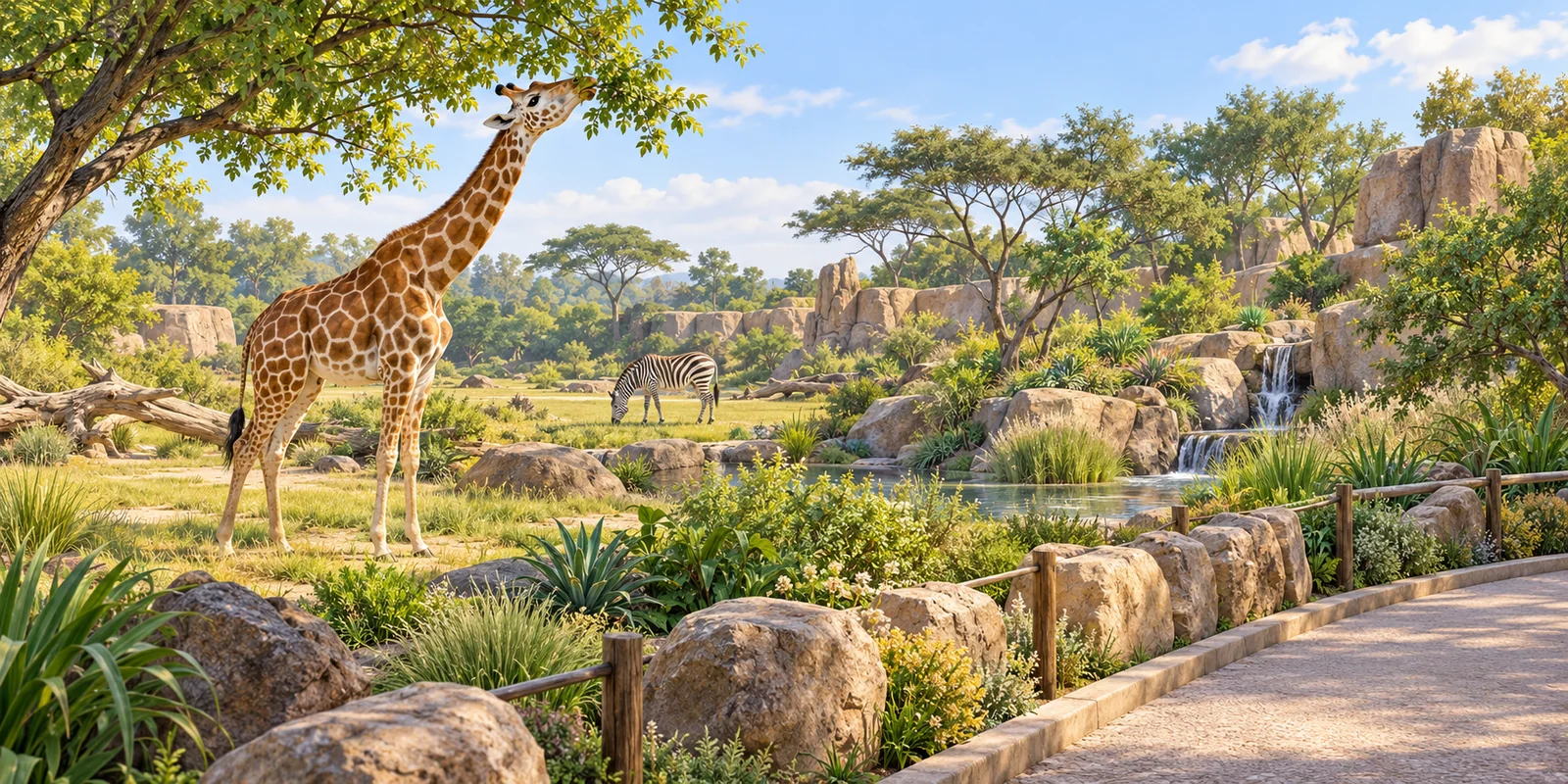
Generic illustration, not a photograph of this venueIllustration
ZooNiedersachsen, Germany

Tierpark Bad Pyrmont

Come to Tierpark Bad Pyrmont for close-looking animal encounters and a family afternoon that leaves time to play.

About

Come to Tierpark Bad Pyrmont for close-looking animal encounters and a family afternoon that leaves time to play. This three-hectare zoo in the Weserbergland spa town brings together animals such as siamangs, capybaras and ocelots with a petting area and a walk-through budgerigar aviary. Start at the ticket desk by asking where the day's keeper feeding round begins, then choose a few animals to seek out before it starts.

The manageable scale makes it easy to give a favourite enclosure a second visit. You can watch quietly, spend time in the children's discovery area and sit down for a break without turning the outing into a long march. The animal collection is captive; the appeal is observing individual animals and learning how their lives connect with habitats elsewhere. Don't forget to bring the Snappit nature identification app along to scan local species.

Tierpark Bad Pyrmont is privately run. Its educational work extends from everyday keeper conversations to bookable zoo-school activities, while its conservation programme connects it with the Deutsche Tierpark-Gesellschaft and the Verein für Tier- und Artenschutz Bad Pyrmont.

What to do here

Begin with a few animal stops, using the park's map to find the species your family most wants to see. At the siamangs, look for the long arms and watch how an animal chooses its next hold. Then compare the ring-tailed lemurs: their conspicuous tails make a useful starting point for children learning to describe what they see.

Leave a quiet spell for the walk-through budgerigar aviary. Pause rather than following a bird around, and let it choose its distance. The petting area and mini-farm offer another kind of encounter; follow the signs and staff instructions about contact.

Join the keeper's feeding round for a chance to ask why different animals receive different foods. The usual start is 15:00 from March to October and 14:00 from November to February. Finish with the playground or the discovery area's sand-track activity and rhinoceros model, which lets children explore digestion through play.

Seasonal info

The park opens all year, including Sundays and public holidays. Regular hours are 09:30–18:30 from March to October and 10:00–17:00 from November to February; ticket sales and admission stop one hour before closing. Check the official website before travelling, particularly during icy or extreme weather, when the park may close for safety.

Accessibility

The grounds are level, and the park describes them as accessible for wheelchairs, pushchairs and walking aids. Accessible toilets are immediately by the entrance. For specific surface, doorway or equipment requirements, call +49 5281 2539 before visiting; detailed dimensions are not published.

Don't miss

1

Walk-through budgerigars

Stand still in the aviary and let children watch individual birds among the movement and calls.

2

The keeper feeding round

Hear about animal diets and bring a question for the keeper during the daily guided round.

3

Siamangs and lemurs

Compare how these primates use their bodies, then explore the forest habitats behind their conservation stories.

4

Play with a purpose

Try the sand-track area and the educational rhinoceros model, then make time for the outdoor playground.

Walks and routes

A shorter animal-focused visit

For roughly 1½–2 hours, choose the budgerigar aviary and three animal stops, then leave time to return to the enclosure that held everyone’s attention. Use the park map to choose the order on arrival. A brief play stop can replace one animal stop if younger children need a change.


An afternoon with the keeper

Allow roughly 3–4 hours. Start with animal watching, take a food or play break, and join the feeding round at its seasonal time. Leave the last part of the visit for the discovery area or a second look at an animal you missed earlier. Check closing time before settling into a long final break.

Things to try

A tracks-and-movement challenge

After the sand-track activity, choose two living animals to compare. Can your child describe how they place their feet or move between resting spots? Drawing a footprint afterwards gives you something to discuss over a snack.

One good keeper question

Before the feeding round, let each child choose one question: why this food, how much, or what would the animal eat in the wild? Listen to the answer together, then see whether you can connect it with something you watched earlier.

Keep a rainy visit flexible

Waterproof clothing is useful for light rain. With sustained rain, make a shorter animal-focused visit or come another day; the outdoor discovery and play areas are a substantial part of the family outing.

Wildlife and habitats

Look for an animal resting above ground before you look for movement. If it changes position, follow the long arms from one hold to the next. Give it time rather than expecting a performance.

Start with the black-and-white tail, then look down as well as up. Ring-tailed lemurs spend more time on the ground than many other lemurs; see where the visible animals choose to sit.

Choose one perched bird and watch it for a little while. Compare its colours with its neighbours, then listen for a call without moving closer or reaching towards it.

Try a side-on view and let children describe the head, ears and body shape. Watch one animal quietly instead of trying to gather the whole group into a photograph.

Watch what happens at ground level as well as above it. Choose one visible animal and describe what it does next; sitting, digging or resting all make good observations.

Scan slowly for a still animal before looking for movement. If you can see the cat, compare the markings along its side. Come back later if it has chosen somewhere out of view.

Find a place on the visitor path where you can look without crowding. Watch the owl’s head and eyes, and let a resting bird remain undisturbed.

Compare the shape of the bill with the smaller budgerigars you have seen. Look for a comfortable viewing angle from the path, and keep fingers and belongings away from the enclosure.

Stories and discoveries

Two different forest lives

Siamangs inhabit the upper layers of Southeast Asian rainforests. Ring-tailed lemurs come from Madagascar’s more open woodland and scrub and use the ground relatively often. Comparing the two makes “forest animal” a much more interesting description.

The rhinoceros is a learning model

The children’s discovery area uses a rhinoceros model to explore digestion. Treat it as a hands-on learning stop alongside the sand-track area; the model is separate from the zoo’s living animal collection.

When to visit

A different winter rhythm

The winter feeding round starts an hour earlier, at 14:00. Allow time beforehand for the animals you most want to see, and make your outdoor breaks fit the temperature and daylight.

Getting there and practical advice

Make play part of the visit

The children’s train, bumper cars and jumping pillow add options beyond the playground. Ask which attractions are operating and whether any separate charges apply before promising a particular ride.

The last part of the journey

From Bad Pyrmont station, use a current journey planner for Untere Hauptallee or Europa-Platz. Local tourism describes each stop as within about five minutes’ walk of the zoo; allow longer with small children or mobility needs.

Talk through individual needs

For wheelchair or walking-aid visits, ask about the sections and walk-through areas you most want to use. The park’s general level-access statement does not give path widths, surface specifications or equipment measurements.

Sources and useful links

Wildlife you might spot

8

Each card links to a full Explore page with photos, traits, and fun facts.

Snap map for this place

Start with the big picture, then zoom in to explore individual wildlife observations around this place.

Loading map…

Good to know before you go

Find the right entrance

Head to Hauptmann-Boelcke-Weg 3, 31812 Bad Pyrmont. A large free car park is directly beside the zoo.

Come by train and bus

Travel to Bad Pyrmont station, then check buses towards Untere Hauptallee or Europa-Platz. Both stops are a short walk from the entrance; plan your return connection too.

Buy tickets at the gate

The 2026 day tariff is €12.50 for adults and €7.50 for children aged 3–13. Debit and credit cards are accepted. Check the current price page before travelling.

Pack a snack if it helps

You may bring your own food and drinks. A café and snack outlet are available, with seats around the grounds; there are no designated picnic areas.

Keep feeding safe

Feed only where permitted, using the park food from the ticket desk or dispensers. Never offer your own food or plants picked in the grounds.

Bring a short lead

Dogs are welcome on a short lead and need a separate day ticket. Keep them back from enclosures and ask staff about the walk-through areas.

Save tired legs

Pull-along wagons can be hired. Ask at the entrance about availability and the hire arrangements before you set off.

Book a themed tour ahead

Call +49 5281 2539 to arrange a 30- or 60-minute guided visit. Topics include food, movement and animals in winter; agree the subject and group needs when booking.

Frequently asked questions

Some warmth-loving animals can choose between indoor and outdoor areas and may be out of sight. Return later if an enclosure seems quiet, without tapping, calling or trying to draw an animal out.
Ordinary rain does not usually close the park, but the play and discovery areas are outdoors. Bring waterproof layers and shorten the visit if needed; for a day of persistent rain, choosing another date may be more comfortable.
Children under 14 must be accompanied by an adult. Keep supervision close in the walk-through and animal-contact areas.

Recent snaps at this place

Recent snaps will appear here as new observations are added.

View all ›

Take the discovery with you

Exploring Tierpark Bad Pyrmont?

Identify the wildlife you spot, learn as you go, and keep a collection of the adventure.

  1. 1Spot it
  2. 2Snap it
  3. 3Keep the discovery