





Hyacinth Macaw
Anodorhynchus hyacinthinus
The Hyacinth Macaw is the largest parrot in the world, with beautiful blue feathers. It's a gentle giant and loves to munch on nuts!
Habitat: Tropical rainforests
The Hyacinth Macaw is a striking bird, known for its deep, vibrant cobalt blue plumage covering its entire body. It has distinctive bright yellow rings around its eyes and a prominent yellow crescent-shaped patch at the base of its powerful, curved black lower beak, making it visually unique.
Category
BirdsRarity
Epic
Danger
2/5 · Low
Snaps
Be the first to snap!
Hyacinth Macaws often bathe in muddy puddles; some think it helps remove parasites!
Their impressive tongue has a bone, acting like a specialized nut scoop!
They often digest palm nuts whole, husks and all, with a super strong gizzard!
This macaw is the longest parrot species in the entire world!
Hyacinth Macaw has an incredibly powerful beak that can crack open the hardest nuts, helping them access vital food.
Hyacinth Macaw can make a variety of loud squawks and calls that help them communicate across long distances.
Hyacinth Macaw can use its strong feet and beak to climb trees skillfully, helping them navigate branches and find food.
These macaws love to eat hard palm nuts, seeds, and fruits from their forest homes.
Attalea speciosa
Main food source of nuts
Acrocomia aculeata
Provides essential palm nuts
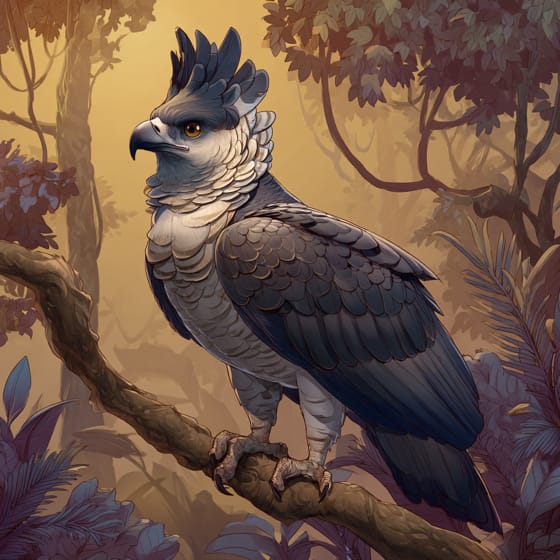
Harpia harpyja
Is a natural predator
Boa constrictor
Preys on eggs and chicks
Wildlife encompasses all undomesticated animal and plant life existing in their natural habitats.
Feathered describes animals, primarily birds, possessing a covering of feathers.
Social animals live in organized groups, cooperating for survival benefits such as foraging, defense, and raising offspring.
This trait characterizes organisms whose diet consists entirely or primarily of plant material.

This trait characterizes organisms with an exceptionally long lifespan compared to others of their kind.

This habitat trait refers to species found in tropical rainforests, characterized by high annual rainfall, high biodiversity, and dense tree cover.
Danger
2/5 · Low
Watch quietly from a distance and never try to feed or chase wild animals.
The easiest way to identify Hyacinth Macaw is to use the Snappit nature identifier app.
95-100 cm
120-140 cm
1.2-1.7 kg
50-60 years
55 km/h
These macaws love to eat hard palm nuts, seeds, and fruits from their forest homes.
Tropical rainforests
Zoom in to split clusters and explore where this object has been snapped.
Recent snaps will appear here as new observations are added.
Take the discovery with you
Snap it with Snappit to identify it, learn what makes it special, and add the discovery to your collection.






.jpg&width=800)










