Snappit logo
Snappit
Get App
Generic illustration, not a photograph of this venueIllustration
ParkKyushu, Japan

Uminonakamichi Seaside Park

The best first visit to Uminonakamichi starts with a small plan.

About

The best first visit to Uminonakamichi starts with a small plan. Enter at the West Gate, walk to Flower Hill and give the Great Lawn enough time for a picnic. In spring, planted nemophila turns the hill blue; in autumn, cosmos brings a different palette. The park stretches for roughly six kilometres along the sand spit between Hakata Bay and the Genkai Sea, so choosing this western area saves a family from spending the day simply getting from one attraction to another.

Flower Hill is a cultivated display, with sowing and maintenance behind the seasonal spectacle. April is the usual nemophila window; the operator lists mid-to-late October for cosmos. Check the flower report before making either the reason for your trip. There is plenty to enjoy between blooms: open space, a slow lunch and a change of pace at the Wild Bird Pond, where observation shelters let you look out without crowding the water's edge.

Choose one extra stop to suit the people with you. Patient young birdwatchers may enjoy the pond; children eager for closer animal encounters may prefer Animal Forest, the park's zoo, where capybaras and other animals are kept under human care. Farther east, the Forest Pond area has Japanese black pine woodland and a very different feel. Save that for a separate woodland or cycling visit rather than adding it to a short western-area walk. Wondering what that bird or insect is? Find out on your visit using the Snappit nature app.

The site includes land formerly used by the Japanese naval air service and subsequently the United States military as Camp Hakata. The land was fully returned in 1972, and a public park was developed. The first areas opened in 1981, including the West Gate plaza, lawn and Animal Forest. Uminonakamichi is a national-government urban park: its purpose combines recreation with the care and use of its coastal landscape.

What to do here

Make Flower Hill and the Great Lawn your two anchors. Look closely at a few flowers from the path, then pause for food and play. If everyone still has energy, choose the Wild Bird Pond or Animal Forest before returning to the West Gate. Use the park map and signs for the paths between them.

Seasonal info

Spring and autumn flower displays change with the weather. In summer, shorten the outing and plan regular drinks and shade breaks. Winter can suit a quieter birdwatching visit, but bring a windproof layer and check the seasonal closure calendar. Water-play facilities have their own operating notices.

Accessibility

The park has paved paths, accessible toilets at major facilities and free wheelchair and stroller loans at entrances, subject to availability. Ask West Gate staff for the most suitable route to the flowers and toilets; lawn surfaces, slopes and the viewing openings at the bird shelters may not suit every visitor. The internal bus runs only on selected dates.

Don't miss

1

Flower Hill

a changing display of cultivated spring nemophila and autumn cosmos.

2

The Great Lawn

space for a picnic and a generous break between stops.

3

Wild Bird Pond

watch through the openings in two observation shelters.

4

Animal Forest

an optional zoo visit, included in ordinary park admission.

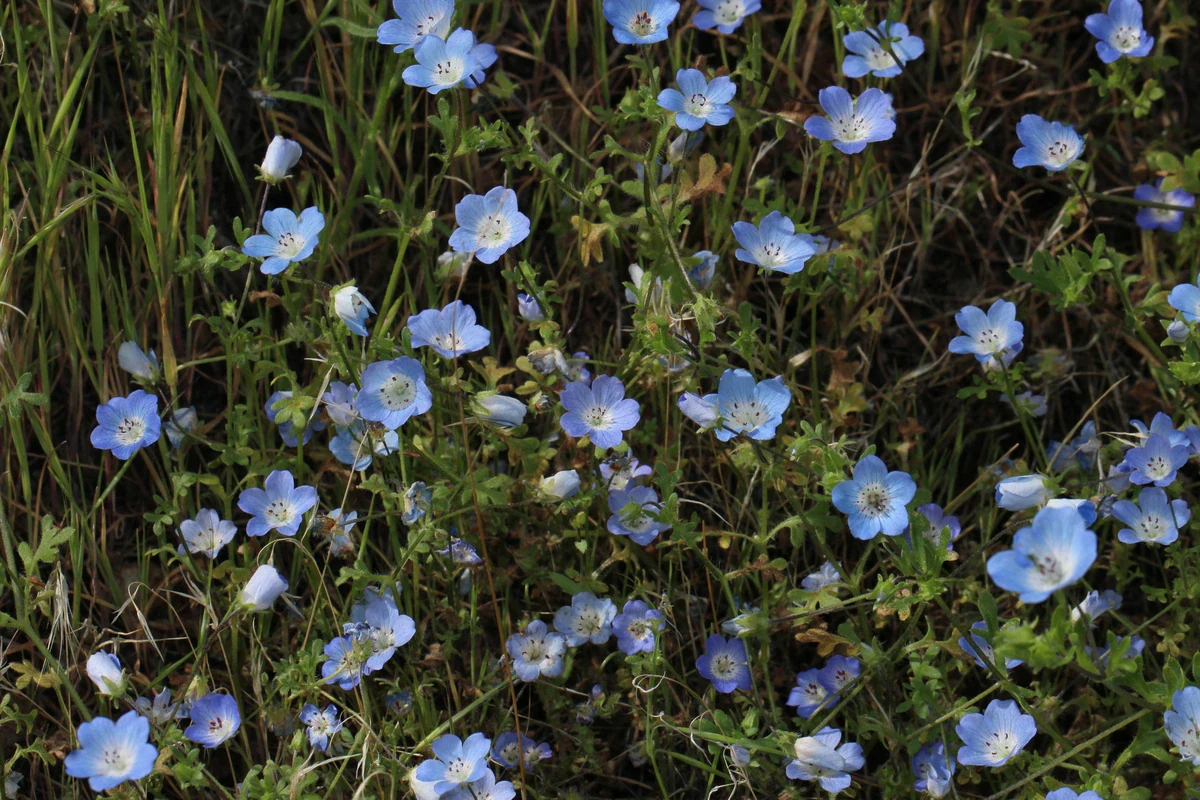
Small pale blue flowers with white centres rise among finely divided green leaves and dry grasses.

Baby blue eyes (Nemophila menziesii), photographed near Lancaster, California, in March 2015. This offsite comparison introduces the flowers featured in Uminonakamichi’s spring displays; it does not show the park or its named cultivar.

©2018 Walter Siegmund / Wikimedia Commons / CC BY-SA 4.0. Nemophila_menziesii_7790.JPG. Source: https://commons.wikimedia.org/wiki/File:Nemophila_menziesii_7790.JPG. License: https://creativecommons.org/licenses/by-sa/4.0/. Proportional downsampling to fit 1200 × 1200 pixels without enlargement; WebP quality 92, method 6. No crop, retouch, recoloring or added text. EXIF omitted. Source reports fill flash; no editing software field displayed. Camera rendering and natural depth-of-field softness retained without restoration claims. · Creative Commons

Walks and routes

Flowers, lawn and one extra stop

Start and finish at the West Gate. Follow the park signs toward Flower Hill, then spend time on the Great Lawn. Add the Wild Bird Pond for a quiet observation stop, or Animal Forest for a zoo visit. Pick one of these extras for a half-day with younger children; neither is required to make the outing worthwhile.

Ask at the gate for a paved-path version that fits your wheelchair or stroller. You can enjoy the flowers from the paths and skip crossing the grass. Confirm the approach and viewing height at the bird shelters before making them an essential stop.


Choose woodland on another visit

If woodland is your main interest, plan around the Forest Pond area and the Light and Wind Ground Gate in the east. Follow signed paths among the pine trees and turn back when your group has had enough. This is a different starting area from the western flower-and-lawn plan.

Ask staff about the current surfaces and a suitable turning point before entering the woodland. The existence of a cycling route does not tell you which walking paths will suit your chair.

A gentle half-day from the West Gate

About three to four hours, with one optional nature stop

At the entrance, check the day’s notices, collect a map and use the toilets before setting off.

Make Flower Hill the first substantial stop when its seasonal display is your priority. Otherwise, keep this part short and enjoy the broader lawn area.

Choose the Wild Bird Pond or Animal Forest. Leave enough time for a slow walk back rather than squeezing in both.

Finish with a picnic or a café break around the Great Lawn, then return to the West Gate. Check your return train before leaving the park.

Things to try

A flower detective game

From the path, each person chooses one flower to draw or describe. Compare its centre, petal shape and nearby leaves. In spring, use the offsite nemophila photograph as a discussion aid, then look at the actual plants and labels in front of you. Leave the planted beds undisturbed.

A short birdwatching turn

At the pond shelter, give everyone a few quiet minutes with binoculars. Count how many different actions you see: swimming, resting, preening or disappearing underwater. You do not need to identify every bird for the stop to be rewarding.

Animal Forest with care

The zoo closes 30 minutes before the rest of the park. Use the disinfectant mats when entering and leaving, and disinfect your hands before and after touching or feeding animals. Only give food approved by the zoo; grass and picnic snacks are not suitable substitutes. Contact sessions may be limited or cancelled.

Make cycling the main activity

Confident riders can choose a separate cycling outing on the park’s approximately 12 km course. Bikes must stay on the cycling course; use cycle pockets and continue on foot at attractions. Hire is first-come, and helmets are available in limited numbers. Return hired bikes at least 30 minutes before park closing.

A brief shower

Pause at a suitable rest house or café and shorten the plan if needed. The bird shelters are observation spaces, not a reason to continue an exposed walk in severe weather.

Persistent rain or strong wind

This is mainly an outdoor outing. Postpone the long walk or choose another activity, and check current park notices before setting out. Do not depend on the occasional internal bus as a weather escape.

Wildlife and habitats

Mallard

At the Wild Bird Pond, use the park’s bird illustrations to compare a duck you can see with the mallard. Note what it is doing before deciding on an identification.

Great crested grebe

The park lists great crested grebe for the Wild Bird Pond. If you find a possible match, keep it in view for a while and compare its outline with the other waterbirds.

Common pochard

Common pochard is another of the park’s pond examples. Use binoculars rather than approaching the bank; a sketch of shape and colour is a good starting point for checking the name later.

Smew

Smew appears in the park’s list of possible pond birds. Treat it as something to learn about rather than a target you must find; ask staff which birds have been noticed recently.

Capybara

Look for capybaras during the optional Animal Forest visit. Watch their behaviour without chasing or crowding them, and follow the keeper’s instructions about contact or feeding.

Japanese black pine

In the eastern Forest Pond area, compare the pine canopy with the open flower beds in the west. The park describes active woodland conservation, so notice the landscape as a cared-for habitat as well as a place to walk.

At the Wild Bird Pond, watch quietly from the shelters and let the birds come and go. The park lists the following birds among those that can occur there, but the mix changes with the season and conditions. Animal Forest animals are captive, and the flower displays are planted. Keep those differences in mind when describing what you see.

Stories and discoveries

Land between two seas

The sand spit separates Hakata Bay from the Genkai Sea. Its long shape explains why selecting the right entrance matters so much here.

A pond that is not always there

In the eastern Forest Pond area, groundwater can rise after heavy rain and create the “Phantom Pond”. Its intermittent appearance is part of the habitat’s character.

Three different nature experiences

The seasonal flower beds are cultivated, the pond birds are free-living, and Animal Forest is a zoo. Comparing those settings can make a useful family conversation about how people manage places for plants and animals.

When to visit

Spring

The usual Flower Hill nemophila season is early to late April. The 2026 display was marked finished in the operator’s 19 May update. Use next spring’s flowering report for a future visit, and keep to the paths beside the beds.

Summer

Make a shorter outing with drinks and shade breaks, or choose a different day if conditions are too hot. Check separate pool and water-play announcements rather than assuming they are part of the flower-and-lawn visit.

Autumn

The operator gives mid-to-late October as the usual cosmos season. Its 15 October 2026 report described the flowers as about four-tenths open. That is a dated snapshot; check again before travelling specifically for a full display.

Winter

Make the pond and a shorter walk the focus, bringing a warm layer for wind. The park’s bird list includes both residents and visitors; see what is there that day. Winter has additional closure days and an earlier closing time.

Getting there and practical advice

Food and picnic supplies

You may bring a picnic; take the packaging home. Play Cafe is in the Great Lawn area, and Animal Forest has a rest house and shop. Carry your own drinking water rather than building the day around a particular food outlet being open.

Toilets and baby care

Major facilities have accessible toilets. Nursing rooms include those at the West Gate management building, Play Cafe and Animal Forest rest house; some baby-care rooms lack a changing table, so use the nearby toilet facilities when directed.

Help at the gate

Ask entrance staff about loan equipment and a shorter route. The management centre’s number is 092-603-1111 during park opening hours. For illness or injury in the park, tell the nearest staff member.

Train to the western area

Use the JR Kashii Line to Saitozaki, then walk about ten minutes to the West Gate. From central Fukuoka, check a journey planner for your connection via Kashii. Uminonakamichi Station serves a different gate, so choose your station to match your first activity.

Drive to West Parking

West Parking is the useful car park for this visit. Ordinary car parking is currently ¥600 in addition to admission. Allow extra time around popular flower weekends and follow the park’s traffic information.

Arrive by ferry only after checking sailings

The operator lists the Saitozaki ferry landing about ten minutes from the West Gate. The Uminonakamichi ferry landing instead serves the Wonder World Gate side. Check the ferry operator’s outward and return sailings, and do not rely on a boat connection in bad weather.

The occasional internal bus

The internal bus is not a daily shuttle. Its published schedule, checked on 16 October 2026, still listed 18 and 25 October as upcoming operating days. Tickets are ¥300 per ride or ¥500 for a day pass for ages three and above; younger children ride free. A lift-equipped bus is provided, but check the service for your date and fold strollers before boarding.

Cycle-hire costs

For a standard bicycle in March–May and September–November, the three-hour price is ¥600 for adults aged 15 and over and ¥400 for junior-high-school-age children and younger; extra time is charged. In June–August and December–February, the standard day price is ¥500 and ¥300 respectively. Stock cannot be reserved. Ask staff about child-seat suitability or specialist cycles before paying.

Keep the visit compact

Choose paths around the western flowers and lawn with entrance staff, rather than assuming every shortcut across grass is usable. Ask specifically about slopes, toilet access and the bird shelters’ viewing openings if those will affect your day.

Loans and assistance

Wheelchairs and strollers are lent free at entrances, with limited stock and no advance reservations. Electric mobility carts have stricter eligibility requirements, including difficulty walking and a physical-disability handbook; ask in advance if you need one. Admission concessions apply to qualifying Japanese-issued disability documents, with one accompanying person included under the published admission rule.

Hours and ordinary admission

Checked 16 October 2026: 09:30–17:30 in March–October; 09:30–17:00 in November–February. Last entry is one hour before closing. Adults aged 15+ pay ¥450, visitors aged 65+ pay ¥210 with proof of age, and junior-high-school-age children and younger enter free. Gate payment is cash-only. Animal Forest entry is included, but it closes 30 minutes before the park.

Check the fiscal-2026 closure calendar

For April 2026–March 2027, the published schedule closes the park on 31 December and 1 January, and from January’s third Monday through the following Friday, excluding public holidays. It also closes on Tuesdays during the periods below; a Tuesday public holiday shifts that closure to the next weekday. Check the date on the official calendar before travelling.

1 June through the third Tuesday in July.

1–30 September.

10 November–30 December.

The first and second Tuesdays in January.

January’s fourth Tuesday through March’s third Tuesday.

Current facility notices

As checked on 16 October 2026, the splash pond’s season ended on 30 August, and the play fountain was suspended for equipment failure with no reopening date. Disc-golf holes 12–14 are scheduled to be closed from 10 October to 15 November 2026, with dates subject to change. Recheck the restriction notices if these activities matter to your plans.

Sources and useful links

Wildlife you might spot

6

Each card links to a full Explore page with photos, traits, and fun facts.

Snap map for this place

Start with the big picture, then zoom in to explore individual wildlife observations around this place.

Loading map…

Good to know before you go

Use Saitozaki Station for the western flower-and-lawn visit; the operator gives about a ten-minute walk to the West Gate.

Check the dated opening calendar before leaving. The park has seasonal Tuesday closures and a maintenance closure, not just a New Year break.

Bring cash for the park gate. Admission payment at the gates is currently cash-only.

Bring binoculars for the pond and let children take short turns looking. Stay quiet and watch from the shelters.

Keep to paths around the flowers. Do not step into the planted beds for photographs.

Pack water, sun protection and a picnic if you like; take your food packaging home.

If cycling, use the designated cycling course and park in a cycle pocket before visiting attractions. Check the return deadline when hiring.

The seashore is closed to entry to protect coastal plants, and the park has no sea-bathing beach. Keep the day within the signed visitor areas.

Frequently asked questions

For this western-area visit, use JR Saitozaki Station and walk about ten minutes to the West Gate. JR Uminonakamichi Station is directly by the Uminonakamichi Station Gate and is more convenient for Wonder World and the aquarium side of the complex.
A half-day works well for one area. Choose flowers and the Great Lawn plus either the Wild Bird Pond or Animal Forest. The eastern woodland, cycling course, pool and aquarium each need additional time.
The nemophila at Flower Hill is a cultivated spring display. The operator names its variety as Insignis Blue. The California photograph in this guide explains the kind of flower; it does not show the park or establish the identity of that cultivar.
Animal Forest is included in ordinary park admission. Marine World is a separately ticketed aquarium. Do not assume that a park ticket covers the aquarium, the seasonal pool, cycle hire or other paid activities.
No. It runs only on selected dates, and bad weather can suspend it. Pick a walk you can comfortably finish without it and check the current operating notice if you want to use it.
Pets must be controlled on a lead or in an appropriate carrier. Pet dogs cannot enter Animal Forest or several other facilities, so choose your stops accordingly. The park makes an exception for assistance dogs.

Recent snaps at this place

Recent snaps will appear here as new observations are added.

View all ›

Take the discovery with you

Exploring Uminonakamichi Seaside Park?

Identify the wildlife you spot, learn as you go, and keep a collection of the adventure.

  1. 1Spot it
  2. 2Snap it
  3. 3Keep the discovery