Snappit logo
Snappit
Get App
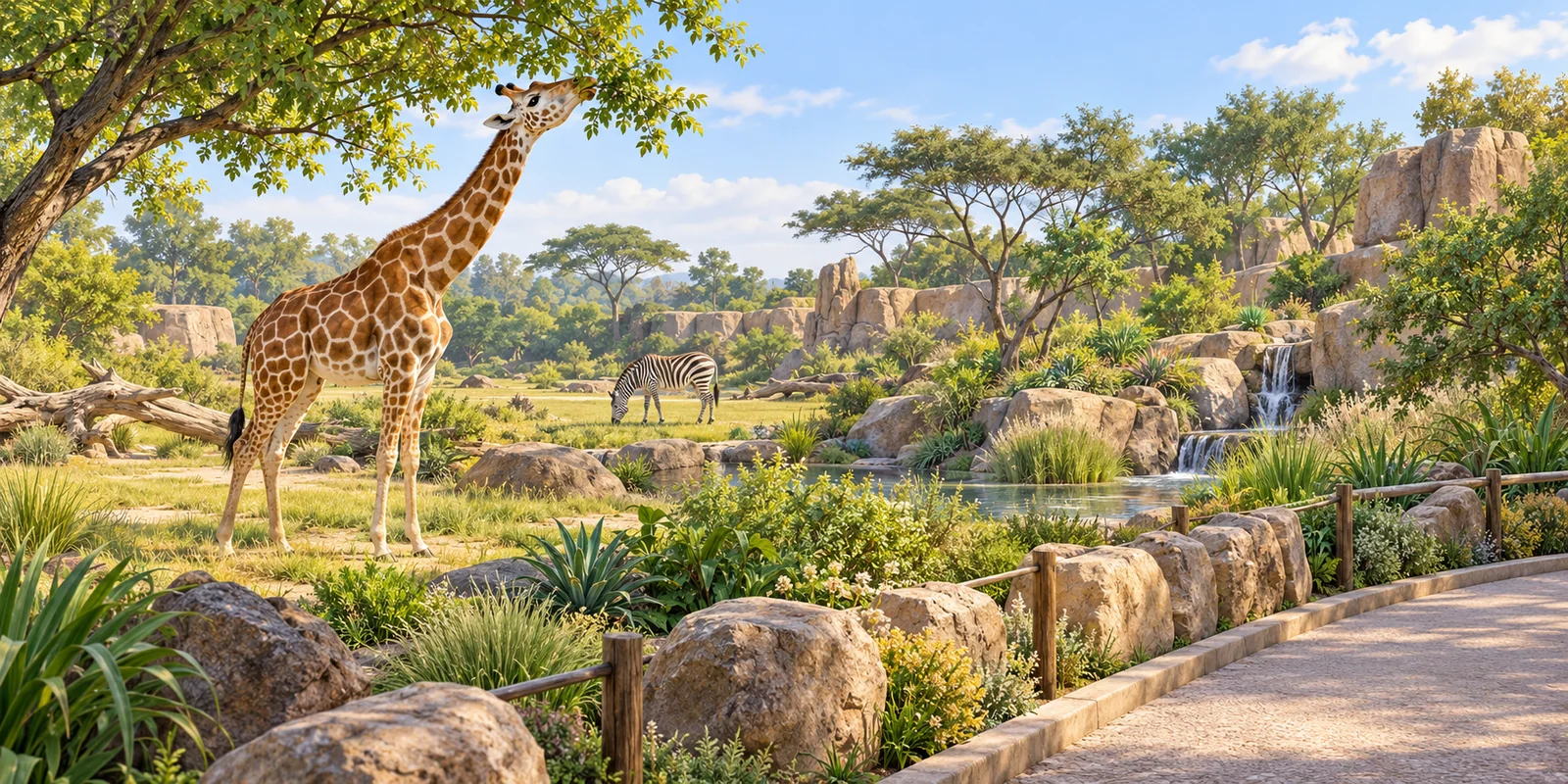
Generic illustration, not a photograph of this venueIllustration
ZooMecklenburg-Vorpommern, Germany

Zoologischer Garten Schwerin

Visit Zoo Schwerin for a day of animal-watching among woods and ponds, with rhinos, lions and small tropical creatures to draw you in.

About

Visit Zoo Schwerin for a day of animal-watching among woods and ponds, with rhinos, lions and small tropical creatures to draw you in. The grounds sit between Schweriner See and Fauler See, and the waterbird landscape at their centre gives the walk a pleasantly open rhythm. Pick up the free map at the main entrance and start with the nearby Rote Liste Zentrum and giraffes before deciding how far the family wants to explore.

The Rote Liste Zentrum gives the visit its central question: why do some species need our help? The lion complex includes birds and terrariums, so let the children choose a small animal as well as a large one. The displays explain the IUCN Red List through living examples. Across the entrance-side area, southern white rhinos occupy a broad savanna enclosure. Following its edge gives you different angles without needing every animal to come close.

Farther into the zoo, the Humboldthaus brings you into the world of South American animals. Look above eye level for two-toed sloths and small monkeys, then explore the aquariums. Outdoors, tapirs, capybaras, maras and vicuñas share an enclosure. Slow down here: a few quiet minutes often reveal more than another quick photograph.

The setting has a conservation story of its own. Old trees, deadwood, flower-rich areas and naturally managed ponds support local wildlife alongside the captive collection. Look at these areas from the paths and notice how different they feel from closely mown lawn. They are part of the day, too. Eager to name that creature? Identify any animal you find during your visit using the Snappit app.

The zoo opened in 1956. Its conservation focus now connects animal care, public learning and work beyond Schwerin. The Rote Liste Zentrum was completed in 2021, and the zoo coordinates the European breeding programme and international studbook for giant otters. That work supports cooperation between zoos and reintroduction projects abroad.

What to do here

For a short visit, link the entrance-side lions, giraffes and rhino savanna, then choose one section of the central pond walk. With half a day, add Bauer Lehmanns Hof, the prairie dogs at the Festwiese, the Humboldthaus and the Eurasian animals. Use the map to choose connecting paths.

The pond circuit has plenty to interrupt your walk: Humboldt penguins, flamingos, aviaries and the little Froschhaus. With younger children, alternate animal stops with the play areas rather than saving all the play until the end. Older children can compare the long arms of the gibbons with the deliberate climbing of the sloths, or find two animals whose shapes seem especially suited to their way of life.

Choose one ZOOInteraktiv keeper talk as an anchor for the day. Penguin talks are listed in both seasonal programmes; the Raubtierwald programme meets at the bears. Ask at the entrance for that day’s times and any changes. Whole prey animals may be used in carnivore feeds, so consider your children’s comfort before joining one.

Seasonal info

From 9 to 24 October 2026, daytime visitors must leave by 18:00 for WILD LIGHTS; Kombi-FLEXticket holders follow the special meeting instructions instead. From 25 October 2026 to 27 March 2027, the daytime zoo opens at 10:00, last admission is 15:00 and closing is at dusk. WILD LIGHTS runs until 29 November 2026 with separate evening admission. Check current opening notices and house access before travelling, especially at Christmas and New Year.

Accessibility

Expect a mix of paved paths, bridges and optional adventure sections. The climbing and wobble path by the red pandas is an activity, so choose ordinary connecting paths if it does not suit your mobility. The map marks accessible toilets at the entrance, Rote Liste Zentrum, rhino area and Humboldthaus. For a wheelchair or pushchair route, call 0385 395510 to discuss slopes, surfaces and any diversions. The WILD LIGHTS route uses mostly asphalt, but that does not describe every daytime path.

Don't miss

1

Rote Liste Zentrum

Lions, terrariums and an approachable explanation of threatened species

2

Rhino savanna

Several viewing angles on southern white rhinos and their shared enclosure

3

Humboldthaus

Look up for sloths, then down into South American aquariums

4

Woodland and ponds

Waterbirds, red pandas, farm animals and play stops along the way

Walks and routes

A shorter day with younger children

Start with the lions and giraffes, make the rhino savanna your main outdoor stop, then pick the nearest appealing stretch of the pond circuit. Leave a generous margin for a play break and the walk back to the main exit. Save the far end around the Humboldthaus for a longer visit.

Things to try

Big animal, small animal

At the Rote Liste Zentrum, choose a lion and one tiny terrarium animal. Read their display panels together: what threatens each in the wild, and what help is being offered? Let each child explain one thing they learnt in their own words.

Wildlife and habitats

Watch from the public viewing areas around the lion complex. Look for a resting animal as well as one moving; different parts of the enclosure may be in use.

Try more than one public viewpoint around the savanna. If a rhino is grazing, notice its broad mouth; leave room for other families at the rail.

At the giraffe area, watch the neck and legs together as an animal changes position. The giraffe platform is also a meeting place in the winter keeper programme.

Search the branches before looking at the ground. A resting red panda can be easy to miss among the trees; try another view from the path and give it time.

Follow the branches and ropes overhead with your eyes. Watch quietly if a sloth moves across the house, keeping clear of the animals rather than reaching towards them.

Scan the shared enclosure for capybaras, then compare their shape with the tapirs nearby. Wait for an animal to choose its own position rather than trying to attract it.

Watch the lawn and burrow entrances from the path. These free-roaming zoo animals can bite, so leave them space and never put a hand into a tunnel.

Look high through the climbing structure and branches. If a gibbon moves, see how its long arms help it travel; listening quietly may be as rewarding as taking a picture.

Take a quiet pause at the aviary and find the white bird with blue skin around its eyes. Look between perches as well as at the most obvious front branch.

Look for the small blue male among the terrarium’s plants and branches. Move slowly and avoid flash; this is a good place to practise noticing tiny details.

Sources and useful links

Wildlife you might spot

10

Each card links to a full Explore page with photos, traits, and fun facts.

Snap map for this place

Start with the big picture, then zoom in to explore individual wildlife observations around this place.

Loading map…

Good to know before you go

Entrance

Head to An der Crivitzer Chaussee 1, 19061 Schwerin. The former entrance through Bistro Vielfalter by Fauler See is closed; use the main gate.

By tram or car

Tram lines 1, 2 and 3 serve Zoo. Check the NVS journey planner for your return. Paid parking is beside the entrance; allow for the parking charge separately from admission.

Food and breaks

Bistro Vielfalter is near the Humboldthaus, while Hoftheke is marked by the farm area. Check which outlet is open before promising a late lunch.

Little legs

Handcarts can be hired through the zoo shop, with a fee and refundable deposit. Availability is limited, and carts reserved for group activities may be unavailable.

Animal space

Keep snacks packed away around animals. Never touch or feed free-roaming lemurs or prairie dogs, and keep children’s hands away from burrow entrances.

At the farm

Use only zoo-approved food where feeding is expressly allowed, and follow the signs and staff instructions. Let animals retreat when they have had enough attention.

Dogs

Daytime visits permit dogs for an extra fee, on a short lead. Dogs cannot enter animal houses, enclosures or playgrounds. They are not admitted to WILD LIGHTS.

Photography

Turn off flash in animal houses and avoid tapping on glass or calling animals over. The visitor rules permit photography for private use; commercial use needs written permission.

Frequently asked questions

Admission is paid, with seasonal tariffs and a family ticket for up to two adults and four eligible children from the same household. Children under three enter free. Bring proof for concessions. Advertised zoo prices include the optional Umwelt-Euro conservation contribution, which can be declined at the ticket desk.
A normal day ticket permits one entry and loses validity when you leave. Plan your food stop inside the grounds, or ask the ticket desk before making any arrangement that would require re-entry.
The Humboldthaus and, when open, the Rote Liste Zentrum provide indoor animal stops; Bistro Vielfalter offers a break from cold weather. You still need to walk outdoors between them. Bring waterproof layers and choose fewer areas if rain is persistent.
The evening event centres on illuminated installations. Most animals are in their night accommodation and the animal houses close normally. Choose a daytime visit for animal-watching. The Kombi-FLEXticket covers both experiences; its holders meet at the Rote Liste Zentrum after daytime closing, following staff directions.

Recent snaps at this place

Recent snaps will appear here as new observations are added.

View all ›

Take the discovery with you

Exploring Zoologischer Garten Schwerin?

Identify the wildlife you spot, learn as you go, and keep a collection of the adventure.

  1. 1Spot it
  2. 2Snap it
  3. 3Keep the discovery