





Prairie Dog
Cynomys ludovicianus
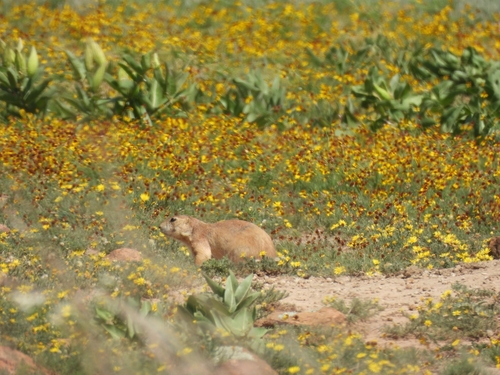
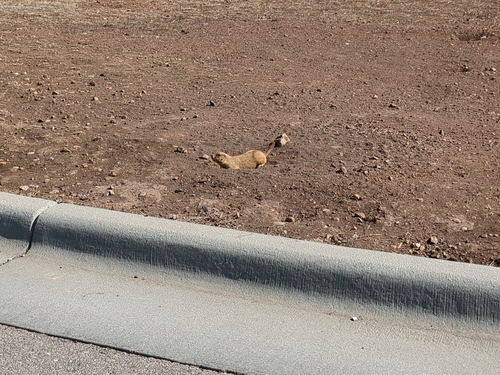
Prairie dogs are small, social mammals that live in underground burrows called towns. They communicate with cute chirps and barks and play an important role in the prairie ecosystem.
Habitat: Grasslands
The Prairie Dog has a stocky body covered in yellowish-tan fur, with a distinctive short tail tipped with black. Its small ears and dark eyes blend into its round face, making it look different from ground squirrels by its larger, more compact build and characteristic black tail.
Category
MammalsRarity
Common
Danger
2/5 · Low
Snaps
50
Many other animals depend on prairie dog towns for food and shelter!
Prairie dogs can plug the burrows of rival groups!
Prairie dogs will trim nearby plants to get a better view of predators.
Their underground 'towns' have special rooms for sleeping and even bathrooms.
Prairie Dogs can dig complex underground tunnels because of strong claws that create safe homes and escape routes.
Prairie Dogs have unique alarm calls that tell their colony about different predators, helping everyone hide fast.
Prairie Dogs can use their black-tipped tail to flick and signal danger, communicating alerts across open plains.
These herbivores munch on fresh plants like grasses and leafy greens to stay healthy and hydrated.
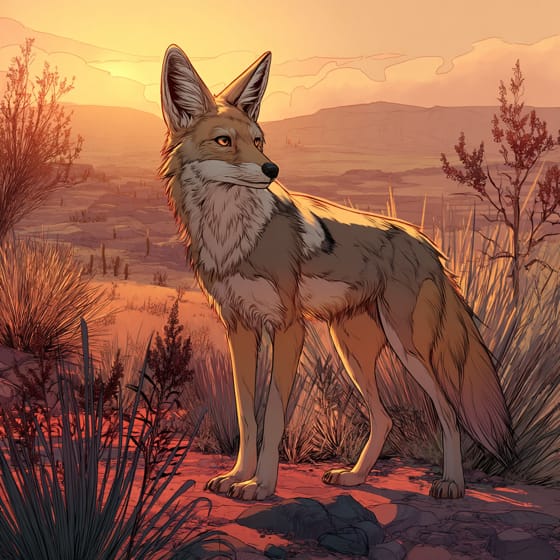
Canis latrans
a common predator on the plains
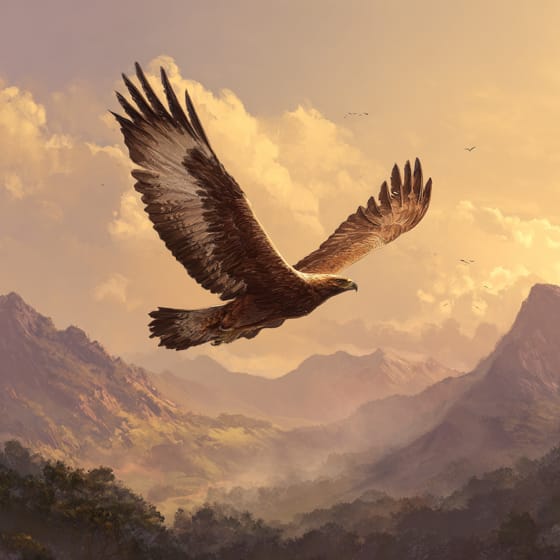
Aquila chrysaetos
hunts them from the sky
Mustela nigripes
their primary prey and food source
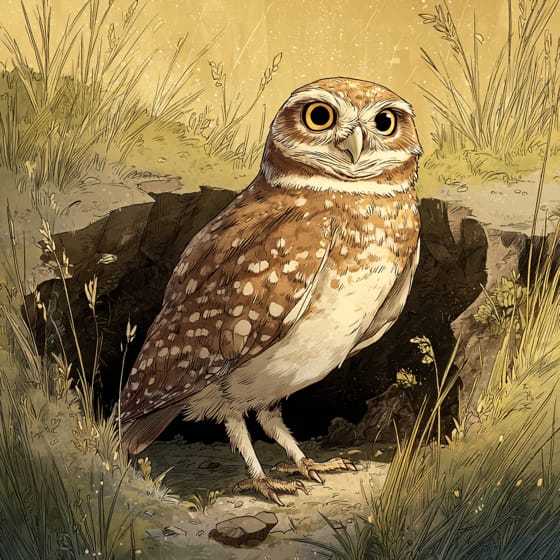
Athene cunicularia
uses abandoned prairie dog burrows for nests

Crotalus viridis
often hides in their burrows for shade
Wildlife encompasses all undomesticated animal and plant life existing in their natural habitats.
Furry describes animals possessing a dense covering of soft hair or fur.
Social animals live in organized groups, cooperating for survival benefits such as foraging, defense, and raising offspring.
Burrowing animals dig tunnels and chambers in the ground, using these subterranean structures for shelter, hunting, or breeding.

Grassland habitats are terrestrial biomes dominated by grasses and herbaceous plants, supporting a variety of grazing animals.

This trait characterizes organisms whose diet consists entirely or primarily of plant material.

Describes a species whose presence and role have a disproportionately large effect on its environment.

Nocturnal animals are primarily active during the nighttime hours, typically resting or sleeping during the day.
Danger
2/5 · Low
Enjoy watching prairie dogs from a safe distance and never try to touch or feed them.
The easiest way to identify Prairie Dog is to use the Snappit nature identifier app.
30-45 cm
0.7-1.4 kg
3-8 years
55 km/h
These herbivores munch on fresh plants like grasses and leafy greens to stay healthy and hydrated.
Grasslands
Foraging
Zoom in to split clusters and explore where this object has been snapped.
May 16, 2026
Holy City of the Wichitas Historic DistrictPhoto attribution
(c) Ansil B.R., some rights reserved (CC BY)
License: CC BY 4.0 ↗
Image may be shown cropped inside the card frame.
Mar 7, 2026
Reptile GardensPhoto attribution
no rights reserved
License: CC0 1.0 ↗
Image may be shown cropped inside the card frame.
Mar 7, 2026
Reptile GardensPhoto attribution
no rights reserved
License: CC0 1.0 ↗
Image may be shown cropped inside the card frame.
Michigan, US
You might spot King Penguin, Macaroni Penguin, and Polar Bear.
View guide →
%2C_Playa_de_Boulders%2C_Simon%27s_Town%2C_Sud%C3%A1frica%2C_2018-07-23%2C_DD_11.jpg&width=800)
Maryland, US
You might spot African Penguin, Reticulated Giraffe, and African Elephant.
View guide →
Pennsylvania, US
You might spot American Alligator, Black Bear, and Canada Lynx.
View guide →

Kansas, US
You might spot Cotton-Top Tamarin, American Bison, and Cougar.
View guide →

New York, US
You might spot Sea Lion, Red Panda, and North American River Otter.
View guide →

North Dakota, US
You might spot Red Panda, Pallas's Cat, and Sichuan Takin.
View guide →
Take the discovery with you
Snap it with Snappit to identify it, learn what makes it special, and add the discovery to your collection.





.jpg&width=800)



.JPG&width=800)
.jpg&width=800)
