



Saffron
Snap an herb's leaves, stems and flowers to sort kitchen herbs, market bunches and look-alikes. Then explore it in the Snappit field guide.
Identify and collect plants and mushrooms with your phone.


Drag a photo here, or choose one below.
JPG, PNG or WebP · Up to 10 MB

Include whole leaves still on the stem, plus flowers if there are any. Loose dried leaves and ground spices hide most identifying features.



Compare the suggested name with what you see in your photo. Then open its field-guide entry for fun facts and look-alikes to rule out.

Browse the field guide here, or save your finds as collectible cards in the Snappit app. Build collections and learn something new together.
From the Snappit field guide: the mints, basils and windowsill herbs kids love to rub and sniff. Open a card for a closer look.
Flat-leaf parsley and cilantro are proof that a quick glance at a green bunch isn't enough. Follow the leaf divisions, edges and how leaves attach to the stem. Flowers and the whole plant add clues, but a photo can't capture scent or tell you an unfamiliar herb is safe to use.

Start where each leaf meets the stem. Mint-family herbs like basil, oregano and sage carry leaves in opposite pairs, while others alternate or split into divided leaflets. That pattern often narrows the group fast, especially when your close-up also shows one or two stem joints.

Look at the leaf edge (the margin) and the surface. Smooth edges, fine teeth, deep cuts, waxy skin, fuzz or a pebbly texture all help. A flat, glossy leaf points somewhere different from a small, hairy one, even before any flowers appear.

Notice whether stems stay green and bendy or turn firm and woody near the base. Upright clumps, trailing sprigs and dense little bushes point in different directions. Square stems are typical of the mint family, but a square stem alone doesn't prove a plant is an edible mint relative.

If there are flowers, include them. Flat umbrella-shaped clusters (umbels) of tiny flowers, purple spikes and small pale thyme-like blooms each shift the possibilities. Even unopened buds help, because where and how they form shows how the plant grows, which beats a single leaf on its own.
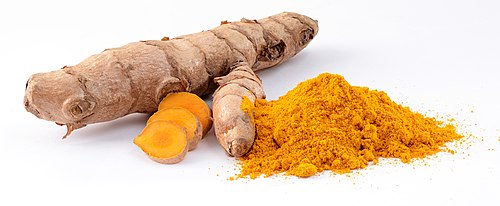
Compare real field-guide examples: Saffron · Garlic · Turmeric

A stem with paired leaves points one way, while parsley-like foliage is cut into segments or leaflets. That splits many soft kitchen herbs into two broad groups, mint relatives and the carrot family. It's a starting point, though, not a rule for edibility or family.

Both look woody and Mediterranean, but rosemary has longer, needle-like leaves along stiffer stems. Thyme has much smaller oval leaves packed closely on short, branching stems. A wider view of the sprig shows the difference better than one leaf.

A supermarket pot or bunch comes from a short list of familiar kitchen herbs, which makes ID easier. An unlabeled plant growing outdoors has far more possibilities, including toxic wild look-alikes. Treat it as a plant ID question, not as a guide to cooking or home remedies.

First split woody sprigs from soft, leafy bunches. Rosemary and thyme keep firmer stems and smaller leaves, while parsley, cilantro, basil and most mint relatives look softer and greener. A photo with both a leaf close-up and a short piece of stem tells you far more than a cropped leaf.
Next, ask whether the leaf is simple or divided. Parsley and cilantro have cut, branching leaves rather than one plain leaf. Mint relatives usually show paired simple leaves along the stem. Buds or flowers can settle a borderline case, especially when leaf size varies on the same plant.

Seedlings don't have the full leaf shape of a grown herb yet. Early leaves can be rounder, smoother or less divided, so the best clue is often how new leaves appear at the stem tip. If you're checking a seedling against a seed packet, photograph the whole sprout, not just one tiny leaf.
Outdoors, looking like a kitchen herb isn't enough to make a plant safe. Feathery divided leaves belong to several unrelated plants, some deadly, and square-ish stems turn up in more than one family. Use the result as a naming aid, then check a trusted regional plant guide; never use it to decide on food or medicine.
Include the spot where leaves join the stem (the node). It shows the leaf arrangement, one of the fastest ways to narrow down an herb.

Bright window light or open shade shows true color and edges better than warm indoor bulbs. Lay the sprig flat so the stem and leaves stay in focus together.

Try to get leaves and blooms in one photo. Where the flowers sit on the stem often separates similar herbs better than their color does.
Usually, yes. Potted herbs are often easier because the plant is whole rather than cut. Fit a short piece of stem, several leaves and any buds or flowers into one frame. That gives the photo far more to work with than a tight crop of a single leaf.
Sometimes, for very distinctive leaves, but herbs are much easier to sort when the photo also shows how the leaf joins the stem. Snappit uses one photo at a time, so take a few shots from different angles and upload the clearest one for the best result.
Often, yes, as long as the leaves are fresh enough to show their real shape and edges. Cutting removes some clues, so bunches of parsley, cilantro, dill, mint or thyme are easier than loose, detached leaves.
Seedlings start with simple seed leaves before the grown-up leaf shape appears. Young parsley or cilantro may not show its familiar divided leaves yet, and tiny mint relatives look alike. Expect a broader result until several true leaves have grown.
Look at the lower leaves: cilantro (coriander) usually has rounder, softer lobes, while flat-leaf parsley has sharper, more toothed segments. Cilantro's upper leaves on a flowering stem turn feathery and finely cut. Compare the whole sprig, since one cropped leaf is weak evidence. Crushing a leaf helps too: the smells are very different.
No. A photo ID is never a reason to eat a plant or use it as medicine, and Snappit doesn't judge medicinal use. Don't taste or chew an unknown plant to test it. Wild look-alikes need confirming by an expert or a trusted regional guide.
Yes. Snappit for iPhone and Android names herbs, flowers and 3,600+ other plants from a photo, with short, kid-friendly facts. Each find becomes a collectible card with a rarity tier in a private family collection, with no ads or chat. It's free to download with free daily IDs; a subscription unlocks unlimited snaps.
Yes. Your first identification here is free: upload one JPG, PNG or WebP photo up to 10MB in your browser. Show a whole leaf, where it joins the stem and any flowers. For a bunch of cut herbs, spread a few stems apart so each leaf is easy to see.
The Snappit appAges 4+ · No ads
Take what you learn here into Snappit and turn your next walk or day out into a shared adventure.
Save your discoveries as collectible cards in the app, with rarity tiers and themed collections to explore.
Short, friendly facts give young readers something to notice, ask about, and remember. The app is made for ages 4 and up, without ads.
Discover new collection themes, try the daily discovery, and earn badges as you keep exploring together.