
Eggplant
Snap a vegetable's leaves, stems, roots or bulb to find out what it is, from market oddities to garden sprouts. Then meet it in the Snappit field guide.

Identify and collect plants and mushrooms with your phone.


Drag a photo here, or choose one below.
JPG, PNG or WebP · Up to 10 MB

Photograph the whole plant and its leaves in daylight. For a harvested vegetable, show one intact piece and any leaves still attached.

Compare the suggested name with what you see in your photo. Then open its field-guide entry for fun facts and look-alikes to rule out.

Browse the field guide here, or save your finds as collectible cards in the Snappit app. Build collections and learn something new together.
From the Snappit field guide: garden staples, odd-looking roots and the greens kids poke at on the dinner plate. Open a card for a closer look.
A bunch of greens, an unlabeled root and a garden seedling each need a different view. Show the whole part you'd eat, plus any attached leaves, stems or roots. Market trimming can remove useful clues, and a young plant may look nothing like the vegetable it will become.

First, work out which part of the plant you're looking at. A bulb, a true root, a swollen stem and a leafy head each narrow things down differently. Even on trimmed produce, the base, the neck and the way leaves attach often tell you more than color does.

Overall form sorts many common vegetables quickly. Is the body round or long, tapered or blunt? Is it one solid piece or many layered leaves? A straight, even cylinder suggests something different from a squat globe with a narrow top.

Surface detail often confirms what the shape suggests. Papery skin, smooth waxy skin, fine root hairs, eyes, thick veins, curled edges and tight layers are all useful. On leafy vegetables, notice whether leaves are crisp and ribbed, soft and floppy, or thick and cabbage-like.

Attached leaves are a big help, because the tops, leaf bases and stem length show how the vegetable grew. Market presentation offers hints too, like bunching, trimming style, or greens sold with roots on. Those help with comparison, but they don't prove anything on their own.

An onion usually has a distinct round bulb with layered flesh and often papery outer skin. A leek is built from overlapping leaf bases that form a long white shaft, without a separate round bulb. If leaves remain, onion leaves are hollow tubes, while leek leaves are flat straps.

True roots such as carrot, parsnip and beet usually taper or carry fine rootlets. Stem tubers are swollen stems, so they have buds or eyes, as on a potato. Shape alone can mislead: a sweet potato is a root, even though it looks like a tuber.

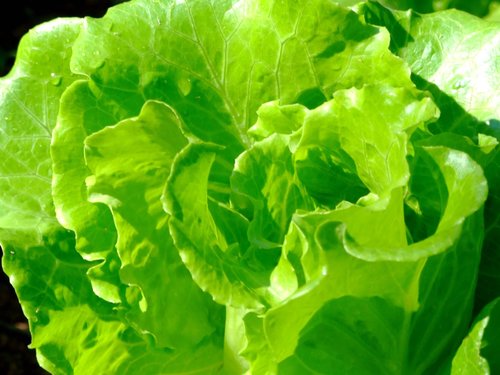
Cabbage usually has thicker, denser leaves that stack into a firm head, often with a stronger midrib and a waxier surface. Lettuce tends to be softer and less rigid, whether loose or headed. Some lettuces are compact and some cabbages are loose, so leaf texture is the better clue.

When a vegetable is sold loose or in a bunch, try to include the whole item and the spot where stems or roots were cut. Onions, radishes, carrots, beets, cabbages and leeks all get easier when that base is visible. A store label or net bag is handy for checking later, but the strongest clues are still the vegetable's own shape, layers and skin.
Variety is where photos get tricky. A picture can easily tell napa cabbage from round green cabbage, or a long daikon from a small round radish, but named varieties often overlap in color and form. For the closest match, show the traits vendors don't trim away: shoulder shape, leaf ribs, bulb neck, skin texture, and whether it grows as a tight head or an open bunch.

Very young seedlings are hard because their first seed leaves, called cotyledons, are simple starter leaves that look alike across many plants. Things improve once true leaves appear and the plant shows its real pattern. Onion seedlings already look narrow and grasslike, while young brassicas like cabbage and broccoli soon grow broader, textured leaves. In garden photos, the stem base and first true leaves tell you more than height.
Treat a wild plant that resembles a vegetable as a look-alike, not a confirmed food plant. Greens, onion relatives and root crops like carrot all have wild or escaped cousins that look similar in a quick photo, and some are toxic. Use the photo result as a starting point, then compare carefully with a regional plant guide, especially if the plant clearly wasn't grown as a crop.
Include the full vegetable if you can, plus the root end, neck or cut stem. Those attachment points often separate similar bulbs, roots and leafy heads.

If you took several photos, upload the sharpest one. One well-lit picture with one main subject works better than a cluttered scene.

For greens, don't fold or cover the leaf bases. Show the leaf shape, main veins and edges, and whether the leaves form a head, a rosette or a bunch.
Often, yes, especially if the picture shows the whole item and the cut base or stem. Market vegetables are easiest while they still have their telltale structure, like onion layers, a leek's long shaft, beet shoulders or cabbage leaves, rather than being chopped into pieces.
Wait for the first true leaves, then take a close photo. Seed leaves (cotyledons) are often too generic to tell plants apart. A clear view of the leaf shape and the base of the stem helps far more than a distant shot of the whole bed.
Look for eyes. Potatoes are stem tubers, so they have buds, or eyes, while carrots, beets and radishes don't. Many roots also taper and carry fine side rootlets. Shape can fool you, though: sweet potatoes look like tubers but are roots.
Check leaf thickness, the main rib, the edge shape and how the leaves are arranged. A tight layered head, a loose rosette and a bunch of separate leaves point to different groups, even when the greens are the same color.
It can get close, but the exact variety is much harder than the general kind. Many vegetables have been bred into forms that overlap in size, color and shape, so a photo may name the vegetable without telling one named variety from another.
Treat it as a look-alike, not as food. Garden crops, escaped plants and wild relatives can look very similar, and some wild look-alikes are poisonous. Don't decide a plant is edible from where it grows, how it looks or a photo result.
Often, yes. A halved onion or cabbage still shows its layers, and a cut leek still shows its long shaft of leaf bases. It gets harder when peeling removes the skin texture or the vegetable is cubed, sliced or mixed into a pile.
Yes. Snappit for iPhone and Android lets kids snap vegetables in the garden or at the market and get short, kid-friendly facts. Every find becomes a collectible card with a rarity tier in a private family collection, with no ads or chat. It's free to download with free daily IDs.
The Snappit appAges 4+ · No ads
Take what you learn here into Snappit and turn your next walk or day out into a shared adventure.
Save your discoveries as collectible cards in the app, with rarity tiers and themed collections to explore.
Short, friendly facts give young readers something to notice, ask about, and remember. The app is made for ages 4 and up, without ads.
Discover new collection themes, try the daily discovery, and earn badges as you keep exploring together.


Open a place guide to see its species checklist and plan what to look for on your next visit.
Explore place guides →