A flexible family afternoon
Begin with the tropical house near the entrance, choose several outdoor animal stops, then take a farmyard break. Let the official map guide the order on the day. Add the café or Stadtpark afterwards.
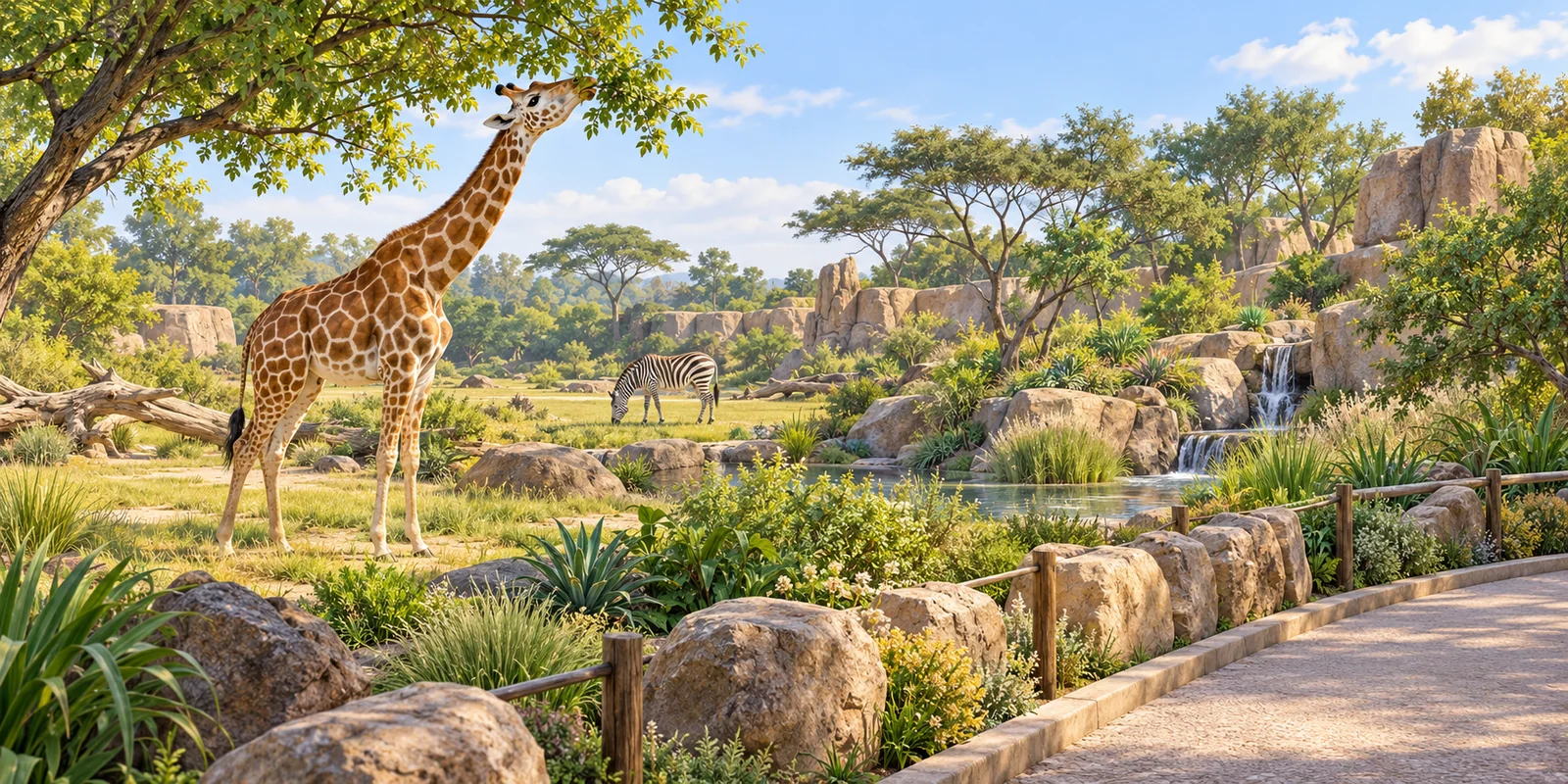 Illustration
Come to Tiergarten Falkenstein for an unhurried animal afternoon that can end with a good run around the neighbouring Stadtpark.
Come to Tiergarten Falkenstein for an unhurried animal afternoon that can end with a good run around the neighbouring Stadtpark. The small zoo sits in the middle of Falkenstein in the Vogtland, bringing together farm animals, a tropical house and creatures that reward a little patience. Start with the entrance information board and choose a few favourites from the digital animal tour. You needn’t turn all its numbered stops into a checklist.
The bear brothers Björn and Martin are American black bears, while the tiny Eurasian harvest mice offer a very different sort of watching: look for a tail curled around a stem. Elsewhere you can compare a lynx’s ear tufts, a snowy owl’s plumage and a Bactrian camel’s two humps. All the animals described here are part of the zoo’s captive collection.
The farmyard and goat contact enclosure give younger children a change of pace. Save some energy for the Stadtpark’s climbing equipment and wheelchair carousel afterwards. Turn your visit into a safari! Use the Snappit app to scan and log wildlife sightings here.
The digital animal tour joined the enclosure signs in September 2022. Its short stories add another way into the collection, especially for families who prefer listening together to reading every panel.
Use the official digital map to pick your own way between enclosures. The tropical house is just behind the entrance, so it makes a handy first stop. Give the black bears, lynx and prairie dogs proper watching time, then choose a farmyard stop or a short animal story on your phone. The QR-code audio tour has English, German and Czech options. Try the hand-and-foot sensory path and scent garden as a break from looking through fences. Finish with the café or neighbouring playground if everyone still has energy.
The zoo operates through the year but closes on 24 and 31 December. In colder, wet weather, leave more time for the tropical house and be flexible about outdoor animal sightings. The café has its own seasonal hours and normally closes on Mondays.
The city describes the zoo as barrier-free. Wheelchairs, walking frames, pushchairs and pull-along wagons use a swing gate beside the ticket-scanning turnstile. For specific needs, ask the zoo on +49 3745 5421 about path gradients, surfaces and toilet arrangements before coming. The neighbouring Stadtpark has a wheelchair carousel; that does not establish access to every play item.
Watch Björn and Martin, the zoo’s American black bears, without rushing straight to the next enclosure.
Look for climbing harvest mice and the black-tailed prairie dogs; poor weather can keep the latter below ground.
Mix the goat contact enclosure with the sensory path and scent garden for a varied visit with younger children.
Allow about 1½–2 hours for the zoo, or roughly 3 hours with a break and the adjoining Stadtpark.
Begin with the tropical house near the entrance, choose several outdoor animal stops, then take a farmyard break. Let the official map guide the order on the day. Add the café or Stadtpark afterwards.
At the camel and llama enclosures, ask children what looks alike and what looks different. Count humps, compare necks, and make one simple drawing of each.
Choose the harvest mouse or marmoset and follow one movement from start to finish. Can you explain what helped the animal hold on? Try describing it to someone who did not see it.
Use the small tropical house for a closer look at its displays, then take a café break if it is open. These are indoor pauses within a largely outdoor outing; for persistent heavy rain, choose another day for the full zoo-and-playground plan.
Watch Björn and Martin from a comfortable viewing spot and notice how they use their paws and noses. A resting bear is still worth a closer look; let any activity happen in its own time.
Look slowly across the whole enclosure for the outline of a resting cat. If you have a clear view, try to pick out the spotted coat and dark ear tufts before reaching for your camera.
Watch the burrow entrances and compare a standing lookout with an animal moving low to the ground. The colony is rarely all visible together, and bad weather may mean very little above-ground activity.
Check low positions as well as raised resting places. Snowy owls spend much of their time on the ground in the wild; compare the light and dark areas of the bird’s feathers without trying to get a reaction.
Count the two humps and, if your view allows, look at the long eyelashes. The humps store fat. Keep behind the visitor barrier and use the animal’s shape for a quick sketch.
Follow one marmoset for a while rather than switching between animals. Watch how it grips a trunk or branch; the audio story explains the claws that help these small monkeys climb.
Look for the whole line of the snake’s body before searching for its head. If the underside happens to be visible, see whether you can make out its chequered pattern. Leave a hidden or resting snake undisturbed.
If a raccoon is awake, watch its front paws as carefully as its face. Touch plays an important part in how it explores and searches for food; you may get a better story from a short observation than a quick photo.
Search among stems for a small shape, then follow its tail. A harvest mouse can use that gripping tail while climbing. Looking slowly is part of the fun; a tiny animal need not be moving to be interesting.
Compare the llama’s outline with the Bactrian camel’s. Both belong to the camel family, although the llama has no humps. Watch from the public viewing area and give animals space to settle their own interactions.
Björn and Martin were born in a Dutch zoo in 2019. Their story is part of the black-bear audio stop.
Harvest mice weave rounded nests among stems and climb with the help of a gripping tail. Their exhibit is a good reason to slow down for the smallest animals.
Keep an outdoor animal wish list flexible in cold or wet weather. The prairie-dog colony may spend long periods underground. Allow the tropical-house stop to take more of the visit and save the Stadtpark for weather that makes playing comfortable.
The official plan marks toilets and picnic places. Lieblingscafé am Tiergarten serves snacks, coffee and cakes from local Konditorei Schrader, with terraces when the weather suits. Check the café’s separate opening schedule.
The visitor address is Allee 9, 08223 Falkenstein/Vogtl. For rail travel, look up Falkenstein (Vogtl) and plan the onward walk separately. Vogtland Verkehr has the current regional journey planner and service notices; check your return connection before setting off.
For a wheelchair or pushchair visit, ask about your whole visit rather than only the entrance: the paths you want to use, access to the tropical house, and the toilet you need. The city’s barrier-free description does not give detailed dimensions or gradients.
Each card links to a full Explore page with photos, traits, and fun facts.
Start with the big picture, then zoom in to explore individual wildlife observations around this place.
Bring a payment card
The entrance ticket machine is card-only. Annual tickets are sold through the town hall, not at this machine.
Use the right entrance
Head for Allee 9, 08223 Falkenstein/Vogtl. Use the swing gate if you have a wheelchair, walking frame, pushchair or wagon.
Choose your audio stops
Scan the QR codes and select English, German or Czech. Let each child pick one animal story.
Keep feeding to the goat area
Follow the enclosure signs and use the designated dispenser feed there. Keep your own snacks for people.
Plan the café separately
Lieblingscafé am Tiergarten normally closes Mondays. Check its hours if a hot drink or meal is part of your plan.
Check the return journey
Use Vogtland Verkehr’s current planner and allow for the onward walk from Falkenstein (Vogtl) station.
Give animals another chance
If an enclosure looks quiet, try another stop and return later. Never tap glass or call to make an animal move.
Dogs stay on a lead
Dogs are welcome under the zoo’s lead rule. Keep them close around enclosures and other visitors.
Recent snaps will appear here as new observations are added.

North Carolina, US
You might spot American Robin and Eastern Gray Squirrel.
View guide →

Florida, US
You might spot Anhinga, American Alligator, and Wood Duck.
View guide →

New Mexico, US
You might spot Wood Duck, Duck, and Canada Goose.
View guide →

Michigan, US
You might spot African Lion, Komodo Dragon, and Brown Bear.
View guide →
Take the discovery with you
Identify the wildlife you spot, learn as you go, and keep a collection of the adventure.