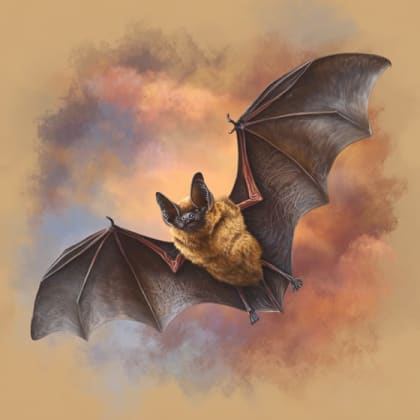

Big Brown Bat
Eptesicus fuscus
The Big Brown Bat is a friendly flying mammal that loves to eat insects! They are great at catching bugs in the air and can be found in many places, especially at night.
Habitat: Urban areas
The Big Brown Bat is a medium-sized bat with uniformly rich brown to reddish-brown fur, a bare blackish face, and dark leathery wings. Its small, rounded ears are distinct against its dark head, helping it blend into shadowy environments.
Category
MammalsRarity
Common
Danger
2/5 · Low
Snaps
4
A big brown bat's wing bones are like tiny, super-flexible human fingers!
Baby bats, called pups, can fly and hunt on their own just weeks after birth!
These bats can eat half their body weight in insects every single night!
They are super cold hardy, able to survive temperatures below freezing while hibernating.
Big Brown Bats can 'see' in total darkness by using echolocation, emitting sounds and creating a sonic map.
Big Brown Bats can gobble hundreds of night-flying insects, like beetles, protecting crops and gardens.
Big Brown Bats can enter a deep sleep for months, slowing their heart rate to survive freezing winters.
Big Brown Bats can comfortably roost in attics and barns, making them flexible home-finders in human areas.
These amazing bats love to munch on nocturnal insects, especially beetles and moths!

Popillia japonica
Controls this common garden pest.
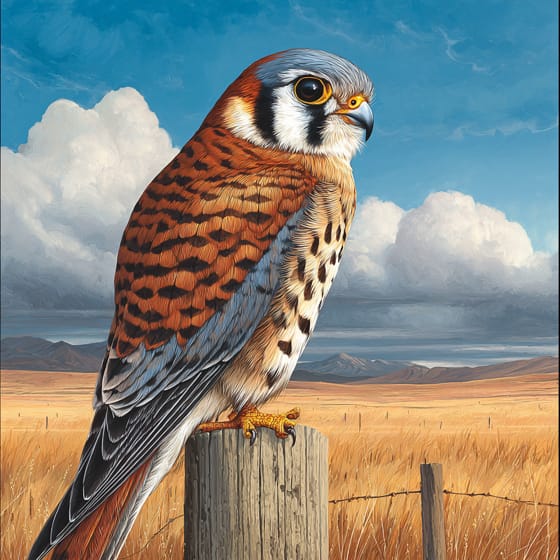
Falco sparverius
Sometimes preyed upon by small raptors.

Quercus rubra
Roosts in tree hollows and under bark.
Anopheles quadrimaculatus
Helps control mosquito populations.
Furry describes animals possessing a dense covering of soft hair or fur.
Social animals live in organized groups, cooperating for survival benefits such as foraging, defense, and raising offspring.
This trait identifies organisms whose diet primarily consists of insects and other small invertebrates.
Echolocation is a biological sonar used by animals to navigate, hunt, and communicate by emitting sound waves and interpreting the echoes.

This trait characterizes organisms with an exceptionally long lifespan compared to others of their kind.

This habitat trait indicates species that can coexist with humans in urban and suburban environments, utilizing man-made structures and green spaces.

Nocturnal animals are primarily active during the nighttime hours, typically resting or sleeping during the day.
Danger
2/5 · Low
Bats are usually not dangerous, but it's best to watch them from a distance and not touch them.
10-13 cm
28-33 cm
0.015-0.026 kg
6-18 years
32 km/h
These amazing bats love to munch on nocturnal insects, especially beetles and moths!
Urban areas
Pursuit
Zoom in to split clusters and explore where this object has been snapped.

Colorado, US
You might spot Western Lowland Gorilla, Varanus Macraei, and Bluetongues.
View guide →

Indiana, US
You might spot African Lion, Tiger, and Aurelia Aurita.
View guide →
Virginia, US
You might spot African Lion, Common Ostrich, and Equus Africanus Asinus.
View guide →

Pennsylvania, US
You might spot American Bullfrog and Allegheny Monkeyflower.
View guide →