





Pygmy Marmoset
Cebuella pygmaea
The Pygmy Marmoset is the smallest monkey in the world! It loves to swing from tree to tree in the rainforest and eat sweet nectar and insects.
Habitat: Rainforest
The Pygmy Marmoset is the world's smallest monkey, with golden-brown fur flecked with gray and black. It has tawny underparts, a long tail often ringed, and small, tufted ears. Its tiny size makes it visually distinct.
Category
MammalsRarity
Rare
Danger
2/5 · Low
Snaps
Be the first to snap!
Pygmy marmoset dads often carry their twin babies on their backs!
They are 'gum-feeders,' making holes in trees to drink their sticky sap.
They can turn their heads almost 180 degrees to spot predators!
This is the world's smallest monkey, weighing less than a deck of cards!
Pygmy Marmoset can gnaw tiny holes in tree bark because of specialized chisel-like teeth that help them reach nutritious sap.
Pygmy Marmoset has powerful hind legs that help them leap over 5 meters (15 feet) between branches with ease.
Pygmy Marmoset can communicate using ultrasonic calls because of unique vocal cords that help send secret messages.
They mainly eat tree sap, but also enjoy insects, fruits, and nectar from their forest home.
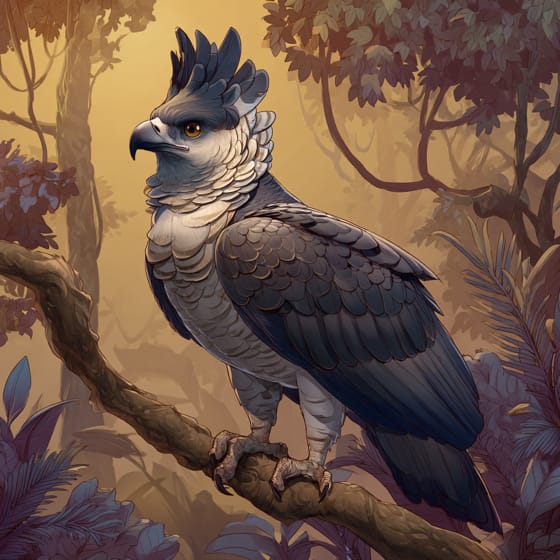
Harpia harpyja
Large raptor that hunts monkeys from above.
Eira barbara
Weasel-like mammal that climbs trees to hunt.
Boa constrictor
Large snake that ambushes small primates.
Furry describes animals possessing a dense covering of soft hair or fur.
Social animals live in organized groups, cooperating for survival benefits such as foraging, defense, and raising offspring.
This trait identifies organisms whose diet includes both plant and animal matter.
Arboreal animals live primarily in trees, utilizing them for shelter, food, and protection from predators.

This trait describes organisms that manipulate external objects to achieve a specific goal.

This habitat trait refers to species found in tropical rainforests, characterized by high annual rainfall, high biodiversity, and dense tree cover.

Pertaining to species that are significantly smaller than typical or average for their kind.

Nocturnal animals are primarily active during the nighttime hours, typically resting or sleeping during the day.
Danger
2/5 · Low
Always observe these monkeys from a safe distance and never try to touch or feed them in the wild.
The easiest way to identify Pygmy Marmoset is to use the Snappit nature identifier app.
11-15 cm
0.1-0.14 kg
10-12 years
20 km/h
They mainly eat tree sap, but also enjoy insects, fruits, and nectar from their forest home.
Rainforest
Foraging
Zoom in to split clusters and explore where this object has been snapped.
Recent snaps will appear here as new observations are added.
Take the discovery with you
Snap it with Snappit to identify it, learn what makes it special, and add the discovery to your collection.





.jpg&width=800)




.JPG&width=800)



.jpg&width=800)
