





American Kestrel
Falco sparverius
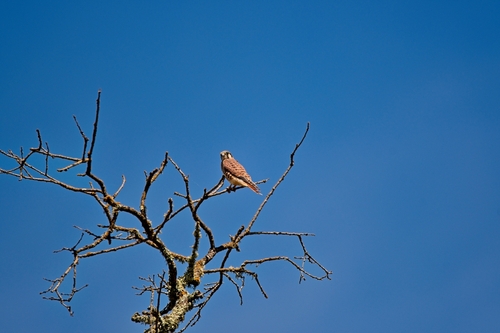
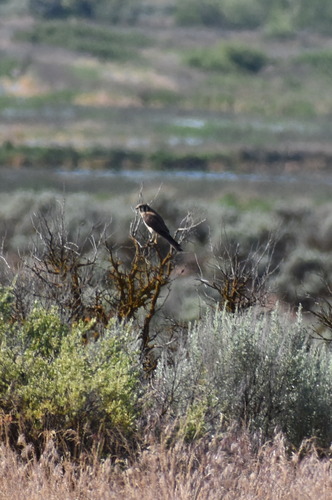
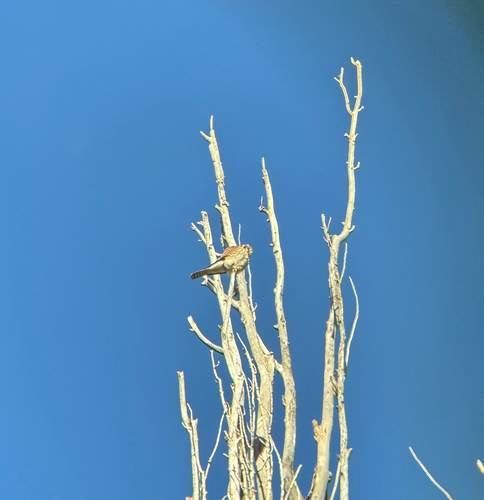
The American Kestrel is a small and colorful bird of prey. They love to perch high up and watch for little insects and mice to eat.
Habitat: Open fields, grasslands, and deserts
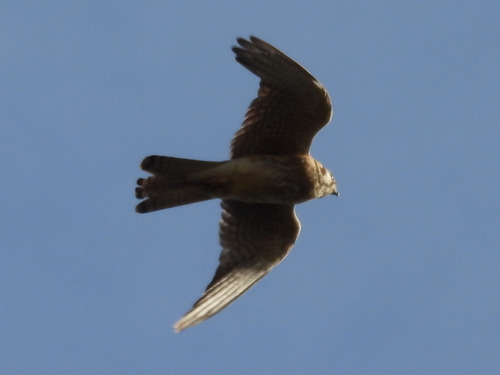
The American Kestrel is North America's smallest and most colorful falcon. Males have slate-blue wings and a rufous back, while females are more reddish-brown. Both sport distinctive black 'mustache' markings on their white faces.
Category
BirdsRarity
Common
Danger
1/5 · Very low
Snaps
98
Kestrels often nest in old woodpecker holes or special human-made nest boxes!
Kestrels sometimes store extra food in secret spots for a later snack!
Males and females look so different, they almost seem like different birds!
This small hunter often ambushes prey from a high perch like a power line!
American Kestrel can hover perfectly still in the air because of powerful, rapid wingbeats that helps them spot tiny prey below.
American Kestrel has ultraviolet vision that helps them see rodent urine trails, guiding them to hidden food.
American Kestrel has incredible agility that helps them snatch insects mid-flight with speed.
Tiny but mighty, this falcon munches on insects, small birds, and rodents.
Age differences: Young kestrels eat more insects, while adults add more small mammals and birds.
Microtus pennsylvanicus
Main prey for kestrel diet.
Schistocerca americana
Common insect meal for young and adults.
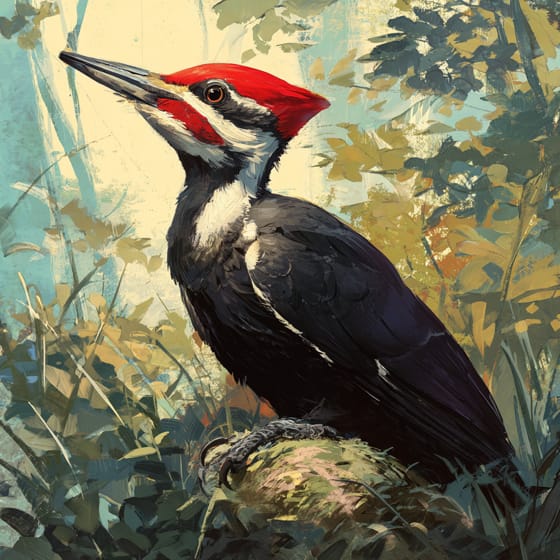
Dryocopus pileatus
Provides old tree cavities for nesting sites.
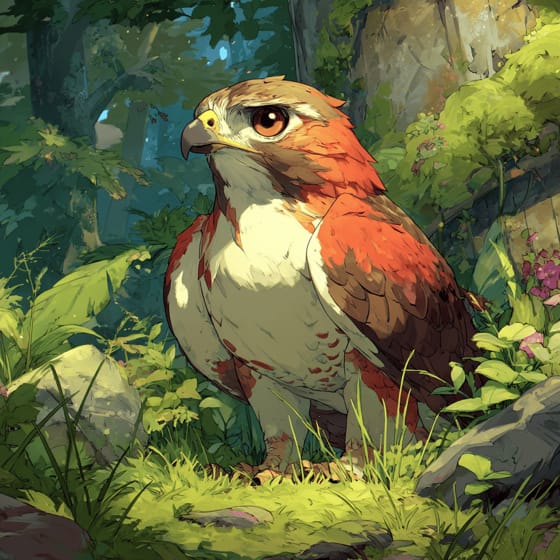
Buteo jamaicensis
Potential predator of eggs, nestlings, or even adults.
Wildlife encompasses all undomesticated animal and plant life existing in their natural habitats.
Feathered describes animals, primarily birds, possessing a covering of feathers.
Aerial creatures spend a significant portion of their lives airborne, utilizing flight for various activities such as hunting, migration, or nesting.
Grassland habitats are terrestrial biomes dominated by grasses and herbaceous plants, supporting a variety of grazing animals.

This trait identifies organisms whose diet consists entirely or primarily of animal tissue.

Diurnal animals are primarily active during daylight hours, typically resting or sleeping at night.

Describes a species whose presence and role have a disproportionately large effect on its environment.
Danger
1/5 · Very low
While Kestrels are not dangerous, it's best to enjoy watching them from a distance.
The easiest way to identify American Kestrel is to use the Snappit nature identifier app.
22-31 cm
51-61 cm
0.08-0.165 kg
1-5 years
64 km/h
Tiny but mighty, this falcon munches on insects, small birds, and rodents.
Open fields, grasslands, and deserts
Zoom in to split clusters and explore where this object has been snapped.
Jun 20, 2026
Albemarle and Chesapeake CanalPhoto attribution
(c) Laura Mae, some rights reserved (CC BY)
License: CC BY 4.0 ↗
Image may be shown cropped inside the card frame.
Jun 9, 2026
Sonoma Botanical GardenPhoto attribution
(c) Daveozric, some rights reserved (CC BY)
License: CC BY 4.0 ↗
Image may be shown cropped inside the card frame.
Jun 1, 2026
Julia Davis ParkPhoto attribution
(c) Sam Kieschnick, some rights reserved (CC BY)
License: CC BY 4.0 ↗
Image may be shown cropped inside the card frame.
May 22, 2026
Drumheller Channels National Natural LandmarkPhoto attribution
no rights reserved
License: CC0 1.0 ↗
Image may be shown cropped inside the card frame.
Apr 4, 2026
Grand CouleePhoto attribution
(c) Caleb Catto, some rights reserved (CC BY)
License: CC BY 4.0 ↗
Image may be shown cropped inside the card frame.

Virginia, US
You might spot Cope's Gray Tree Frog and Basilica Orbweaver.
View guide →

California, US
You might spot Western Fence Lizard and California Brittlebush.
View guide →

California, US
You might spot Snowy Egret, Great Blue Heron, and Willet.
View guide →

New York, US
You might spot White Snakeroot, Rock Pigeon, and Eastern Gray Squirrel.
View guide →

Illinois, US
You might spot Eastern Fox Squirrel, Amur Honeysuckle, and Poison Hemlock.
View guide →
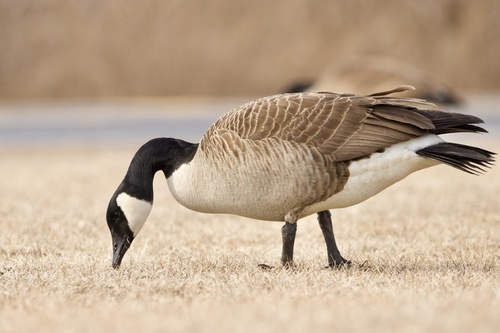
Illinois, US
You might spot Canada Goose, House Sparrow, and Rock Pigeon.
View guide →
Take the discovery with you
Snap it with Snappit to identify it, learn what makes it special, and add the discovery to your collection.




.jpg&width=800)








