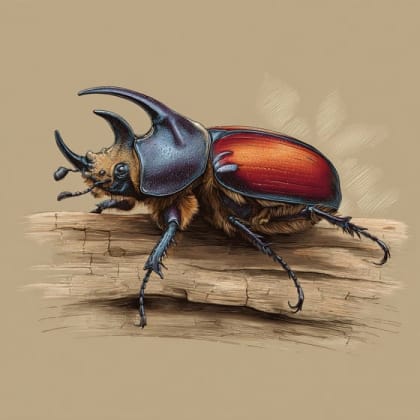
Seven-spotted Lady Beetle
Coccinella septempunctata
The Seven-spotted Lady Beetle is famous for its seven black spots on a bright red body. These little beetles are great at keeping pests away!
Habitat: Gardens, crops, and meadows
The Seven-spotted Lady Beetle is a small, domed insect with shiny, bright red or orange wing covers (elytra), each typically featuring three distinct black spots. Its black head displays prominent white markings on either side, and a seventh spot is usually present at the base of its wing covers.
Category
InsectsRarity
Common
Danger
2/5 · Low
Snaps
76
An adult can eat up to 5,000 tiny aphids in its lifetime!
If threatened, they will often play dead, falling motionless to the ground!
Ladybugs aren't bugs at all; they are actually a type of beetle!
Their spots can actually fade a little as they get older!
Seven-spotted Lady Beetle has hidden wings under its hard shell that help them fly quickly to new food sources or mates.
Seven-spotted Lady Beetle has bright red and black markings that tell predators 'don't eat me, I taste bad!'.
These helpful beetles love to munch on tiny plant-eating insects like aphids, protecting plants!
Aphis fabae
A favorite meal for both adult and larval beetles.
Parus major
Some birds, like tits, learn to avoid their bitter taste.
Araneus diadematus
Sometimes caught by spiders despite their warning colors.
Wildlife encompasses all undomesticated animal and plant life existing in their natural habitats.
Social animals live in organized groups, cooperating for survival benefits such as foraging, defense, and raising offspring.
This trait identifies organisms whose diet primarily consists of insects and other small invertebrates.
Diurnal animals are primarily active during daylight hours, typically resting or sleeping at night.

Describes a species whose presence and role have a disproportionately large effect on its environment.

Describes organisms that transfer pollen, enabling the fertilization and reproduction of plants.
Danger
2/5 · Low
Do not touch or pick up. Some insects sting or bite. Ask an adult for help.
10-14 mm
5-8 mm
300-365 days
15 km/h
These helpful beetles love to munch on tiny plant-eating insects like aphids, protecting plants!
Gardens, crops, and meadows
Foraging
6
Zoom in to split clusters and explore where this object has been snapped.

England, UK
You might spot Red Panda, European Lynx, and Emperor Tamarin.
View guide →

North Dakota, US
You might spot Red Fox, Gray Wolf, and Equus Africanus Asinus.
View guide →

England, UK
You might spot Blue Shark, Great White Shark, and Tiger Shark.
View guide →

Oklahoma, US
You might spot African Lion, Tiger, and Indian Rhinoceros.
View guide →

Colorado, US
You might spot Tiger, Aurelia Aurita, and Barramundi.
View guide →

California, US
You might spot Abyssinian Ground Hornbill and Chelonoidis Nigra Nigra.
View guide →