Snappit logo
Snappit
Get App
Garajonay National Park photo
National ParkSpain, Spain

Garajonay National Park

Garajonay protects the wooded heights of La Gomera, where Atlantic mist helps sustain a green world above the island’s drier coast.

About

Garajonay protects the wooded heights of La Gomera, where Atlantic mist helps sustain a green world above the island’s drier coast. Its laurel forest belongs to a lineage of subtropical forests that once spread much more widely around the Mediterranean. The trees themselves are living, growing and renewing; it is the forest’s ecological history that reaches back millions of years.

For a first family visit, make La Laguna Grande your base. A short signed circuit, information point and recreational area let you combine a little walking with plenty of looking. The nearby woodland includes fayal-brezal, a forest dominated by tree heath and faya, rather than a single uniform stand of laurels. Twisted trunks, small leaves and the contrast between shade and open ground give children something to investigate even when distant views disappear.

Juego de Bolas is the park’s fuller introduction to nature and island life, but it is a separate stop in La Palmita, Agulo, about 3 km outside the national park. Its planted gardens and exhibitions complement a woodland visit; they are not the start of this Laguna Grande walk. Choose it as an additional outing if your travel plans allow, rather than squeezing both places into a rushed morning. Eager to name that creature? Identify any animal you find during your visit using the Snappit app.

People have long used La Gomera’s upland forest for water, timber, fuel and grazing, and as a way between settlements. Sugar production from the late fifteenth century placed heavy demands on woodland fuel; later, timber, charcoal and poles for agriculture remained important. The forest that survives is therefore part of the island’s human history as well as its natural heritage. Pressure eased during the twentieth century as livelihoods and fuel use changed, while scientists and conservationists pressed for protection. Garajonay became a national park on 25 March 1981 and a UNESCO World Heritage Site in 1986. The 2012 fire damaged parts of the park, and the official Laguna Grande route account describes recovering forest visible from its viewpoint. A green canopy can return before a mature forest’s full structure does.

What to do here

Start at Laguna Grande’s information point, ask about the short Route 3 circuit, then walk slowly enough to read a sign, compare leaf shapes and pause to listen. Finish with a picnic or play break. If the group would rather learn indoors, consider Juego de Bolas as a separate visit.

Seasonal info

The forest can feel cool and damp even when the coast is warm. Carry a warm layer and waterproof through the year. In warmer, drier periods, check fire restrictions before leaving; picnic grills are usable only when the park specifically permits them. Winter outings need a generous daylight margin.

Accessibility

Plan the exact section with park staff. The park provides some wheelchair-adapted path sections, but a low-difficulty walking grade does not establish that the whole Route 3 circuit, its viewpoint spur or every facility suits a wheelchair or pushchair. Ask about surfaces, slopes, steps, toilets and the shortest return.

Don't miss

1

A manageable first woodland walk from La Laguna Grande

2

Tree-heath trunks and the varied textures of the monteverde

3

Picnic tables and a children’s play area beside the forest

4

Nature and island-culture interpretation at the separate Juego de Bolas visitor centre

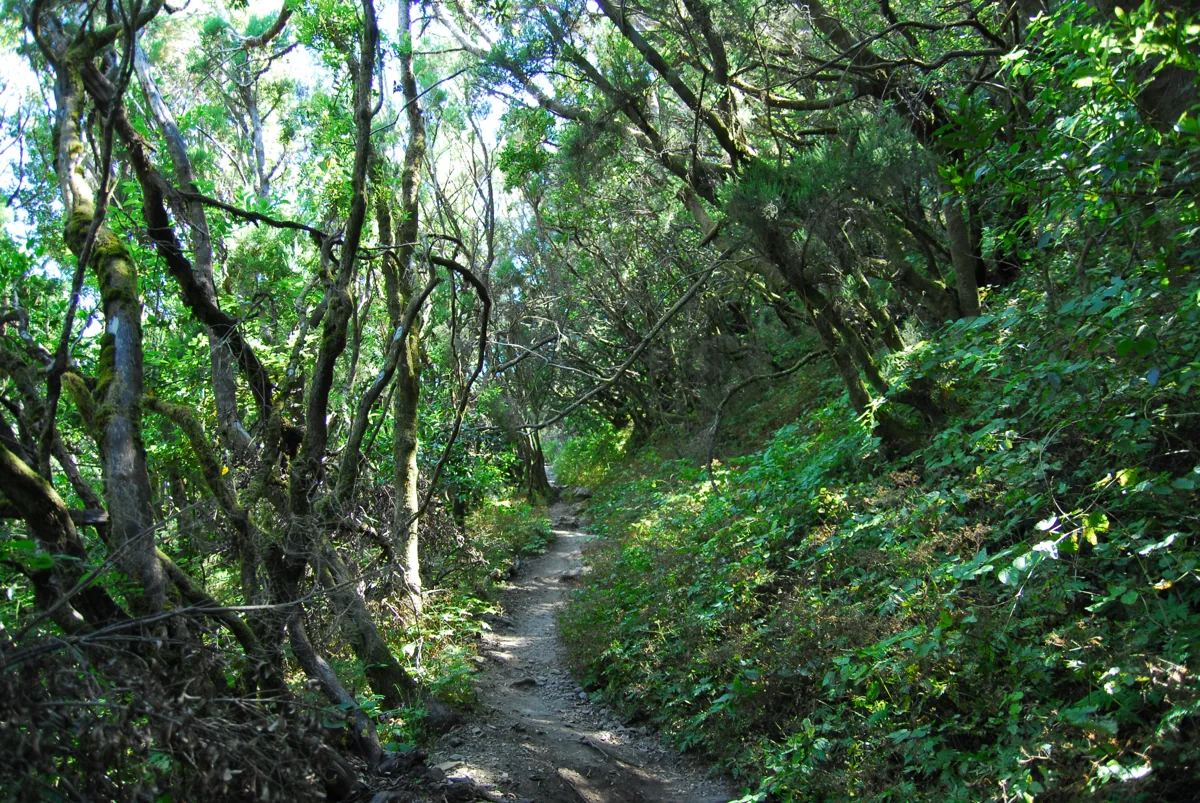
A narrow earth path beneath intertwined trees and dense green foliage near Laguna Grande.

A forest path south of Laguna Grande in Garajonay National Park, photographed in June 2011.

Parque nacional de Garajonay - near Laguna Grande.jpg — Pawel Ryszawa / Wikimedia Commons / CC BY 3.0 · Creative Commons

Walks and routes

Route 3: La Laguna Grande I

Find the signed start between the restaurant and the information centre. This is the short circular introduction to fayal-brezal, with interpretation panels along the way. Allow about 30 minutes of walking on this low-difficulty circuit, and confirm the signed route with staff before you start. At the upper fork, a short viewpoint spur is described; take it only if conditions and everyone’s footing suit it.

The general walking grade is low. Ask staff to identify any wheelchair-adapted section and a suitable turn-back point; do not assume the whole circuit or viewpoint spur is step-free.


Route 3: La Laguna Grande I

A relaxed Laguna Grande outing

Begin with 15–20 minutes for the information point and practical questions. Give the short circuit 45–60 minutes with pauses, then allow 30–45 minutes for a cold picnic and play break. If children are tired, finish there. If the weather is unsuitable for walking, shorten the visit rather than turning it into a longer route in search of a view. These are suggested family timings, not an official scheduled tour.

Add Juego de Bolas when it fits your journey

Allow 45–75 minutes for the exhibition, Casa de la Memoria and a look at the planted gardens, plus separate road travel. In the displays, connect the island’s steep landscape with farming, forest use and traditions such as silbo, the whistled language. Outdoors, read plant labels: a specimen cultivated for interpretation here is different from a plant found growing wild on a park path.

Things to try

Be leaf detectives

Choose two or three leaves you can see from the path, without picking them. Compare narrow, needle-like leaves with broader ones, then look for their trees on the interpretation panels. Try sketching a trunk’s twists or making a list of textures: smooth, ridged, mossy, glossy. The aim is to notice differences, not to name every plant.

Try a one-minute listening stop

Find a safe place where your group does not block the path. Stay quiet for a minute, then compare what each person heard: nearby movement, birds, wind in the canopy. The glass-sided Laguna Grande information point is also suggested by the park as a place to watch birds. Binoculars can help, but curiosity is enough.

Look closely without turning things over

From the path, examine a patch of moss or a fallen branch for miniature shapes and movement. Bark and dead wood shelter small animals, while the forest floor is part of the woodland’s recycling system. Leave logs, stones and leaf litter where they are; a phone photograph or a drawing is a better souvenir.

Consider a park-guided walk on another day

The official service advertises free, low-difficulty walks in Spanish on Fridays, plus Wednesdays in July, August and September; holidays can move a walk to another day. Reserve through the official site and confirm the day before on +34 922 477 222, 09:30–14:00. Staff give the route and meeting point at confirmation. The service requires at least five confirmed participants, limits groups to 15 per guide, excludes pets and can cancel for weather or other operational reasons. Its early meeting time requires an overnight stay on the island. This is a separate activity, not a guaranteed guided version of the Laguna Grande circuit.

Make the exhibits the main visit

For ordinary wet weather, use Laguna Grande’s small exhibition or plan a separate visit to Juego de Bolas while it is open. The larger centre gives more room to explore the forest’s story and island culture. During severe weather or an access closure, stay away from affected roads and woodland rather than driving between centres in search of an alternative.

Wildlife and habitats

European robin

Look for a small bird pausing near low cover, then use binoculars or a photograph to check its features. The park’s account describes the robin feeding on ground-dwelling invertebrates and fruit; there is no need to offer crumbs.

European goldfinch

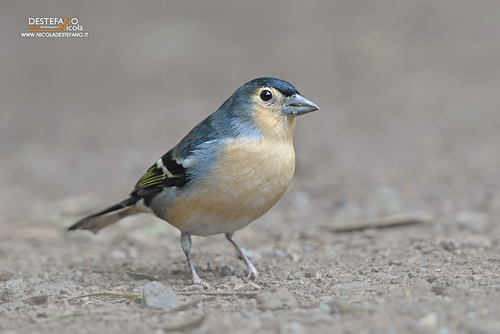
The park’s account describes a social, mainly seed-eating bird that also takes insects during breeding. If you notice a small group of birds, watch how they feed and ask staff to help identify them, rather than assuming every small bird is the same species.

Common raven

The raven appears in Garajonay’s official bird catalogue. If a large dark bird passes overhead, follow it with your eyes from a safe standing place and discuss shape and flight before trying to name it.

The birds below are documented for Garajonay as a whole, not promised at Laguna Grande on a particular day. Watch quietly from permitted paths, avoid nests and leave animals unbaited and undisturbed. The gardens at Juego de Bolas are planted interpretation areas, not evidence of wild plants at this walk.

Stories and discoveries

The forest can collect water from cloud

Rain is only part of this forest’s water story. Research in Garajonay has studied how tiny fog droplets strike vegetation and collect on it. On a misty day, watch for droplets clinging to leaves and twigs. A wet canopy does not necessarily mean it has just rained.

One green mountain, several kinds of forest

Exposure and moisture help shape different woodland communities. The park’s wetter laurel forest differs from fayal-brezal, which naturally occurs on drier southern slopes and also in some areas with a stronger history of human use. A short walk shows one piece of that larger mosaic.

The name does not promise a lake

Laguna Grande is a tree-ringed clearing whose centre can hold water after heavy rain. On a dry visit, the open space is still the place you came to see. Keep any water-filled ground as something to observe from the route, rather than a play area.

Recovery takes longer than turning green

The official Route 3 account points out woodland affected by the 2012 fire from its viewpoint. Looking across it can start a family conversation about what a forest needs beyond leaves: shelter, soil, different ages of trees and time. Stay behind any barriers protecting recovery areas.

When to visit

Spring: look along the edges

The short route is described as having pink flowers known locally as patacuervos in spring. Let children search for colour from the path without gathering flowers. Bring layers even on a bright morning, and make any extra walking depend on how the group feels.

Summer: keep the plan flexible

Shade does not remove the need for water or fire precautions. Start with the latest park advice, choose a modest walk, and use a cold picnic as the simple default. Hot, dry or windy conditions can change access; postpone if staff or emergency advice tells you to.

Autumn and winter: plan for damp and shorter days

Choose footwear with grip and keep a dry layer ready for children after the walk. Heavy rain can leave water in the clearing and make a short outing more demanding. Finish with enough daylight for the return drive and check whether roadworks affect your chosen approach.

Getting there and practical advice

Laguna Grande information point

Published hours are daily 08:30–16:30, with closures on 25 December and 1 January. The small exhibition and reception are useful for choosing a walk and checking local conditions. Email: [email protected]. Centre hours do not guarantee that every surrounding path or service is available.

Picnic, play and practical stops

The park lists parking, picnic tables, fountains, toilets, a children’s play area and a restaurant at Laguna Grande. Bring your own water and food, and check toilet access and restaurant opening before relying on them. Supervise children at the play equipment and keep picnic food away from wildlife.

Juego de Bolas visitor centre

At La Palmita, Agulo, published hours are daily 09:30–16:30, except 25 December and 1 January. It offers exhibitions about the islands and the park, gardens and the Casa de la Memoria. Call +34 922 477 222 to confirm arrangements, particularly for a group or access needs.

By car or prearranged taxi

The GM-2 is the main east–west road across the park. Follow signs for Área Recreativa de La Laguna Grande; the information centre gives its address as GM-2, km 26.5. Use the designated parking. For a taxi, arrange the pickup time and location as well as the outward journey. Juego de Bolas is a different destination in La Palmita, Agulo.

Using the island buses

GuaguaGomera serves several park-edge and park-road stops. The park points to lines 1, 6 and 8, but their published stop lists do not establish a direct stop at the Laguna Grande recreational area. Ask the operator on +34 922 141 101 about the exact stop, onward connection and return for your date. A bus passing through Garajonay is not by itself a complete transport plan for this short outing; do not improvise a roadside walk to bridge the gap.

Choose a section that fits your needs

Contact the park before travelling if a wheelchair, mobility aid or pushchair is essential. Ask specifically about the path from parking to reception, the suitable forest section, toilet access, steps or uneven surfaces and how to return without the viewpoint spur. Some adapted sections exist in the park, but the published Route 3 description is not a detailed access audit.

Ask about assisted outdoor access

Park rules permit joëlettes, single-wheel all-terrain chairs, on the trail network. Ask staff whether equipment, trained assistance and a suitable route can be arranged for your date; permission to use one does not establish that a chair or support team is available.

Sources and useful links

Wildlife you might spot

4

Each card links to a full Explore page with photos, traits, and fun facts.

Snap map for this place

Start with the big picture, then zoom in to explore individual wildlife observations around this place.

Loading map…

Good to know before you go

Check park incidents, the La Gomera weather warnings and fire restrictions on the morning of your visit. Follow barriers and staff instructions.

Wear shoes with grip. Bring drinking water, a snack, a warm layer and a waterproof; do not rely on a coastal forecast or a working fountain.

Ask for Route 3, La Laguna Grande I, by name. Several longer routes also start around Laguna Grande.

Keep children close on forest paths and at the viewpoint. Return early if rain, wind, fatigue or poor visibility changes the outing.

Plan a cold picnic. The presence of a grill does not mean lighting it is permitted that day.

Stay on authorised paths, leave plants and fallen wood in place, and watch animals without feeding or pursuing them.

If arriving without a car, arrange the final journey to Laguna Grande and your return before setting off.

Use designated parking only. For a time-sensitive ferry or flight, allow extra road-travel time and check roadworks.

Frequently asked questions

Do not expect a permanent lake. The name refers to a large clearing that can fill with water after heavy rain. Keep to the paths and follow any temporary restrictions.
The official Route 3 page presents it as an independent visitor walk and does not specify a reservation. Check current restrictions before travelling. Organised park-guided walks have a separate booking and confirmation process.
The park’s general rules allow pets on paths on a lead. The park-run guided walking service does not allow pets, so check the rules for the particular activity you choose.
No. It is in La Palmita, Agulo, about 3 km outside the national park. Allow a separate journey; it is an orientation centre, not the Laguna Grande trailhead.
Treat Alto de Garajonay as a separate walking plan, with its own route, time and weather checks. Do not follow a summit sign expecting a small extension to Route 3, and check the dated Route 17 closure in Before you set off.
The park is home to Bolle’s pigeon and the laurel pigeon, known locally as paloma turqué and paloma rabiche. They are a reason to learn about the forest, not a promised encounter on this short outing. Let the birds keep their distance.

Recent snaps at this place

View all ›

Take the discovery with you

Exploring Garajonay National Park?

Identify the wildlife you spot, learn as you go, and keep a collection of the adventure.

  1. 1Spot it
  2. 2Snap it
  3. 3Keep the discovery