Snappit logo
Snappit
Get App
Generic illustration, not a photograph of this venueIllustration
ParkIT

Gran Paradiso National Park

The park spreads across Piemonte and Valle d’Aosta, with five main visiting valleys: Cogne, Valsavarenche, Rhêmes, Orco and Soana.

About

The park spreads across Piemonte and Valle d’Aosta, with five main visiting valleys: Cogne, Valsavarenche, Rhêmes, Orco and Soana. Each offers a different day out. Choose one as your base rather than trying to cover the whole park. Neighbouring valleys can look deceptively close on a map when the road journey actually takes you around the mountains. Planning to visit? Download the Snappit app to identify the wildlife you spot in real-time.

Gran Paradiso became Italy’s first national park on 3 December 1922. Its earlier history has an unusual twist: the royal hunting reserve declared in 1856 protected a remnant ibex population even while reserving hunting for the monarchy. The old access tracks and hunting lodges are still part of the landscape you walk through. Protection later shifted towards a national conservation purpose, and ibex from this surviving Alpine population played an important role in restoring the animal elsewhere in the Alps. Walking the Orvieille mule track makes that complicated relationship between hunting, protection and research tangible. [Read the park’s history](https://www.pngp.it/visita-il-parco/storia).

What to do here

Start with a walk, binoculars and time to stop. Leave room for the pleasure of watching animals go about their day, or exploring a village after you come back down.

Seasonal info

Spring growth begins at different times on different slopes. Summer opens more high-level choices, while autumn brings shorter days, colder mornings and seasonal closures. In winter, start afresh with local snow and avalanche advice: a straightforward summer track can cross dangerous terrain when snow-covered.

Accessibility

A low-gradient valley walk is not automatically step-free. The park publishes access information for individual places, and Paradisia’s detailed guide describes slopes, gravel and steps. Use those specifics to plan around your needs rather than relying on a general ‘easy’ trail label.

Don't miss

1

Valnontey’s valley-floor walk, with a shorter turnaround whenever you choose.

2

The royal mule track above Dégioz and the pastoral basin at Orvieille.

3

Alpine wildlife watched quietly, from the trail and at a distance.

4

Paradisia’s botanical collections during its published opening season.

Walks and routes

Valnontey – Valmianaz – Pont de l’Erfaulet

Follow the park’s route 22 from Valnontey, through the valley towards Valmianaz, then onward to Pont de l’Erfaulet. The changing foreground is part of the pleasure: buildings and woodland give way to a broader view of the glacial valley. The published climb is 164 metres, from 1,666 to 1,830 metres. The published walking times are 1 hour 30 minutes outward and 3 hours for the return outing. Allow a half-day with stops, or turn back earlier. Official route.

Rated T, the park’s tourist-walking category, it follows a dirt track and trail. Ask about surface conditions if using a pushchair or mobility aid. Stay on the path beside the delicate Prà Suppiaz wetland.
Valnontey – Valmianaz – Pont de l’Erfaulet

Dégioz – Orvieille – Djouan lakes

From Dégioz, cross the Savara to Vers le Bois and take the historic mule track towards Orvieille. The park gives 2 hours to the hunting house, a useful shorter destination, and 3 hours 15 minutes to the lakes at 2,516 metres. The hike to the lakes has 976 metres of ascent and an E hiking rating. Make it a full day and leave ample time for the descent. Returning the way you came keeps the logistics simple; the alternative descent to Eaux Rousses ends somewhere different. Official route.

Expect a sustained climb on mountain paths, without step-free access.

Dégioz – Orvieille – Djouan lakes

Campiglia Soana – Pian dell’Azaria – Grange Barmaion

Leave from Campiglia Soana’s parking area on the dirt track towards Pian dell’Azaria and Grange Barmaion. Mixed woodland gives way to larch and spruce, then open alpine pasture. The summer itinerary is rated T, with 300 metres of ascent between 1,350 and 1,650 metres and a published total walking time of 2 hours 30 minutes. Allow a leisurely half-day to include the village and pauses along the way. Official summer route.

Expect unpaved surfaces and uphill sections. Groups with mixed stamina can turn around before the full destination.

Campiglia Soana – Pian dell’Azaria – Grange Barmaion

One relaxed day in the Cogne area

Choose a comfortable turnaround on the Valnontey valley walk, leaving enough energy to enjoy the return. In Paradisia’s opening season, add the garden before or after lunch. If it is closed, give that time to the village and the landscape instead. This suggested day combines separate visits.

Two days without rushing between valleys

Stay on one side of the massif. On the Aosta Valley side, pair a modest Cogne-area day with the Orvieille outing if fitness and weather suit. On the Piedmont side, choose a Soana walk and a separate Ceresole-area day. Leave Nivolet optional until access and weather are clear.

Things to try

Cogne and Valnontey: the simplest first choice

Use the Valnontey walk for a flexible outing: you can turn around at Valmianaz rather than committing to the furthest bridge. In the garden’s season, add Paradisia to learn the names of mountain plants without picking them. The cultivated displays help you recognise the plants of mountain habitats.

Valsavarenche: a day with more climbing

Choose Dégioz for the Orvieille mule track, then decide whether the lakes are within your energy and weather margin. The woodland climb and open basin make a rewarding shorter outing in their own right.

Orco Valley: Ceresole Reale and the high-road option

Start around Ceresole Reale with the ibex story at Homo et Ibex when it is open. Nivolet is a separate high-mountain excursion reached by the seasonal SP50 from this side. Check road conditions and access arrangements before driving higher; arriving by road still leaves you in exposed mountain surroundings.

Soana Valley: pasture and mountain settlements

Campiglia Soana is the starting point for Pian dell’Azaria and Grange Barmaion. This is a good choice if you would rather combine woodland, pasture and the village itself than make a high pass your main objective. The summer route includes the area dedicated to writer Mario Rigoni Stern.

Rhêmes Valley: understand the birds above you

At Chanavey, the Bentornato gipeto! visitor centre tells the bearded vulture’s story. It makes a low-effort focus for a visit, especially if identifying distant birds is new to you. Check the seasonal calendar before travelling.

A visitor centre can rescue a poor-weather day

Homo et Ibex at Ceresole Reale explores people’s relationship with the ibex; Bentornato gipeto! at Chanavey focuses on the bearded vulture. Confirm opening before travelling. At Homo et Ibex, use the signed approach and the Sporting Club parking indicated by the park, rather than the private Grand Hotel parking. As checked on 19 October 2026, Fondation Grand Paradis lists the Dégioz visitor centre as closed. Check the Aosta-side calendar.

Wildlife and habitats

Alpine ibex

The park’s emblem lives on high grassland and rocky slopes. Mature males carry especially heavy horns; females have much smaller horns. The park describes a continuous wild population across its valleys. Scan from a safe path, then stay still and let the animal choose its distance.

Chamois

Look for a compact mountain ungulate with slender, hooked horns rather than an ibex’s heavier headgear. Chamois use steep, rocky and grassy terrain on both sides of the park. Binoculars make it possible to appreciate their movement without following them across the hillside.

Alpine marmot

These burrowing mammals belong to alpine and subalpine grassland. They spend winter in hibernation, so a summer meadow visit offers a very different prospect from a snowy outing. Watch from the path and keep clear of burrows; tourist familiarity is no reason to feed or approach them.

Golden eagle

The park records breeding golden eagles in all its valleys. Watch the open sky and ridgelines, without searching for nests. A distant large bird needs careful identification: bearded vultures also occur here, so size alone is not enough to name what you have seen.

European larch

The larch is a helpful tree to get to know on lower and middle slopes. Unlike an evergreen spruce, it sheds its needles in autumn. Its seasonal change gives woodland walks a different character from the rocky country above the tree line.

Let wildlife get on with its day

Keep your distance, stay quiet and never surround an animal for a photograph. Do not feed foxes, marmots or any other wildlife. Respect signed protection zones and avoid seeking out nests. Leave flowers, insects and stones where they belong. The park’s visitor rules explain how small choices protect habitats and animals.

Stories and discoveries

Read the landscape from the valley upwards

Ancient ice and running water carved the valleys. Today, larch and other conifers give way to alpine grassland, then rock and ice as you climb. That succession explains why a short valley walk and a high-lake hike feel like different worlds. The wetlands are part of the story too: admire them from established paths rather than treating every green patch as a picnic lawn.

A changing high-mountain landscape

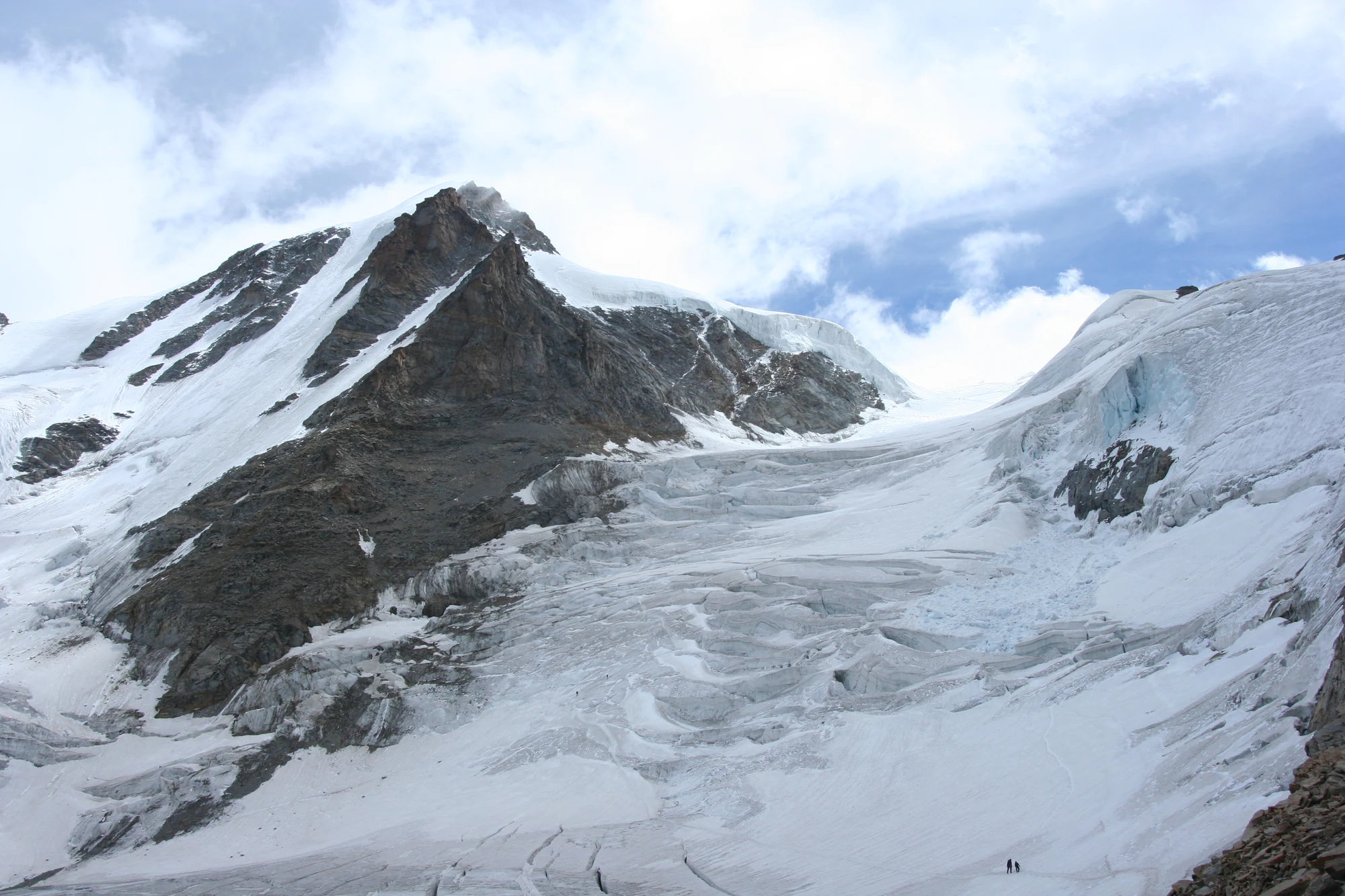
This August 2006 photograph gives a historical view of the mountain’s rock and ice. Glaciers have continued changing: in a separate study at Grand Etrèt, the park reported about three metres of average ice-thickness loss during summer 2026. The photograph does not identify that monitoring site or show current conditions. Read the monitoring report.

A rocky summit rises above fractured glacier ice and snow, with tiny climbers near the lower edge, in a photograph from 2006.

Gran Paradiso’s rock and ice, photographed on 11 August 2006. This historical image does not show present-day glacier conditions or an ordinary walking route.

Photo: “Gran Paradiso 01.jpg” by Paweł Kuźniar (Jojo_1, Jojo), [Wikimedia Commons](https://commons.wikimedia.org/wiki/File:Gran_Paradiso_01.jpg), [CC BY-SA 3.0](https://creativecommons.org/licenses/by-sa/3.0/). Unmodified offered original. No endorsement implied. · Creative Commons

When to visit

Before you set out

Use the forecast for your chosen side and elevation, not just the nearest city. Check Valle d’Aosta’s official weather service or Arpa Piemonte, plus snow and avalanche information when relevant. After heavy rain or snow, ask locally about damaged paths and crossings. Keep a shorter option in mind before you leave the valley.

Getting there and practical advice

Paradisia: learn the plants at a manageable scale

Paradisia, in Valnontey, brings together alpine plants, recreated habitats, rocks and lichens. We suggest allowing at least an hour if you enjoy looking closely. Its published 2026 opening ran from 30 May to 13 September, and the operator now lists a seasonal closure. For a later trip, check Paradisia’s calendar and admission details rather than carrying last summer’s hours forward.

Food, toilets and overnight plans

Build your day around confirmed services in the valley settlements. Visitor centres are seasonal, and a mountain-hut symbol is not a promise of meals or a bed. Carry what you need for the walk and book any overnight stay directly. At Valnontey, the garden’s access guide documents toilets at the main parking area; confirm availability if they are essential to your plans.

Choose the side before planning the journey

For the Aosta Valley side, the park directs drivers from the A5’s Aosta Ovest exit towards Cogne, Valsavarenche or Rhêmes. From Turin, the Orco approach follows the SP460; the Soana branch turns off at Pont Canavese. Use the park’s arrival page for operator links and check disruptions before departure. These are approaches to different valleys, not a drive-through tour of the protected area.

Visiting by public transport

The park points to SVAP for Cogne, Arriva for Valsavarenche and Rhêmes, and GTT for the Piedmont valleys. SVAP also lists Cogne’s local service to Valnontey. Plan the final connection and return together, with the correct weekday, holiday and seasonal timetable. Do not assume that a bus reaching a valley town continues to the start of your chosen walk.

Nivolet needs its own access check

In the published 2026 summer scheme, access beyond Lago Serrù on designated dates was capped at 350 motor vehicles per day, including motorcycles, with an online NivoletCard costing €10 plus payment-provider fees. Free shuttles were an alternative, with booking required for departures from Locana and other departures subject to capacity. These are dated seasonal arrangements, not a year-round promise. The SP50 closes in winter. Check the current Nivolet information and booking rules before committing to the trip.

Paradisia has specific obstacles worth checking

The garden’s access guide describes roughly 500 metres from Valnontey’s parking area, including an approach option with a 12% slope. It suggests contacting staff in advance about permission to drive closer if needed. Inside, expect gravel, uneven ground, short slopes and steps. Two reserved parking spaces are documented in the main car park. Discuss the route and any assistance you need with staff before arriving. Read the detailed access guide.

Visitor information

Travel notice checked 19 October 2026

SVAP has announced diversions on the Cogne–Aosta line because of an SR47 closure at Fournier in Aymavilles, from 08:30 on 20 October to 07:00 on 22 October 2026, local time. Stops and routes vary by departure. If travelling in that window, read the specific SVAP notice before choosing a boarding stop.

Sources and useful links

Wildlife you might spot

5

Each card links to a full Explore page with photos, traits, and fun facts.

Snap map for this place

Start with the big picture, then zoom in to explore individual wildlife observations around this place.

Loading map…

Good to know before you go

Carry water, food, warm layers, rain protection and a map you can use offline.

Bring binoculars or a long lens; never use food to bring wildlife closer.

Keep to established paths, especially beside wetlands and through alpine grassland.

Check your return bus before setting out, including the connection from the trailhead.

Take every scrap of litter back with you, including food waste.

Check signs at the start of the walk and respect barriers even if an online route remains listed.

Frequently asked questions

Cogne and Valnontey make a practical starting point if you want a valley walk and, in season, the botanical garden. Choose Valsavarenche for the longer Orvieille–Djouan outing, or Campiglia Soana for woods and alpine pasture. Decide from the walk you want to do before choosing accommodation.
Absolutely. The walks described here are separate from a summit ascent. Reaching the summit involves mountaineering terrain, including glacier hazards, and needs specialist planning, suitable skills and equipment, and advice from an alpine guide. A summer photograph does not tell you what conditions will be like on your date.
No. Ibex live throughout the park, but their position and visibility vary. Watch suitable open slopes without leaving the path to approach them. If an animal stops feeding or moves away because of you, give it more space. The successful encounter is the one that leaves its behaviour unchanged.
Only within the specifically permitted areas and routes, always on a lead. The park allows designated valley-floor areas year-round and selected additional trails from 15 July to 15 September. Check the [official dog-access maps](https://www.pngp.it/introduzione-cani) for your exact route; a lead alone does not grant access everywhere.
Check parking, visitor attractions, guided activities and accommodation separately. Nivolet has its own seasonal vehicle-access scheme. If you want a guided outing or a staffed-hut stay, arrange it with the provider and confirm dates rather than assuming availability from a route listing.
Use authorised campsites rather than pitching beside a lake or on a meadow. Recreational drone flying is not permitted in the park. The [park’s drone rules](https://www.pngp.it/sorvolo-drone) distinguish authorised professional purposes from hobby use; owning a small drone does not create an exemption.

Recent snaps at this place

Recent snaps will appear here as new observations are added.

View all ›

Take the discovery with you

Exploring Gran Paradiso National Park?

Identify the wildlife you spot, learn as you go, and keep a collection of the adventure.

  1. 1Spot it
  2. 2Snap it
  3. 3Keep the discovery