Snappit logo
Snappit
Get App
Generic illustration, not a photograph of this venueIllustration
ParkOccitanie, FR

Pyrénées Catalanes Regional Nature Park

This park has room for both warm valley habitats and mountain country approaching 3,000 metres.

About

This park has room for both warm valley habitats and mountain country approaching 3,000 metres. Its roughly 139,000 hectares span the Capcir, Cerdagne and Conflent in the Pyrénées-Orientales, meeting Spain and Andorra along the frontier ridges. Villages, grazing land and cultivated ground are part of the landscape: this is an inhabited regional nature park, with 66 communes, rather than a single fenced attraction.

The Têt valley is a useful thread to follow. Above it, Cerdagne and Capcir open into broad high plains; irrigation channels, hedges and stone boundaries show how people have worked this terrain. Cerdagne drains towards the Sègre, while Capcir feeds the Aude. A journey between these areas changes your view of the mountains, from a river corridor to open agricultural land and then to wooded slopes and rocky heights.

Forest covers more than half the park. The contrast between Mediterranean holm oak and high-altitude mountain pine helps explain why one season cannot describe every visit. Mountain pines can grow in strikingly contorted forms where wind and snow shape them. The park also explains that some were planted to stabilise slopes: a wild-looking forest may carry a history of human intervention.

La Bastide makes a particularly good first stop because its history is visible on a small scale. Medieval towers stand beside a site that later served farming and industry, while the present visitor centre shares its buildings with a monitored bat colony. You can learn about the larger park without committing to an exposed mountain walk. Turn your visit into a safari! Use the Snappit app to scan and log wildlife sightings here.

La Bastide’s two surviving towers recall a fourteenth-century castle of the viscounts of Évol. A settlement grew below its walls, and the site later became agricultural land. Its next transformation was industrial: from 1958 to 1993, the former farm and surrounding ground were used in processing fluorite ore brought from nearby Escaro. The Maison du Parc project reclaimed this neglected site, combining a public welcome with environmental restoration. The result is a useful place to think about conservation in a lived-in landscape, where protecting habitat includes adapting buildings and repairing land as well as looking after distant mountains.

What to do here

Make the Sentier Biodiversité your starting point, using its habitat displays to connect meadow, woodland, stone and river. Add the short historical interpretation around La Bastide if everyone still has energy. During reception hours, ask which nearby outing suits your group and the conditions. For a second visit, consider the Bouillouses lake country as its own mountain excursion, with transport, weather and walking time planned separately.

Seasonal info

The lower-valley visit and the high lakes have very different conditions. Snow can restrict mountain roads and paths when Olette is perfectly walkable. Autumn also changes the bat display: the animals leave their summer quarters for other roosts, so an empty live image can be entirely normal.

Accessibility

The park explicitly states that the biodiversity trail is not accessible to people with reduced mobility. Its easy walking grade is not a wheelchair-accessibility claim. Ask reception about the building and any suitable outdoor sections before travelling with specific access needs.

Don't miss

1

A compact biodiversity trail beside the Têt at La Bastide

2

Medieval towers within a former agricultural and industrial site

3

A seasonal camera view into the Maison du Parc’s bat roost

4

The distinct high-mountain landscapes of the Bouillouses sector

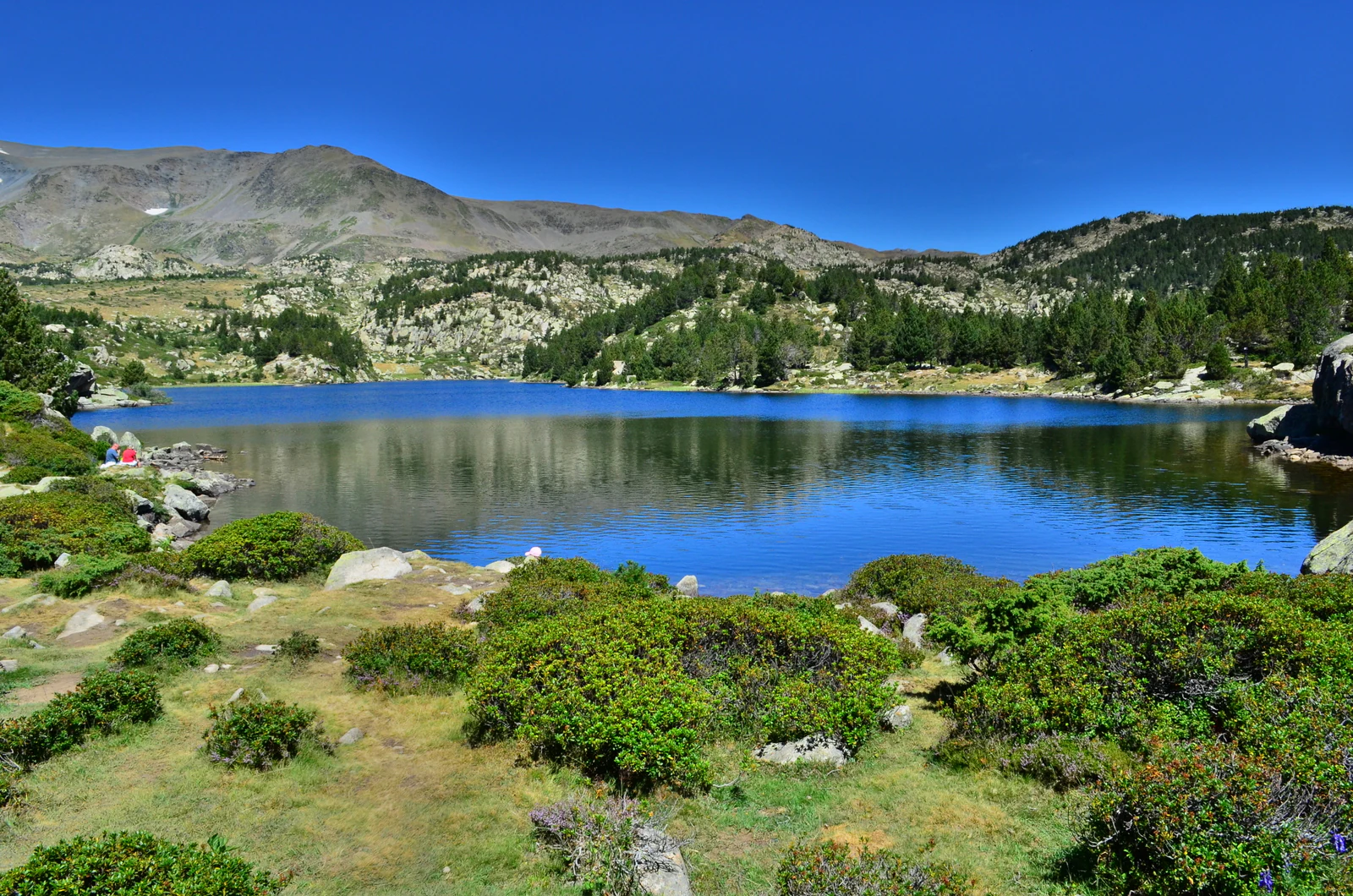
A blue mountain lake lies below a rocky ridge, bordered by low shrubs, pale rocks and conifers, with a few small visitors near the shore.

A lake in the Bouillouses area, photographed in August 2012. This wider-park landscape is separate from the Maison du Parc trail in Olette; the individual lake is not identified.

“Lacs des Bouillouses (66)” — Damien RAMOS, CC BY-SA 2.0. Source: https://www.flickr.com/photos/dam-r/7791289364/. License: https://creativecommons.org/licenses/by-sa/2.0/. Original photograph unchanged. · Creative Commons

Walks and routes

Sentier Biodiversité de la Maison du Parc

Start at Maison du Parc, La Bastide, 66360 Olette, and follow the on-site interpretation. Opened in March 2024, this is the short introductory walk: the park publishes a maximum of one hour. Give yourself time to stop at the displays and try the activities along the way.

The route is described as having no walking difficulty, but is expressly unsuitable for reduced-mobility access. If bringing a pushchair, ask about the surface and steps before choosing your equipment.


Sentier Biodiversité de la Maison du Parc

Boucle de la Pradella: a separate mountain option

For a shorter circuit in the Bouillouses area, the Department lists the Boucle de la Pradella at 1 hour 15 minutes. Obtain the current route sheet and confirm its starting point before leaving the information area near the barrage. Add the journey to the site and generous stopping time. This is a mountain path, not an extension of the Olette trail; do not confuse it with the longer Carlit lake circuits or a summit ascent.

Contact the site before considering this circuit with mobility needs. Assess mountain footing, altitude and the entire return journey for your group; a short published time does not make it suitable for every child.

Boucle de la Pradella: a separate mountain option

A relaxed first visit: allow 1–2 hours

If reception is open, begin with a quick check of the trail conditions and the bat display. Spend most of your visit outside, giving children time to try the interpretation stops. Finish with the towers and historical displays, then a picnic if that suits the day.

With another day available

Choose one landscape contrast rather than stacking several long drives and walks together. In settled, snow-free weather, the Bouillouses sector pairs lakes, pine woodland and open grazing ground. If mountain conditions are poor, keep the day in the valley and use reception advice to choose a suitable local visit. A mountain leader can help match an outing to the group’s experience.

Things to try

Try the trail’s observation tools

Use the tree-ring table and listening cones, then look for the animal silhouettes along the route. Let each person choose a different habitat to describe. The panels make useful prompts, but you can also sketch the difference between open meadow and shaded woodland without collecting anything.

Read a landscape from the train

A Train Jaune journey can become part of a longer park visit. Watch how the Têt corridor, settlements and wooded slopes relate to one another, and compare them with the open country farther uphill. Choose a manageable rail segment with a confirmed return rather than trying to see the entire line in one rushed day.

Keep a short indoor option

During opening hours, the Maison’s reception and shop provide a brief sheltered stop to browse local books and plan the next outing. The bat screen is a seasonal possibility, not an all-year indoor attraction. If heavy rain or storms make the riverside unsuitable, leave the trail for another day instead of trying to complete every station.

Wildlife and habitats

Greater horseshoe bat

The Maison du Parc shelters a summer colony of this insect-eating bat. Its horseshoe-shaped nose structure helps direct the sounds used for navigation. The infrared camera offers a way to watch without entering the roost; ask whether the feed is running and the bats are present. Never shine a light into an opening or try to get closer to the colony.

Eurasian otter

Otters are recorded in the park’s Têt, Sègre and Aude rivers. Their dense fur helps limit heat loss in water, and fish form a major part of their diet. At La Bastide, use the riverside interpretation to understand the habitat; an actual encounter is a bonus, not the measure of a successful visit. Stay on the path rather than searching bank vegetation.

Western capercaillie

This large forest bird belongs to the park’s mountain habitats, particularly its mountain-pine woods. Males have dark plumage and red markings above the eyes; females are mottled brown. Disturbance is a serious concern in breeding and winter periods. Enjoy learning about its habitat without seeking display sites, using playback or leaving marked routes to find it.

Stories and discoveries

A meadow needs management

At La Bastide, late mowing and retained patches of taller vegetation are deliberate choices that give insects and their food plants time to complete their life cycles. The apparently untidy margins are part of the lesson: maintaining open habitat involves choices about when to intervene as well as when to leave it alone.

When to visit

Spring and early summer

May and June bring interest to La Bastide’s meadow. Keep plans flexible after rain, and remember that the higher country may still have snow. If bats are the main interest, ask when the summer roost and viewing screen are active rather than assuming a calendar date guarantees their return.

Summer in the mountains

Allow time for regulated access and choose an outing that leaves a margin for the return. Carry a warm layer and rain protection as well as sun protection. Forest restrictions can change from day to day: check the prefecture’s linked fire-risk information and follow closures on the ground.

Autumn and winter

A valley visit can still work well on a suitable day, but the upper lakes become a different proposition when snow arrives. Do not treat a summer walking time as a winter estimate. The published 2026 Bouillouses information-desk season ended on 11 October; confirm staffed services for any later trip.

Getting there and practical advice

Reception, picnic and interpretation

The Maison du Parc’s published reception hours are Monday–Friday, 10:00–12:00 and 14:00–16:00, excluding public holidays and 25 December–1 January inclusive. Entry is free. There is a shop, local information, outdoor photography displays and some picnic tables. Summer guided visits may be arranged by reservation. Contact 04 68 04 97 60 before making a special trip for staff help or a group visit.

Getting to La Bastide

Use the destination Maison du Parc, La Bastide, 66360 Olette. For public transport, the park lists regional trains via Villefranche-de-Conflent and the Train Jaune, plus liO bus line 260 along the valley. Olette / Canaveilles-les-Bains is a station in the village. Ask the Maison to confirm the appropriate stop and pedestrian approach for your visit; the site is not simply the station forecourt. Check the return timetable before setting out, and do not improvise a walk along the main road.

Getting to the Bouillouses

The approach requires its own plan. Summer road restrictions are paired with shuttles from Pla de Barrès, while winter closure begins at Pla des Avellans. The Department’s 2026 notice also describes replacement works on the Calme Nord chairlift and extra walking on that approach. Verify the season’s arrangements, fares and final return service before travelling; a planned 2027 reopening is not confirmation that a lift is operating.

Useful support, with route limits

Easy-to-understand and Braille trail booklets are available at reception. Arrange to collect them during staffed hours. For the Bouillouses, the Department describes adapted toilets and special road-access arrangements for wheelchair users because its shuttle buses are not wheelchair-equipped. Contact the site about the current procedure; these facilities do not make the lake circuits accessible.

Sources and useful links

Wildlife you might spot

3

Each card links to a full Explore page with photos, traits, and fun facts.

Snap map for this place

Start with the big picture, then zoom in to explore individual wildlife observations around this place.

Loading map…

Good to know before you go

Leave plants and fruit unpicked at La Bastide. The interpretation warns of heavy metals remaining in the soil from the site’s industrial past.

Download the trail’s English or Catalan panel translations before your visit if you would find them useful.

Bring water, a sun hat and footwear with grip; keep children close at the river and old stonework.

Check the day’s forest-access restrictions before a summer outing. Carry a cold picnic and leave fires and barbecues out of the plan.

In pastoral areas, give livestock space and follow local instructions around flock-guardian dogs. Check each reserve’s dog rules before setting out.

Keep an alternative at lower altitude when planning the lakes, and turn back if weather or the group’s energy makes the route unsuitable.

Frequently asked questions

No. It is an information and interpretation base in Olette. The wider park includes villages, roads, forests and mountain sectors reached independently. Visiting La Bastide does not require taking a mountain hike afterwards.
The outdoor site is advertised as freely accessible every day. Staff assistance, booklets and the indoor bat-camera screen depend on reception opening. Respect any temporary barriers or local closure notices.
Do not build swimming into either suggested outing. The park warns that reservoir lakes are closed to swimming and directs visitors to local authorities for rules elsewhere. An inviting photograph does not establish permission or safe water conditions.
The current park comprises 66 communes, with its charter running to 2029. An expansion to 85 communes is being studied for the next charter, but those proposed additions are not yet part of the park. Use the current official park map when choosing further outings.

Recent snaps at this place

Recent snaps will appear here as new observations are added.

View all ›

Take the discovery with you

Exploring Pyrénées Catalanes Regional Nature Park?

Identify the wildlife you spot, learn as you go, and keep a collection of the adventure.

  1. 1Spot it
  2. 2Snap it
  3. 3Keep the discovery