Snappit logo
Snappit
Get App
Generic illustration, not a photograph of this venueIllustration
ParkBretagne, FR

Sept-Îles National Nature Reserve

The white gatherings on Rouzic are the best-known face of Sept-Îles, but the protected place is much larger than its nesting islands.

About

The white gatherings on Rouzic are the best-known face of Sept-Îles, but the protected place is much larger than its nesting islands. Since the 2023 extension, the reserve covers about 19,700 hectares, including Tomé, the Triagoz plateau and a broad sweep of sea. Beneath the surface, kelp forests and rocky habitats help explain why protecting the birds also means protecting their feeding grounds.

For a first family visit, make one clear choice: go out on a passenger boat if everyone is comfortable with an open-water outing, or explore the interpretation centre ashore. The boat offers changing viewpoints and the scale of the archipelago; the museum lets you look closely, listen and ask questions without balancing on a moving deck. Combining them can work, but they have different departure points and need separate travel time.

This is a wildlife reserve rather than an island-hopping destination. A colony seen at a respectful distance is the experience. The captain’s route, the weather and the season matter more than collecting a list of islands or securing a particular photograph. Wondering what that bird or insect is? Find out on your visit using the Snappit nature app.

Protection here began with opposition to puffin hunting in 1912, the year the organisation that became the LPO was founded. National nature-reserve status followed in 1976. The 2023 enlargement changed the scale of the project from a small island-and-shore reserve to a much larger marine protected area. That history is useful to carry aboard: the empty islands are not an oversight in the visitor offer, but part of what makes their wildlife possible.

What to do here

Choose a no-landing passenger excursion, with seabird commentary and views of the Côte de Granit Rose. Give children a simple job: listen for the island names, then choose one bird to watch for a whole minute. Ashore, the Maison de la Réserve on Île-Grande brings the marine world closer through films, interactive displays and a reconstructed cliff scene.

Seasonal info

April to September is the operator’s usual main sailing season; October departures depend on the sea forecast. The live notice checked on 18 October 2026 says the gannets have departed and autumn trips focus more on resident wildlife and heritage. Winter is not a substitute for a breeding-season colony visit.

Accessibility

Trestraou is the operator’s preferred boarding point for limited mobility; manual-wheelchair boarding must be arranged by telephone, and electric wheelchairs are not accepted. The separate Île-Grande museum describes adapted facilities, but confirm opening and equipment before travelling.

Don't miss

1

Rouzic’s seabird colony, viewed from the permitted boat route

2

The Côte de Granit Rose seen from the sea

3

Grey seals and the wider marine ecosystem

4

Interactive reserve interpretation at the mainland-connected Île-Grande gateway

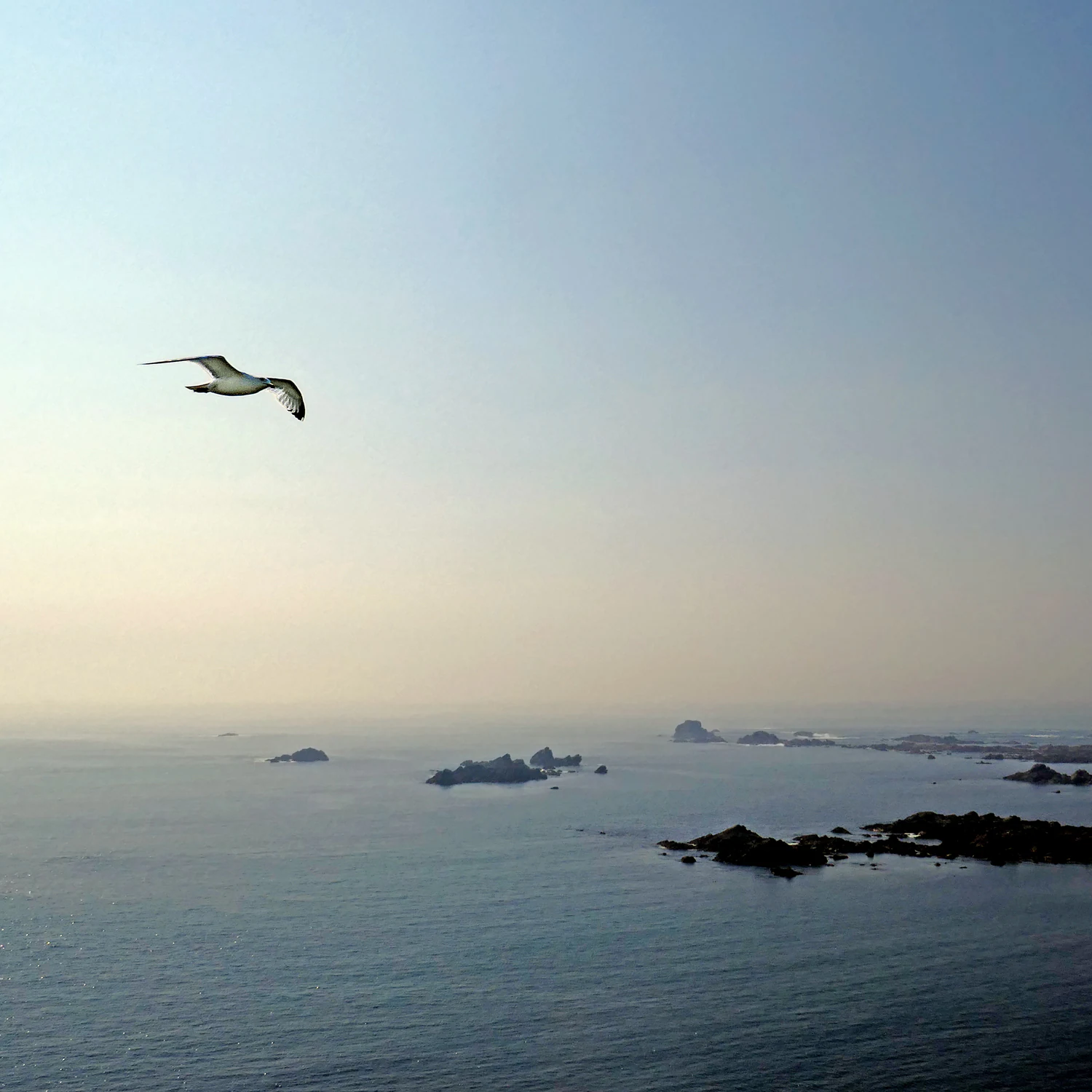
A gull flies across a pale blue sky above hazy water and scattered low rocky islets.

A view from Île aux Moines across the Sept-Îles archipelago, photographed on 7 May 2018. This historic view does not indicate that landing excursions are currently operating.

“Archipel des Sept-Îles, Côtes-d'Armor” — Pom', CC BY-SA 2.0. Source: https://www.flickr.com/photos/pom-angers/28255522917/. License: https://creativecommons.org/licenses/by-sa/2.0/. Original photograph unchanged. · Creative Commons

Walks and routes

The first-choice sea trip: Trestraou without a landing

Book the 1-hour-45-minute discovery sailing with a Trestraou departure. The advertised route takes in Rouzic, Malban and Bono before returning towards the pink-granite coast. It is a narrated excursion, not a fixed walking trail or a ferry to explore independently. Choose a comfortable viewing position and let the crew direct your attention; the view changes as the boat moves.

For wheelchair or walking-access needs, telephone Armor Navigation on 02 96 91 10 00 before selecting a departure. Boarding depends on the ramp and sea conditions, not simply on whether the boat has space.


The first-choice sea trip: Trestraou without a landing

Ashore: the Maison de la Réserve on Île-Grande

At the Station LPO in Pleumeur-Bodou, use the cliff diorama to place birds and seals in their habitats, then explore the interactive marine displays. The Rouzic colony camera is a breeding-season feature, not a promise of live birds all year. Leave time for children to return to the display that caught their attention. This is an external interpretation gateway, outside the legal reserve.

The published access description includes a wheelchair-usable path from the visitor car park, about 150 metres away, adapted toilets and a lift to the upstairs projection room. Confirm current arrangements following building works.

Ashore: the Maison de la Réserve on Île-Grande

A manageable family half-day

Have a relaxed meal or snack before boarding, then reach the departure area with time to settle. Take the no-landing sailing and leave the rest of the afternoon flexible. Children who have concentrated on moving water for nearly two hours may enjoy simply talking through what they noticed. The three-hour allowance includes arrival and breathing room.

Ashore first, sea another day

If you have several days nearby, visit the museum when opening is confirmed and save the sailing for a suitable forecast. Let each person choose one animal to learn about indoors and look for later from the boat. This separates the two gateways sensibly and avoids turning a weather-dependent excursion into a rushed transfer.

Things to try

Listen to the colony’s story

On summer dates, an LPO-guided boat outing adds a naturalist’s interpretation to the crossing. These are reserved departures from Trestraou, not from the Station LPO. Check the current programme for duration and booking; the 2026 brochure distinguishes early- and later-July timings.

Read the coast from the water

On the return leg, put the binoculars down for a while and look at the rock shapes along the Côte de Granit Rose. This change of scale gives a family trip a second subject after the birds, particularly when younger children have had enough of searching the water.

Use the museum as a question stop

Pick a question before entering: how does a seabird find food, or why do seals need undisturbed shore? The combination of films, reconstructed habitat and interactive displays gives different ages several ways into the same subject. It also makes a worthwhile standalone visit when the sea trip is unsuitable.

Choose shelter, not a more exposed viewpoint

The museum is the useful indoor alternative once opening is confirmed. Castel Erek, around the Station LPO, offers coastal views and traces of former granite quarrying in suitable conditions, but it is outdoors. Skip exposed rock edges and coastal wandering when wind, spray or footing make them uncomfortable; a cancelled sailing does not need replacing with another weather-exposed activity.

Wildlife and habitats

Northern gannet

Rouzic is the key name to remember. Its breeding colony gives the boat commentary a clear focus: where birds gather, how they build nests and where they go to feed. Look for white adults with black wingtips; later-season departures may find the colony empty.

Atlantic puffin

Puffins nest in burrows and spend much of the year at sea. Their bright breeding-season bill is memorable, but a distant bird may be harder to identify than the pictures suggest. The LPO highlights visits before mid-July for this species; ask the guide to help you pick one out on the water.

Grey seal

The reserve is also a place where grey seals rest and breed. Watch from the boat when the crew points one out, and keep the experience at the animal’s chosen distance. A shape on a rock or a head at the surface can be a satisfying sight without a close approach.

Razorbill

A razorbill’s thick, sideways-flattened bill is the feature behind its English name. The species belongs to the reserve’s breeding seabird community and shares the early-summer viewing window highlighted by the LPO. Watch for its outline on the water, then use the guide’s explanation to compare it with a guillemot.

Common guillemot

The common guillemot is a powerful diving bird, using its short wings to propel itself underwater. Its dark upperparts are more brown than the stark black-and-white impression suggests. At Sept-Îles it is a documented breeder; watching where a bird disappears and resurfaces can be more revealing than a quick photograph.

Stories and discoveries

Protection extends below the surface

The enlargement protects marine habitats as well as nesting sites. Kelp forests, rocky plateaux and gorgonian habitats feature in the decree’s explanation. From a passenger boat most of this world remains unseen, which is a useful reminder that the reserve is more than the birds visible above it.

Sea litter can reach a nest

The LPO describes gannets bringing plastic and fishing material into their nests along with natural nesting material. That makes keeping a snack wrapper aboard a very local conservation action, not just a general request to keep the coast tidy.

When to visit

Spring to early summer

Build a bird-focused visit around available sailings and ask which breeders are currently present. For puffins, razorbills and guillemots, earlier in the season is a more purposeful choice than an unspecified summer holiday. Keep an alternative day available if you can.

July and August

The LPO publishes a summer programme of guided excursions and activities. Book a named event rather than assuming every commercial departure carries an LPO guide. Around mid-July, the selection of breeding auks to look for changes; the late-summer outing has its own interest.

Autumn and winter

Look for a different experience: coastal light, island heritage and any resident wildlife the crew can find. October sailings are conditional, and winter museum openings follow a limited calendar. Do not promise children a busy gannet colony using a summer photograph as the model.

Getting there and practical advice

Tickets and a realistic budget

The 1-hour-45-minute trip listed €22 for passengers over 12, €16 for ages 3–12 and free travel for under-threes when checked on 18 October 2026. The museum’s 2026 material lists €4 adult admission and €3 reduced admission. Recheck eligibility and totals when booking; guided LPO departures have their own tariff.

Do the practical stops before sailing

Plan food, drinks and toilet needs before joining the boarding queue, and ask about onboard facilities if they matter to your family. Do not count on an island café or a shore toilet stop. The currently suspended Île aux Moines outing describes an island without shops, benches or toilets.

Boat departure: Trestraou, Perros-Guirec

Use the gare maritime at Plage de Trestraou. Arrive 30 minutes before the departure shown on the ticket, with additional time to find parking. There is no dedicated passenger car park: spaces are shared with other beach visitors. The summer beach shuttle is seasonal, so check that it operates on your date.

Two gateways need two travel plans

The museum is at the Station LPO on Île-Grande, in Pleumeur-Bodou. It is a separate destination from the Perros-Guirec terminal. For a car-free visit, consult the current TILT network timetable and check both the outward connection and the last practical return before buying a sailing; services change seasonally.

A boat without an island stop

Manual-wheelchair users should agree a suitable Trestraou departure directly with the operator. Strong swell at the ramp can still change the arrangement. Do not select a landing trip on the assumption that you can remain aboard: the operator says passengers cannot stay on the boat during the Île aux Moines stop.

The museum’s published access features

The LPO describes Tourisme & Handicap recognition for motor, hearing and cognitive disabilities. Its published facilities include reserved parking spaces, a hearing loop, subtitled films and tactile interpretation. These details predate the recent building works, so ask about the equipment and assistance you actually need rather than relying on the label alone.

Space for wildlife

A reinforced protection zone around Rouzic is closed to all activity from 1 April to 31 August. Passenger trips must respect it. Drones, disturbance, taking wildlife or plants, and leaving litter are prohibited under the reserve rules; landing dogs, camping and lighting fires are also prohibited. On Île aux Moines, any permitted walk stays on marked paths.

Sources and useful links

Wildlife you might spot

5

Each card links to a full Explore page with photos, traits, and fun facts.

Snap map for this place

Start with the big picture, then zoom in to explore individual wildlife observations around this place.

Loading map…

Good to know before you go

Bring a windproof layer even on a warm beach day, plus sun protection and binoculars if you have them.

Choose the shortest suitable sailing if anyone is unsure about spending time at sea.

Put the exact departure point from your ticket into your travel plan; the museum is not the boat terminal.

Check the operator’s daily notice before leaving your accommodation.

Keep snacks, hats and loose packaging secure so nothing blows into the sea.

Frequently asked questions

No. Île aux Moines is the regular public walking-visit island, with access confined to designated paths. Other landings are tightly restricted; the limited seasonal Bono beach exception is not an invitation to explore that island. Take a passenger excursion rather than planning your own landings.
Armor Navigation’s 2-hour-30-minute excursion with a 40-minute stop was advertised as suspended when checked on 18 October 2026, because of interventions on the island. Do not build a visit around it unless the operator explicitly confirms that the service has resumed.
No. Both are part of the reserve’s wildlife, but sea conditions, season and the animals’ movements determine what a passenger sees. Treat a good explanation and the marine landscape as part of the outing, even if the hoped-for animal stays out of view.
The rescue centre is not open for visits. The museum interprets the reserve and may show video from the care facilities. Please do not arrive expecting to meet or handle rescued animals.
Keep children and pets away and do not touch it. Ask the LPO or the Office français de la biodiversité for instructions before intervening. Do not carry it into the visitor centre or onto a boat without guidance.

Recent snaps at this place

Recent snaps will appear here as new observations are added.

View all ›

Take the discovery with you

Exploring Sept-Îles National Nature Reserve?

Identify the wildlife you spot, learn as you go, and keep a collection of the adventure.

  1. 1Spot it
  2. 2Snap it
  3. 3Keep the discovery