Snappit logo
Snappit
Get App
Generic illustration, not a photograph of this venueIllustration
ParkCastilla y León, Spain

Cañón del Río Lobos Natural Park

The pleasure of Río Lobos is in the change of scale.

About

The pleasure of Río Lobos is in the change of scale. You can spend a minute looking up at a cliff, then another noticing a leaf floating on a quiet pool. The river and the limestone have shaped a long, winding canyon shared by Soria and Burgos, with woodland on the surrounding high ground and sheltered river habitats below.

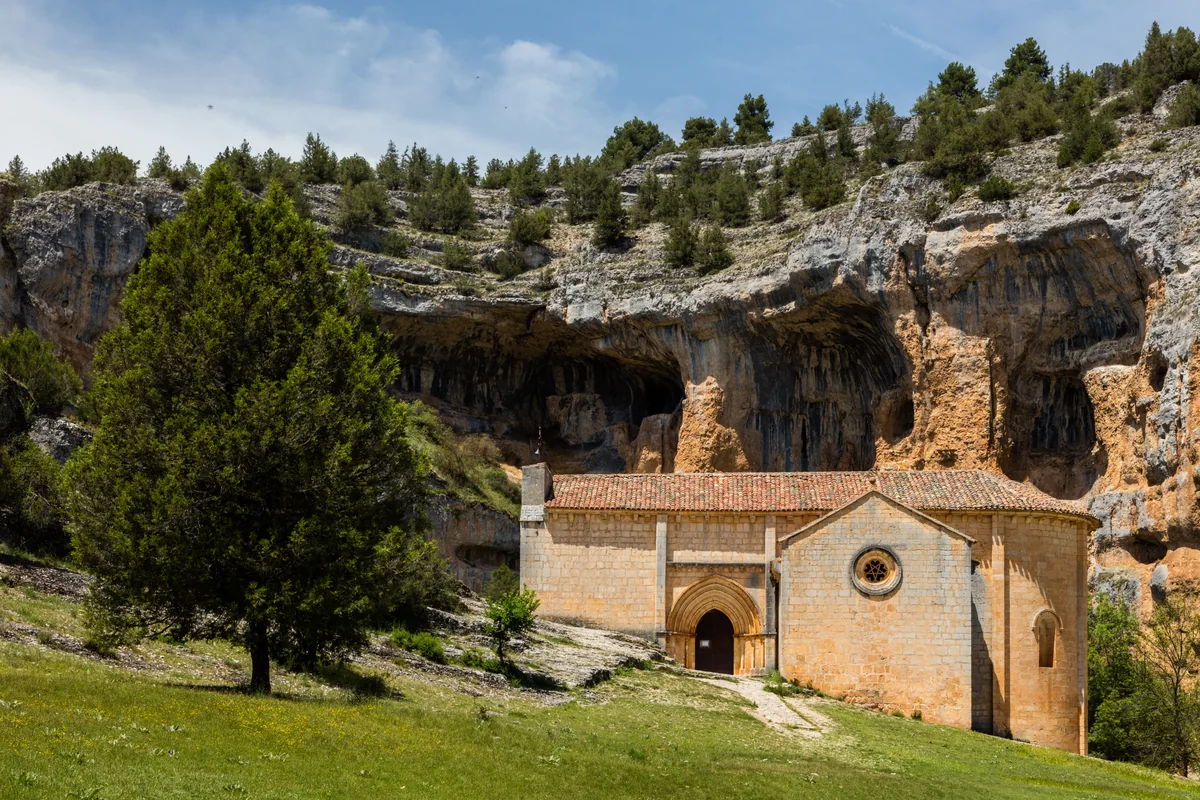
For a first visit, keep to the Ucero end. Start with practical advice at the Casa del Parque, then use the authorised lower-canyon parking arrangement for that day. If vehicles can reach Valdecea and the path is safe, the approach to the hermitage of San Bartolomé makes a satisfying short out-and-back. Stop at the open area around the building, look at its carved stonework and the surrounding rock, and return without turning the outing into a full-canyon expedition.

Leave space for observation. Griffon vultures are part of the park’s wild birdlife, while the contrast between evergreen woodland and the river’s vegetation makes even a quiet day worthwhile. Binoculars are more useful than chasing a closer photograph. Watch from the path and keep away from nesting ledges, caves and secluded wildlife refuges.

The park also has a human story: grazing, woodland work, water-powered industry and a medieval hermitage all belong here. The visitor centre connects those themes. La Galiana offers a separate view from above, and the longer Gullurías circuit suits a more ambitious walking day. You do not need to fit all three into one visit. Be ready to snap and learn! Get the Snappit app to identify any nature species you find here.

The canyon was declared a natural park in 1985. Its protection covers much more than the familiar view at San Bartolomé: the surrounding woodland, high ground and river habitats belong to the same landscape. San Bartolomé combines Romanesque and early Gothic features. Its association with the Knights Templar is part of the place’s historical tradition, but the precise identification with the lost monastery of San Juan de Otero is treated differently by different sources. Enjoy the building without needing every legend to be established fact. Look beyond the hermitage to understand local life. Livestock routes, resin collection and woodland use have left traces across the park. At Ucero, the stone building now used as the Casa del Parque has served industrial and milling purposes, making water a link between the canyon’s natural history and its human one.

What to do here

Get current river and access advice at the Casa del Parque, choose the short Valdecea–San Bartolomé walk if conditions allow, and take a quiet binocular stop. Alternatively, combine the centre with La Galiana, or make Gullurías the main walk of a longer day.

Seasonal info

The river may look very different from one visit to another: water sinks into the limestone, and some reaches dry out in summer. Heavy rain and snowmelt can flood paths and crossings. In winter, allow for frost, ice and short daylight; in hot or windy weather, check fire and heat warnings.

Accessibility

The short distance to San Bartolomé does not make the canyon path an adapted route. Ask about the current track surface, any crossing, gradients and toilets before choosing it with a wheelchair or pushchair. La Galiana is officially described as having an accessible approach and platforms. The Casa del Parque lists reserved parking; its accessible audioguide describes a lift, tactile models and Braille information. Confirm that the facilities you need are working.

Don't miss

1

A short lower-canyon approach to the exterior of San Bartolomé

2

Limestone shapes and the changing river landscape

3

Quiet sky-watching for the park’s cliff birds

4

The Casa del Parque and a separate panoramic stop at La Galiana

A pale stone hermitage with a tiled roof and round window sits below an orange-grey cliff, with grass and a dark green tree in the foreground.

The hermitage of San Bartolomé beneath the cliffs of the Río Lobos canyon, photographed in May 2017.

Ermita de San Bartolomé, Parque Natural del Cañón del Río Lobos, Soria, España, 2017-05-26, DD 01.jpg — Diego Delso, delso.photo / Wikimedia Commons / CC BY-SA 4.0 International · Creative Commons 1 · Creative Commons 2

Walks and routes

Valdecea to San Bartolomé: a short out-and-back

If Valdecea is open and reachable, follow the signed approach towards the hermitage and return the same way. The official leaflet gives 1.2 km each way. Allow 60–90 minutes for the roughly 2.4 km return with time to notice the rock and river. Stop around the hermitage exterior; cave entry and the climb to elevated rock arches are not part of this plan.

Choose the signed track appropriate to the group after asking staff about its condition. Do not assume the narrower river path, any crossing or the unsurfaced track is wheelchair-accessible. Mud, loose stones or flood damage can change the outing.


Valdecea to San Bartolomé: a short out-and-back

Senda de las Gullurías: the longer walking option

The official circular route starts and finishes at the Casa del Parque. Its detailed listing gives 8.55 km, moderate difficulty and about 3 hours of walking. Allow 3–4 hours with pauses for woodland and the canyon outlook. Choose this as your main walk, with a map and enough daylight, rather than adding it after the short hermitage outing.

An uneven walking route with ascent to higher ground; it is not presented as an adapted path. Ask about conditions and suitability for the whole group. Keep back from cliff edges.

Senda de las Gullurías: the longer walking option

La Galiana: a separate short viewpoint visit

Use the signed viewpoint access from the SO-920 north of Ucero. This is a separate stop reached by road, not an extension of the short canyon-floor walk. Allow around 20–30 minutes for the platforms and a view over the valley, with more time if the group enjoys a quiet observation stop.

The current official listing describes an accessible path and viewing platforms. Ask about the approach from the parking area and any assistance you need. Stay within the protected viewing areas.

La Galiana: a separate short viewpoint visit

A relaxed first visit from Ucero

Fit arrival to the visitor centre’s opening, ask about conditions, then move to the authorised lower-canyon parking. If the Valdecea plan works, walk to San Bartolomé and back with plenty of stopping time. Finish with a picnic at a designated area or food in a nearby settlement, checking business opening separately.

A day with less walking

Pair the Casa del Parque with a separate road journey to La Galiana if conditions are suitable. Confirm the centre’s lift, toilets and the viewpoint approach beforehand when access needs make these essential. There is no need to add the canyon-floor path to make the visit worthwhile.

A fuller woodland-and-canyon walk

Choose Gullurías on a settled day, beginning at the Casa del Parque. Carry lunch, water and a map, and leave enough time for the whole circuit. If the group is not ready for a moderate walk, use the shorter plan instead.

Things to try

Spot three different habitats

From the authorised path, compare the river edge, exposed rock and wooded slopes. Ask each person to choose one difference in colour, shape or sound. This gives a short walk a purpose without needing to identify every species.

Look carefully at San Bartolomé

Make the exterior a slow-looking stop. Notice the carved doorway, the shape of the windows and the contrast between worked stone and the canyon behind it. Check separately if you want to go inside.

Follow the water story indoors

At the Casa del Parque, use the exhibits to connect the river, high ground and cliffs. Ask which audiovisual or adapted materials are available that day. Children can look for one feature indoors and recognise it later outside.

Use the centre if travel is safe

When the centre is open and roads are safe, spend longer with its exhibits and postpone the canyon walk. Confirm services before leaving. A flood closure is a reason to stay away from the river, not to try a different entrance.

Do not trade one hazard for another

La Galiana is exposed, and the Senda del Castillo includes road sections and an underground canal passage. Neither is an automatic substitute in bad weather. Choose an indoor visit or a different day instead of improvising a new route.

Wildlife and habitats

Griffon vulture

Scan the open sky from a safe place on the path. A distant soaring bird is a good reason to pause and use binoculars, without searching for a nesting ledge.

Mallard

Where water remains, watch quietly for ducks moving between open water and bankside cover. Let them choose their distance and leave bread and other food in your bag.

Grey wagtail

This is one of the river birds illustrated in the official trail guide. Look from the path for small birds around moving water rather than stepping onto wet rocks for a better view.

Eurasian eagle-owl

Learn about this nocturnal bird in the park interpretation. Keep dusk and daytime refuges quiet; do not seek out a roost or use calls to draw an owl into view.

Holm oak

The park’s woodland includes this evergreen oak alongside its better-known junipers and pines. Compare leaf shapes from the path and leave branches and acorns where they are.

Eurasian otter

The park’s rivers support otters, a useful reminder that the water has a life beyond the view. Enjoy the river from the path and keep dogs away from the banks rather than searching for a den.

Stories and discoveries

A dry riverbed can hide an active water system

Limestone allows water to travel underground through cracks and cavities. A dry-looking stretch is part of the canyon’s natural pattern, while heavy rainfall can bring a rapid, very different river. Looking at the rock helps explain both.

The woodland has more than one kind of juniper

Spanish juniper, Juniperus thurifera, is characteristic of the park’s limestone high ground. Other junipers also occur, and local names can be confusing. Use a reliable plant guide and compare features in place rather than assuming every evergreen tree is the same species.

A visitor centre with a working past

The Casa del Parque occupies a substantial stone building formerly used for activities including milling and manufacturing. Water is therefore more than a display theme: it links the building to the landscape it now explains.

When to visit

Spring: water and fresh growth

Enjoy the river margins from the path and leave wildlife undisturbed during the breeding season. Rain and snowmelt can make crossings and banks unsuitable, so let the current river advice decide the walk.

Summer: start modestly and carry water

Plan an early outing, take sun protection and do not expect the river to flow everywhere. Check heat and fire restrictions before travelling; a short shaded pause is more useful than pushing on to an arbitrary landmark.

Autumn: allow for changing light and hours

A settled day can suit a leisurely walk, but the mornings may be cold and the visitor centre’s opening reduces. Check the timetable before deciding whether to visit the exhibits before or after walking.

Winter: a flexible plan matters

Frost, ice, high water and limited daylight can rule out a path that feels straightforward in summer. Check the journey as well as the walk. The centre also has seasonal closures, so do not assume an indoor fallback is always available.

Getting there and practical advice

Casa del Parque: your practical starting point

Find it at SO-920 kilometre 16 in Ucero. The official listing includes information, exhibitions, toilets, vending and reserved mobility parking. Contact +34 975 363 564 or +34 975 363 507, or [email protected], for visit-specific advice and guided-group arrangements.

Opening times change through the year

For October 2026, the timetable currently linked by the centre gives Thursday and Friday 10:00–17:00, Saturday and Sunday 10:00–19:00, and Monday–Wednesday closed. Call about 25 and 31 October because the exception line is unclear. November has shorter hours and holiday exceptions. The same sheet lists closure from 9 to 31 December. Always check the linked calendar for your exact date.

Picnics, toilets and drinking water

The general park brochure marks picnic facilities at Fuente Engómez and Valdecea and an ecological toilet at Valdecea. Ask whether these are available before relying on them. Use centre toilets while it is open, carry drinking water and leave picnic areas clean.

The hermitage has separate arrangements

The walking plan focuses on the exterior. Confirm interior opening and any donation or fee independently before making it the main reason for the trip. An open canyon path does not mean the church is open.

Drive to the right gateway

The Casa del Parque is on the SO-920 between El Burgo de Osma and San Leonardo de Yagüe. Use the Ucero entrance for this guide’s short lower-canyon plan. Puente de los Siete Ojos and Hontoria del Pinar give access to other sections and do not provide an equivalent short walk to the hermitage.

Let the day’s parking arrangements set the walk

Ask which of Fuente Engómez, Cueva Fría and Valdecea you may use, whether a charge applies, and how it is paid. The official route leaflet separates Cueva Fría and Valdecea by about 1.3 km, with a further 1 km between Fuente Engómez and Cueva Fría. Starting earlier can add several kilometres to the return outing. Follow staff and signs.

Arrange the last link and the return

If travelling without your own vehicle, confirm transport to the intended gateway and book any necessary return in advance. Ask the centre about current options; do not rely on a historical shuttle or on a nearby town being connected to the car park.

Ask about the whole centre visit

Reserved mobility parking is listed at the Casa del Parque. The official accessible audioguide describes a lift to the exhibition, tactile models and Braille information. Ask about step-free entry, toilet suitability, lift operation and any sensory or assistance needs before travelling.

La Galiana is the clearest adapted outdoor option

The current operator page describes an accessible path and platforms. Confirm the parking-to-viewpoint approach for your chair or walking aid. Exposure, ice and strong wind still matter even where the built route is adapted.

Assess the canyon path separately

A short track can still have mud, stones, slopes and water-related barriers. Describe your pushchair or wheelchair to staff and ask which exact section is suitable that day. If it is not, the centre-and-viewpoint plan avoids turning the visit into a difficult test of equipment.

Sources and useful links

Wildlife you might spot

6

Each card links to a full Explore page with photos, traits, and fun facts.

Snap map for this place

Start with the big picture, then zoom in to explore individual wildlife observations around this place.

Loading map…

Good to know before you go

Ask the Casa del Parque about today’s access, river level and any path restrictions before entering the canyon. Never pass a barrier or try another entrance to bypass a closure.

Choose your parking destination carefully: Ucero, Puente de los Siete Ojos and Hontoria del Pinar are different gateways. For the short hermitage plan, ask about Valdecea access from Ucero.

Bring water, food, sun protection, a warm layer and shoes with grip. Do not depend on a fountain or a seasonal refreshment service.

Keep children close beside water, on bridges and at viewpoints. Turn back before a flooded, icy or damaged section rather than testing it.

Watch wildlife quietly from existing paths. Do not approach nests, play bird calls, bait animals or enter caves to look for bats.

Keep your dog close and under control; a lead is the sensible choice around wildlife, livestock and other visitors. Close livestock gates after passing through, following any signs.

Use marked parking and follow staff directions. Ask the current charge and payment method before relying on a quoted price; being directed to an earlier car park changes the walking distance.

Take litter home, leave plants and rocks in place, and do not light fires or camp freely in the protected area.

Frequently asked questions

Use the Casa del Parque at kilometre 16 of the SO-920 in Ucero for advice. It is a separate stop from the lower-canyon parking. Ask which car park is available before committing to the short San Bartolomé plan.
The official Senda del Río leaflet gives 1.2 km between Valdecea and San Bartolomé. Returning the same way makes about 2.4 km. If you must start at Cueva Fría or Fuente Engómez, add the extra distance in both directions and reconsider whether it still suits the group.
Check the current vehicle-access and parking arrangements with the park, including charges and any booking system for your date. Organised groups, specialist activities and guided visits should ask about their own permission and booking requirements.
Treat the exterior as the dependable focus of the walk. Interior opening and any donation or admission arrangement need a separate check; the visitor centre’s timetable is not the hermitage’s timetable.
No. The official full Senda del Río is about 25 km one way between the Ucero end and Hontoria del Pinar. That needs a full walking plan and return transport. The short outing here uses only the lower end.
Keep this outing to the authorised paths and the hermitage exterior. Caves, shafts and steep rock approaches introduce different hazards and may have conservation restrictions. Ask the park about a properly organised specialist visit rather than improvising one.
Ask specifically about your intended path and device. La Galiana has an officially described accessible approach; the centre offers adapted interpretation. Neither establishes that the canyon-floor walk is accessible for you. Confirm parking, lift operation, toilets and surfaces as a complete visit.
Arrange transport to the chosen gateway and back before travelling. Ask whether a visitor shuttle is operating on your date. Do not assume a bus to a nearby town provides the final link or a return after your walk.
The park supports griffon vultures and other wild animals, but sightings depend on conditions and chance. Bring binoculars, stay quiet and enjoy the habitat even if the animals keep their distance.

Recent snaps at this place

Recent snaps will appear here as new observations are added.

View all ›

Take the discovery with you

Exploring Cañón del Río Lobos Natural Park?

Identify the wildlife you spot, learn as you go, and keep a collection of the adventure.

  1. 1Spot it
  2. 2Snap it
  3. 3Keep the discovery