
Snappit logo
Snappit
Get App
Generic illustration, not a photograph of this venueIllustration
ParkCataluña, Spain

La Garrotxa Volcanic Zone Natural Park

Start small in La Garrotxa.

About

Start small in La Garrotxa. At Can Serra, ask for the short Sender Joan Maragall, then wander into Fageda d’en Jordà with time to pause. The woodland floor rises into little rounded hills, trunks catch the changing light and the canopy makes you look up. This is a rewarding first visit even if you never climb a volcano.

The forest grows on a lava flow from Croscat. Its small mounds, locally called tossols, are part of that volcanic story, rather than ordinary piles of earth. Elsewhere, wooded cones, exposed rock and cultivated fields make the geology easier to read. The park contains more than 40 volcanic cones, but it is also a lived-in landscape of farms, villages and woodland.

For a second outing, the restored quarry face at Croscat reveals layers inside a volcanic cone. Santa Margarida offers a different scene: a broad crater with a small hermitage. You can connect the famous sites on a longer marked circuit, but it takes much more time and effort than the short beechwood walk. Choose a day that suits the least experienced person in your group.

Fageda d’en Jordà and the individual volcanic reserves belong to this single natural park. This guide starts at Can Serra while keeping the wider park in view, including its oak woods, river landscapes and other volcanic areas. It does not treat the separate Alta Garrotxa protected area as part of the same visit. Turn your visit into a safari! Use the Snappit app to scan and log wildlife sightings here.

The park’s protection dates from 1982, following public concern about the destruction of volcanic landforms. At Croscat, extraction of volcanic material continued until 1991. The restored quarry now helps visitors understand what a volcanic cone looks like inside. Human activity is still part of the landscape. Fields occupy fertile volcanic ground, and dry-stone structures record the work of clearing and cultivating it. In the beechwood, the memorial to Joan Maragall connects the place with literature. Leave time for these quieter details as well as the geological landmarks.

What to do here

Begin at Can Serra when the information point is open, take the signed 1.5 km Sender Joan Maragall and finish with a picnic in the designated area. Look for the woodland’s low volcanic mounds and compare the canopy with the forest floor. Save the longer volcano circuit for a separate, properly planned walk.

Seasonal info

Rain makes leaf-covered steps and stones slippery. Strong winds are a reason to avoid woodland, and thunderstorms or high heat can spoil a longer circuit. In winter, check for frost and keep daylight in mind. Follow any fire-risk or weather-related access restrictions.

Accessibility

The usual Sender Joan Maragall approach includes steps and uneven woodland ground. Its short length does not make it a wheelchair route. Can Serra lists reserved parking spaces; ask about the current step-free approach, toilets and suitable outdoor options. Special vehicle-access permits for reduced mobility must be requested at least 24 hours ahead.

Don't miss

1

Beech woodland growing over a lava flow at Fageda d’en Jordà

2

The short Sender Joan Maragall and its volcanic mounds

3

Croscat’s exposed layers on a separately planned geology walk

4

Santa Margarida’s crater and the park’s mosaic of woodland and farmland

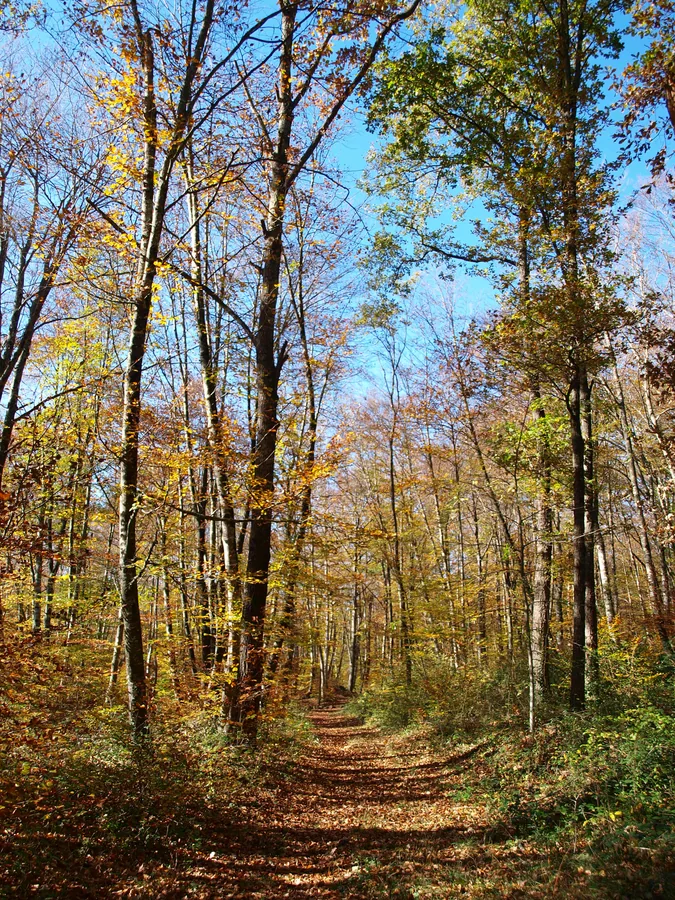
Tall, slender beech trees frame a narrow leaf-covered woodland path, with green and yellow foliage against patches of blue sky.

A leaf-covered woodland path beneath the beech trees of Fageda d’en Jordà, in La Garrotxa Volcanic Zone Natural Park.

Bosque de hayas de la Fageda d'en Jordà.jpg — José Antonio JG / Wikimedia Commons / CC BY-SA 4.0 · Creative Commons

Walks and routes

First visit: Sender Joan Maragall

Follow signed Route 2 from Can Serra into Fageda d’en Jordà. The official map gives 1.5 km and 35 minutes. The path passes the Joan Maragall memorial and loops around a large tossol before returning along the approach. Take time to notice the small changes in height beneath the trees.

The usual approach has steps, followed by uneven woodland ground. Ask at Can Serra about a practical alternative for your wheelchair, walking aid or pushchair.


First visit: Sender Joan Maragall

A separate geology walk: Croscat’s grederes

Route 15 starts at the Santa Margarida parking area and leads towards Can Passavent and the exposed former quarry. The 2024 map gives 2.9 km and 50 minutes for the return outing. The cut reveals contrasting volcanic layers; it is not a summit route or a view into Croscat’s crater.

Expect a signed road crossing and an uphill approach towards Can Passavent. Ask about current surfaces and the reduced-mobility vehicle permit rather than assuming the walk is accessible.

A separate geology walk: Croscat’s grederes

For a longer day: forest and volcano circuit

Route 1 links Fageda d’en Jordà, Sant Miquel de Sacot, Santa Margarida and the Croscat area, returning to Can Serra; Santa Margarida is another official starting point. The 2024 park map lists 10.25 km and 3 hours 35 minutes, with medium difficulty. The older route webpage describes 12 km and 4 hours 20 minutes, so use the current map and ask staff to confirm the signed version and any crater or quarry detours.

A substantially longer walk with climbs, descents and uneven paths. It is not a step-free route or a simple extension of the short family loop.

For a longer day: forest and volcano circuit

An unhurried first morning

Arrive for Can Serra’s opening if you want advice, use the toilets, and ask about Route 2. Walk slowly through the beechwood, then return for a picnic. Leave the afternoon flexible rather than turning a happy short walk into a race around the volcanoes.

Two short visits with a break

If your group still has energy, make Croscat a separate outing from Santa Margarida, with a meal and transfer between the walks. Check Rumbus or parking and Can Passavent’s hours first. Skip the second walk if the weather, transport or anyone’s energy makes it awkward.

Make Route 1 the main event

Start early enough for a full day and confirm the current marked circuit. Build in stops for the woodland and volcanic landscape, and decide beforehand whether any additional crater or quarry visit fits. Carry the official map instead of trying to join landmarks from memory.

Things to try

Sketch a volcanic mound

From the path, draw the outline of one tossol and add the trees growing on it. Compare your drawing with the explanation at the information point. Seeing a landform beneath a forest is a different sort of geology challenge from looking at bare rock.

Listen for one minute

Choose a safe place where you will not block other walkers. Stay quiet for a minute, then compare the sounds each person noticed. No species names are needed; this works well with children who would rather listen than read every sign.

Make a colour notebook

Record five colours with a pencil or a photograph: leaves, bark, shadows, soil or rock visible from the path. Leave everything in place. On a later visit, repeat the exercise and see how the woodland has changed.

Let a guide connect the clues

An accredited local guide can connect volcanic layers, woodland and land use. Arrange the activity beforehand and check its length, language and suitability for your group. A guided Croscat group visit also needs the park’s specific reservation arrangements.

Start with information in Olot

If it is open, Casal dels Volcans can help you choose a more suitable day or a shorter plan. Check which indoor displays and information services are available before making a special trip, and keep the rest of the day flexible.

Postpone when conditions call for it

In strong wind, thunderstorms, flooding or severe heat, change the plan rather than forcing the woodland or volcano walk. The closed Fontfreda crossing is not a wet-weather alternative, and an unmarked shortcut is not a safe substitute for an official path.

Wildlife and habitats

European beech · Fagus sylvatica

The beechwood is the natural place to begin. Compare the tall trunks, the canopy and the leaf-covered ground without leaving the path. The park’s botanical catalogue identifies this native tree, while the Route 2 interpretation explains the woodland’s unusual volcanic setting.

Pedunculate oak · Quercus robur

The park also has humid oak and mixed woods. This oak provides a useful contrast with the Fageda: ask at the centre how to recognise it and where a suitable public woodland visit fits your day. Do not assume every oak beside a trail is the same species.

Holm oak · Quercus ilex

Evergreen holm-oak woodland belongs to the park’s warmer, more Mediterranean side. Notice how the feel of the vegetation changes between sunny slopes and cool woodland. Use the park’s interpretation to connect those differences with moisture and exposure.

Eurasian nuthatch · Sitta europaea

The nuthatch is on the park’s bird list. Pause near woodland and watch the trunks and branches rather than scanning only the sky. Keep your distance from cavities and leave any nest activity undisturbed.

European robin · Erithacus rubecula

Robins are documented in the park. Try a quiet listening stop before looking into low vegetation. A brief glimpse is enough: let the bird choose how close it comes, and never use food or recorded calls to draw it out.

Common chaffinch · Fringilla coelebs

Another bird named by the park is the chaffinch. Make a note of a bird’s size, colours, movement and call before checking an identification guide. These are park-wide wildlife suggestions, so enjoy whatever the day brings rather than treating them as a checklist.

Stories and discoveries

A forest floor built by lava

Croscat’s lava spread into the area now occupied by Fageda d’en Jordà. The park explains the tossols as mounds formed when lava solidified over wet ground. Their gentle shapes are easier to notice when you slow down and look sideways through the trees.

Reading colour at Croscat

The quarry cut exposes the cone’s internal material. Dark grey and black deposits contrast with reddish and orange areas changed by oxidation. Look from the visitor route; the layers are protected geology, not material to collect.

The fields belong to the story

Woodland and farming form a mosaic across the volcanic zone. Rich soils helped make lava-covered ground useful for cultivation. Respect cultivated plots as working places, and look at walls and field boundaries from public paths.

When to visit

Spring

Fresh leaves change the light inside the beechwood. Allow for showers and muddy patches, and give plants space rather than stepping off the path for a photograph.

Summer

Walk earlier, carry water and give exposed parts of a volcano visit a generous heat margin. Use shade breaks and check thunderstorm and fire-risk advice before a longer outing.

Autumn

Colour makes the woodland popular, but it does not follow a fixed calendar. A weekday and an early arrival can help. Wet leaves hide the path surface, so slow down on steps and rocks.

Winter

Bare branches reveal more of the woodland’s shape. Check frost, rain and wind, wear layers and keep the visit within the available daylight. Staffed opening is more limited on some calendar dates.

Getting there and practical advice

Can Serra: the woodland gateway

Can Serra is on the Olot–Santa Pau road, GI-524 km 4, in Santa Pau. It provides park information and family learning resources; the area has public toilets, a picnic space and regulated parking, including reserved spaces for disabled visitors. Telephone: +34 972 19 50 74.

Autumn 2026 opening hours

The seasonal notice lists Can Serra Wednesday–Friday 10:00–16:00 and weekends/public holidays 09:00–15:00; Can Passavent daily 10:00–17:00; and Casal dels Volcans Tuesday–Sunday 10:00–14:00. Check the individual calendars for exceptions and later seasons. Outdoor access and toilet availability should be checked separately from staffed opening.

Can Passavent: understand Croscat

At the entrance to the grederes, Can Passavent has volcanic interpretation and handles organised-group visits. Contact +34 972 19 50 94 or [email protected] for arrangements. Public toilets are listed at the Santa Margarida area, so plan a stop there before walking towards the quarry.

Casal dels Volcans in Olot

At Avinguda de Santa Coloma 47, in Parc Nou, this information centre is another place to ask about the park and consult documentation. The surrounding park has a botanical garden and notable oak woodland. It is a useful starting point for an Olot-based day; confirm which indoor services are available.

Bring what your group needs

Pack water and a simple picnic. Use the designated picnic spaces and avoid depending on a vending machine, spring or restaurant being available when you arrive. Check toilets in advance if they are essential to your group’s plans.

Rumbus: a useful alternative to parking

The published route connects Les Preses, central Olot, Fageda d’en Jordà, Santa Margarida and Santa Pau on weekends, public holidays and other scheduled dates. Turisme Garrotxa currently advertises a €2 day ticket with unlimited trips. Check TEISA’s dated timetable, fare, last return and accessibility arrangements before travelling.

Driving and parking

For the short woodland visit, navigate to Àrea de Can Serra / Fageda d’en Jordà on GI-524 km 4. The central car parks are paid: Can Serra uses automatic card payment, while Santa Margarida uses cash collection. Spaces are limited and cannot be reserved. Check the displayed tariff; the park’s linked price sheet is dated March 2023, so confirm current charges rather than budgeting from that older sheet.

Check the approach and bus stop

Works announced in May 2026 include new stops and improved pedestrian access at Can Serra. During construction, the existing bus stops were to remain in use and the woodland route could have signed diversions. Check the latest arrangement with the centre and use the marked crossing; do not assume a planned accessible path is already available.

Connect to the final leg

TEISA serves park towns from several regional origins. Check your connection through Olot and the onward service to the Fageda for your actual date. Allow a buffer before the return bus, especially after a longer walk.

Arrange reduced-mobility access beforehand

The park offers special vehicle-access permissions for people with reduced mobility to Fageda d’en Jordà, Croscat and Montsacopa. Email [email protected] at least 24 hours in advance and ask which approach and stopping point suit your needs. Wait for the permit and instructions before entering a restricted road.

Separate the centre from the woodland route

Reserved parking and access improvements at Can Serra do not make Route 2 step-free. Describe your wheelchair, walking aid or pushchair needs to staff and ask about steps, surface, slopes, toilets and any suitable short return option. The usual forest approach includes stairs.

Choose a quieter, shorter experience

If crowds or a long walk would be difficult, ask about a quieter visiting time and keep the outdoor part flexible. A brief nature stop and picnic can be enough. Arrange any interpretation or assistance you need rather than expecting a particular format on arrival.

Sources and useful links

Wildlife you might spot

6

Each card links to a full Explore page with photos, traits, and fun facts.

Snap map for this place

Start with the big picture, then zoom in to explore individual wildlife observations around this place.

Loading map…

Good to know before you go

Check the park notices, Can Serra’s opening calendar and the forecast before leaving. Follow current signs around the 2026 access works, and ask where to board the bus that day.

Consider Rumbus on a day it operates. If driving, use the designated car parks; places cannot be reserved. Can Serra takes bank cards and Santa Margarida takes cash, so check the current tariff and carry both.

For a first visit, follow Route 2 rather than accidentally joining the much longer Route 1. Download the official park map, read junction signs and use the signed road crossing.

Wear shoes with grip and bring water, a snack and a waterproof. Take extra time on steps and wet leaves; a child carrier may be more practical than a pushchair on the woodland trail.

Keep to the paths and leave volcanic rock, plants and animals in place. Take photographs or make sketches instead of collecting souvenirs; keep dogs close and on a lead.

Organised groups visiting Croscat need advance arrangements and a park-authorised guide. Ask the guide to confirm the current group limit and available slot before committing to the day.

Respect farms, gates and private entrances. Bring a cold picnic, take litter home and do not light fires or camp outside authorised accommodation or camping areas.

Do not plan the complete Tres Colades circuit while the Fontfreda crossing is closed. Ask Sant Joan les Fonts or the park about the currently permitted local visits; never improvise a river crossing.

Frequently asked questions

The official Route 2 information describes a self-guided walk without an individual trail-booking step. The main car parks are paid and do not reserve spaces. Guided activities and organised Croscat visits have separate arrangements; check current notices before travelling.
No. The autumn 2026 notice lists Wednesday–Friday 10:00–16:00 and weekends and public holidays 09:00–15:00. Use the date-by-date calendar too, particularly around holidays, and confirm the hours again for a later season.
The standard short route has steps and uneven ground. Contact the park to discuss an alternative before arriving. Reduced-mobility vehicle access to the Fageda, Croscat or Montsacopa needs advance permission; email [email protected] at least 24 hours ahead. A permit does not establish that every path is accessible.
No. Route 2 is the short beechwood visit. Route 1 connects Fageda d’en Jordà, Santa Margarida and the Croscat area over a much longer circuit. The 2024 park map gives 10.25 km and 3 hours 35 minutes of walking, before a leisurely allowance for stops or extra visits.
Organised groups need a park-authorised guide and an advance reservation, regardless of how small the group is. Independent visitors should check the current visitor hours and instructions at Can Passavent. Published official sources differ on organised group size, so have the guide confirm it directly.
Rumbus links Les Preses, central Olot, Fageda d’en Jordà, Santa Margarida and Santa Pau on weekends, public holidays and other scheduled dates. Check the dated timetable and return service with TEISA. A bus arriving in Olot is only the first part of the journey.
Routes 1, 2 and 15 are walking itineraries where cycling and horse riding are not permitted. Ask the centre for the current cycling network and use a route intended for bikes.
Beech and oak woodland are dependable things to explore; birds take patience. The park documents robins, nuthatches and chaffinches, among many others. Listen quietly and give animals space. Sightings depend on season, conditions and luck.

Recent snaps at this place

Recent snaps will appear here as new observations are added.

View all ›

Take the discovery with you

Exploring La Garrotxa Volcanic Zone Natural Park?

Identify the wildlife you spot, learn as you go, and keep a collection of the adventure.

  1. 1Spot it
  2. 2Snap it
  3. 3Keep the discovery









