Snappit logo
Snappit
Get App
Generic illustration, not a photograph of this venueIllustration
ParkChubu, Japan

Myoko-Togakushi renzan National Park

A big mountain view comes with a small walk at Imori Pond.

About

A big mountain view comes with a small walk at Imori Pond. Start at Myoko-Kogen Visitor Center, then step outside to a pool edged by reeds, wetland plants and woodland. When Mount Myoko is clear and the water is still, its outline appears twice: once above the trees and once in the pond. The Japanese nickname for that reflection, sakasa Myoko, means upside-down Myoko.

This is an approachable first taste of Myoko-Togakushi renzan National Park, which crosses Niigata and Nagano prefectures. The wider park includes high mountains, the Togakushi area, Lake Nojiri and separate highland walking areas. For this visit, stay with the visitor center and Imori Pond in Myoko's Ikenotaira area. The mountain across the water is your view; reaching its summit is a separate hiking undertaking.

Inside the center, use the terrain model and film displays to make sense of the mountains, heavy snow and the people who live with them. Then see what you can recognize outside. The large-windowed lounge is a particularly easy way to enjoy the pond and mountain between outings. If you are visiting with children, let each person choose one thing from the displays to look for on the walk: a landscape shape, a plant or a bird.

The pond circuit is short enough to leave plenty of time for looking. In spring, the white hoods of mizubasho, or Asian skunk cabbage, rise from the wet ground. Summer brings taller reeds and insects around the water. On the woodland side, watch for tiny long-tailed tits moving through the branches or the black-and-white pattern of a woodpecker. Stop where there is room for others to pass, and use binoculars rather than stepping into the wetland.

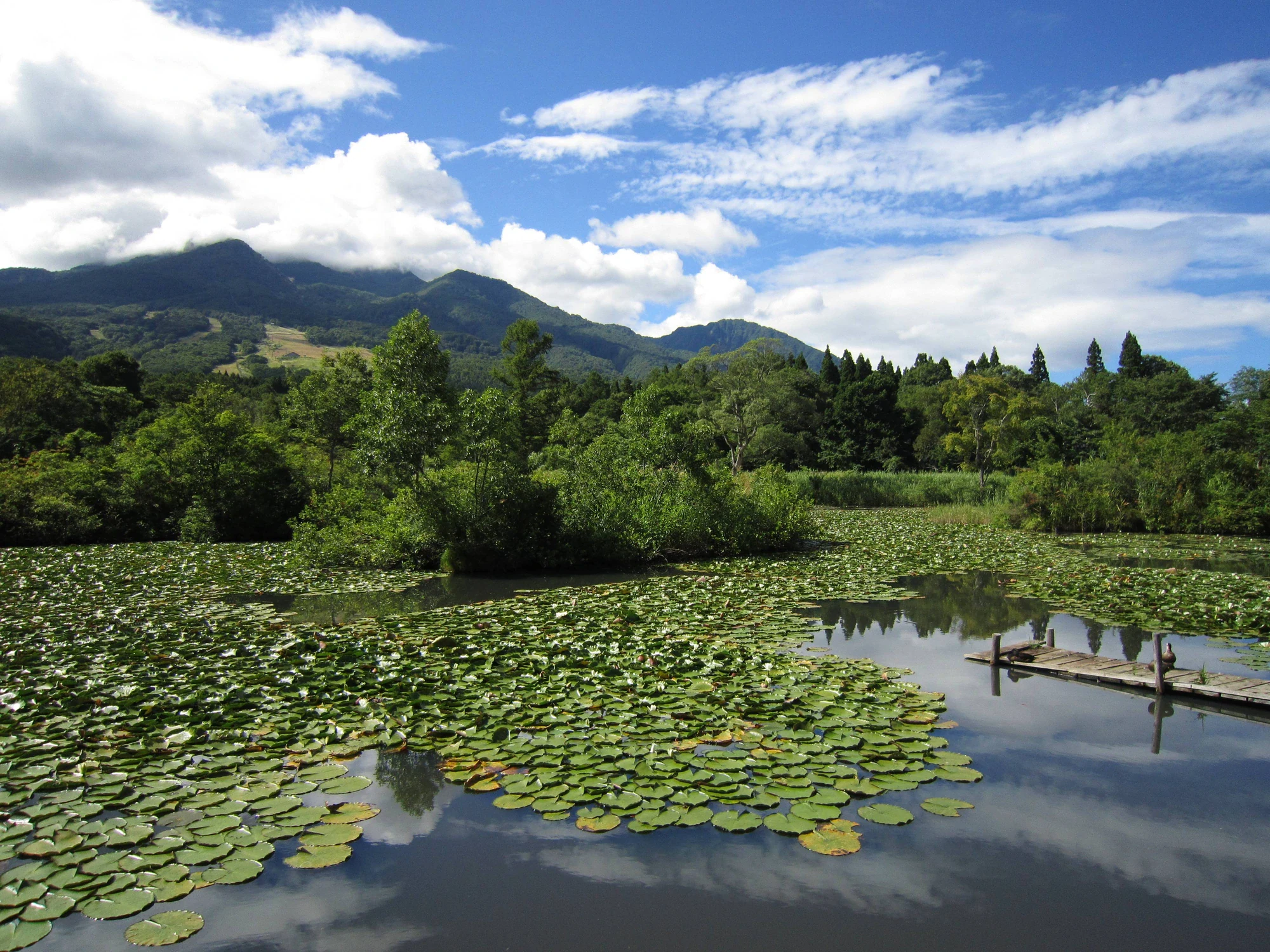
There is a conservation story in the view, too. Introduced water lilies can spread across the pond's surface, and local teams remove them to recover open water and protect the landscape. A sheet of floating leaves may look attractive, but it also changes the habitat. Keep plants and animals where they belong, and ask staff about the work if you would like to understand what you are seeing.

You can have a satisfying visit here without a long trail. Walk a short open section, spend longer with the exhibits, or add a guided nature walk if the weather and your energy allow. Check the path and bear information at the center before setting out. Snow, maintenance and wildlife conditions can change which outdoor option makes sense on the day. Unlock an interactive field guide for this spot: get the Snappit app to identify nature on the go.

Myoko-Togakushi renzan became a national park on 27 March 2015. Its mountains and foothills bring together volcanic landscapes, heavy snowfall and long traditions of mountain worship. The rebuilt Myoko-Kogen Visitor Center opened beside Imori Pond on 1 April 2022, helping visitors connect that wider story with the landscape outside.


What to do here

Begin with the visitor-center exhibits and ask which pond paths are open. Follow the signed Imori Pond circuit when conditions allow, pausing for the Mount Myoko view, the wetland plants and movement in the trees. For a simple family challenge, compare three things: a reflection, a plant growing at the water's edge and a bird's shape or call. Finish in the lounge, or ask the tour desk about a longer guided walk.

Seasonal info

Spring snow can linger, and flower timing can move by weeks. Summer is good for green wetland scenery and waterside insects; carry water and rain protection. Autumn brings color to the pond later than to the high mountains. Winter turns this into a snow-country visit: use the center as your base and arrange suitable guided snow activities rather than assuming the summer circuit is walkable. Check road conditions and the winter bus timetable.

Accessibility

The center has a south-side ramp, step-free access out to the pond shore, a multipurpose toilet and a baby-care room. Two wheelchairs are available to borrow, subject to availability. The local tourism office describes the pond path as barrier-free, but check the full circuit's surface, any works and snow or ice before relying on it. The adjoining forest routes need a separate accessibility check.

Don't miss

1

Mount Myoko reflected in Imori Pond when the mountain is clear and the water is still

2

A short pondside walk with spring mizubasho, summer reeds and autumn color

3

Nature displays, a terrain model and a view-filled visitor-center lounge

4

Small woodland birds and waterside wagtails to look for at an unhurried pace

Broad floating leaves cover much of a pond beneath wooded mountain slopes and clouds, with a small wooden platform beside open reflective water at the right.

Imori Pond in Myoko Kogen, photographed on 2 September 2012. This historical view shows extensive floating vegetation; the pond’s present appearance may differ.

Imori Pond.jpg — Qurren, CC BY-SA 3.0 (https://creativecommons.org/licenses/by-sa/3.0/). Source: https://commons.wikimedia.org/wiki/File:Imori_Pond.jpg. Resized and recompressed as WebP; no crop or retouching. · Creative Commons

Walks and routes

Imori Pond circuit

Start at the visitor center and ask about the open circuit. Walk the signed pondside route, stopping where there is room to enjoy the mountain view and inspect wetland plants from the path. If part is closed, take only the section staff recommend and return the same way.

The center provides step-free access to the shore, and the tourism office describes the pond path as barrier-free. Confirm the full circuit, wet surfaces and any temporary diversion for your mobility needs.

Imori Pond circuit

Optional forest outing toward Kitsune Pond

If the short pond walk leaves you wanting more, ask staff about the wooded route toward Kitsune Pond. Get a current route description and condition check, allow a separate half-day outing, and turn back early enough for your return transport.

This is a woodland walk with separate terrain requirements. Ask staff whether it suits your mobility before choosing it.

Optional forest outing toward Kitsune Pond

Start inside. Look at the terrain model and nature exhibits, then ask about the paths and current bear information.

Head out for the open pond circuit or a shorter return walk. Pause for the view and leave time to notice small things at the wetland edge.

Return to the lounge, compare what you found and check your next bus. Add a drink or packed-food break if you have time.

Things to try

Match the model to the mountain

Use the indoor terrain model to get your bearings, then compare it with the view of Mount Myoko. Ask children which shapes remain visible when cloud hides the summit.

Make three small discoveries

On the pond walk, choose one reflection, one wetland plant and one bird or insect to describe. Sketch what caught your eye instead of collecting it, and compare everyone's choices back at the center.

Let a guide reveal the smaller details

Ask the tour desk about a pondside nature walk or a longer highland outing. Programs change with season; confirm dates, language, price, fitness requirements and booking before planning around one.

Keep the day at the center

Spend longer with the exhibits and the pond-facing lounge. Try comparing the landscape model with the shapes you can still see through cloud. Wait for better conditions before going onto slippery outdoor paths.

Wildlife and habitats

Long-tailed Tit

Watch the woodland edge for a tiny, pale-bodied bird with a tail that looks unusually long for its size. Follow movement among branches with binoculars, and listen for thin calls.

Grey Wagtail

Look along the water from the path for a slim bird with a yellow belly. The pale or gray upperparts and long tail help separate it from the black-and-white wagtails on more open ground.

Great Spotted Woodpecker

Scan tree trunks and larger branches for bold white shoulder patches against a black back, with red beneath the tail. Keep your viewing position on the path rather than following a bird into the trees.

White Wagtail

Check open ground near the pond for a black-and-white bird with pale cheeks and a dark stripe through the eye. Watch from the edge of the path so the bird has space to keep feeding.

Look from the path and let the wildlife carry on around you. Some visits are busy with birds, while others reward close attention to leaves, reeds and insect movement. Keep sound playback off and avoid following birds into cover.

Stories and discoveries

Sakasa Myoko means upside-down Myoko: the mountain mirrored in Imori Pond. Wind, cloud and floating vegetation all change the picture.

Imori is the Japanese word for a newt. Local tradition says the pond was named for the many newts that once lived here.

Keeping open water here takes work. Local crews tackle introduced water lilies by cutting them and using sheets on the pond bed; these efforts also help bring the mountain reflection back into view.

The park brings together mountains with different origins. Mount Myoko is a compound volcano, while the dramatic Togakushi landscape tells a separate story of uplift and erosion.

When to visit

Spring

Watch for mizubasho after snowmelt. Late April–early May is a useful planning window, but check the center's flower updates and remaining snow.

Summer

Enjoy green reeds and small creatures around the water. Slow down at the wetland edge rather than trying to turn a short loop into a distance challenge.

Autumn

Plan around the pond's later foliage season, usually late October–early November. Pack a warm layer and check seasonal buses as services wind down.

Winter

Visit the exhibits and ask about guided snow activities. Heavy snow changes the routes; suitable clothing, footwear and transport planning matter even for a short outing.

Getting there and practical advice

Myoko-Kogen Visitor Center

Exhibits, lounge, cafe, museum shop and tour desk. English content is available through exhibit QR codes and video options.

From Myoko-Kogen Station

Use the municipal Suginosawa Line. Check whether your chosen service calls at Visitor Center itself or the nearby entrance stops. Check your outbound and return departure times before leaving the station.

Seasonal bus choices

For 2026, the Myoko Sanroku sightseeing line is scheduled from 25 April to 3 November. The published direct Nagano summer service ran from 4 July to 27 September and has ended for the season. Check the operator for any later or winter service before relying on it.

Arriving by car

Set your destination to Myoko-Kogen Visitor Center or Imori Pond and use the center parking. The forecourt is also used by buses, and overnight parking is not allowed. Prepare for snow and ice in winter.

A short, step-free starting point

Use the center's south ramp and ask staff about the route from the building to the shore. A multipurpose toilet, baby-care room and loan wheelchairs support a short visit. Ask about any specific width, gradient, transfer or assistance needs in advance.

Outdoor conditions decide the route

The pond path is promoted as barrier-free, but snow, slippery surfaces or temporary works can change what is usable. The longer woodland option has separate terrain and access requirements.

Bear country

Check Myoko City's latest sightings and ask staff before walking. A Niigata bear alert remained in effect when checked on 16 October 2026. Stay together and alert, make your presence known, and keep away from bears and cubs. If one appears, back away slowly without running or shouting.

Snow, weather and the water's edge

Wear grippy footwear and carry layers and rain protection. Keep children close by the pond, stay on open paths and never step onto ice. A short circuit is still an outdoor route, so shorten or skip it when conditions are poor.

High peaks are a separate plan

A mountain climb requires its own current weather, volcanic, trail and equipment checks. Do not use this pond itinerary to plan Mount Myoko, Mount Hiuchi or Niigata-Yakeyama.

Sources and useful links

Wildlife you might spot

4

Each card links to a full Explore page with photos, traits, and fun facts.

Snap map for this place

Start with the big picture, then zoom in to explore individual wildlife observations around this place.

Loading map…

Good to know before you go

Ask at the center which paths are open before you start. Follow barriers and turn back if a circuit cannot be completed.

Check Myoko City's latest bear information. Walk together, stay alert and make your presence known in wooded sections; do not enter a closed area to watch wildlife.

If you see a bear, keep your distance and back away slowly while watching it. Do not run, shout or approach a cub.

Wear shoes with good grip and bring a warm layer and waterproof. Wet boards, fallen leaves, snow and ice can make a short walk slippery.

Stay on the paths, leave flowers and animals in place, and never feed wildlife. Keep children close beside the pond.

Plan the return bus before walking. The regular Suginosawa Line, the seasonal sightseeing loop and the direct Nagano summer bus have different operating dates.

Bring a refillable bottle and a bag for rubbish. The center has drinking water, and packed food is allowed in its shared rest area.

Use the visitor-center parking and watch for buses in the forecourt. Do not leave a vehicle there overnight.

Frequently asked questions

Myoko-Kogen Visitor Center and neighboring Imori Pond in Myoko, Niigata. Togakushi's shrines and forest, Lake Nojiri and Sasagamine are separate destinations. Plan travel time and route conditions for each rather than treating them as one walk.
Travel to Myoko-Kogen Station, then use the municipal Suginosawa Line. Some daytime buses stop at Visitor Center; others require a nearby roadside stop. In the April–November 2026 timetable, the 09:30 station departure reaches the center at 09:51. Check the live timetable for your date and return journey. Myoko-Kogen Station and Joetsumyoko Shinkansen Station are different stations.
As checked on 16 October 2026, admission is free and normal hours are 09:00–17:00 throughout the year, with occasional temporary closures. Check the operator's notices before traveling. The current telephone number is 0255-75-5270.
The center and short pondside visit make a flexible family outing. There is a baby-care room and step-free access to the shore. Check the outdoor route first, especially after rain or snow, and keep children close at the water. You can shorten the walk and spend longer inside.
Exhibition-panel QR codes and video exhibits offer English content. Staff with basic English may be available, but do not rely on an English-speaking guide without arranging one.
Mizubasho is usually a spring sight around late April and early May, with earlier or later seasons depending on snowmelt. Imori Pond's foliage generally peaks in late October or early November. Higher places such as Sasagamine and the alpine wetlands color earlier.
Ask the center about the nearby forest or a guided highland walk if you want a longer outing. A route continuing to Kitsune Pond has been described as about an hour each way, before stops. It is a separate forest walk. Mount Myoko, Mount Hiuchi and the other high peaks require dedicated mountain planning, appropriate equipment and current trail, weather and volcanic advice.
The center normally opens year-round, but the outdoor experience changes greatly with snow. Do not follow a summer walking plan onto buried paths or onto the pond. Ask about suitable snow activities and guides, and confirm transport before a winter visit.

Recent snaps at this place

Recent snaps will appear here as new observations are added.

View all ›

Take the discovery with you

Exploring Myoko-Togakushi renzan National Park?

Identify the wildlife you spot, learn as you go, and keep a collection of the adventure.

  1. 1Spot it
  2. 2Snap it
  3. 3Keep the discovery