





aardvark
Orycteropus afer
Aardvarks are unique animals with long ears and a snout like a pig! They love to eat ants and termites and are mostly active at night.
Habitat: Savannas
The aardvark has a sturdy, pig-like body with sparse, yellowish-grey skin. It features long, rabbit-like ears, a distinctive pig-like snout, and powerful, shovel-like claws on its feet. Its thick, hairless tail is cone-shaped and muscular.
Category
MammalsRarity
Common
Danger
2/5 · Low
Snaps
Be the first to snap!
Aardvarks are the only living species in their entire scientific order!
Many other animals like warthogs use abandoned aardvark burrows as homes.
The name 'aardvark' means 'earth pig' in the Afrikaans language.
Their thick skin protects them from painful ant and termite bites.
The aardvark can dig incredibly fast because of its powerful claws that help them create burrows and find food.
The aardvark has an excellent sense of smell that helps them sniff out ants and termites deep underground.
The aardvark has a long, sticky tongue that helps them slurp up hundreds of insects in a flash.
The aardvark can close its nostrils because of special muscles that help them keep out dust and insects while digging.
Aardvarks are insect-eating experts, gobbling up ants and termites with their long, sticky tongue!
Macrotermes natalensis
Primary food source in many habitats.
Dorylus helvolus
Hunted for food when termites are scarce.
Panthera leo
Aardvarks can be prey for large predators.
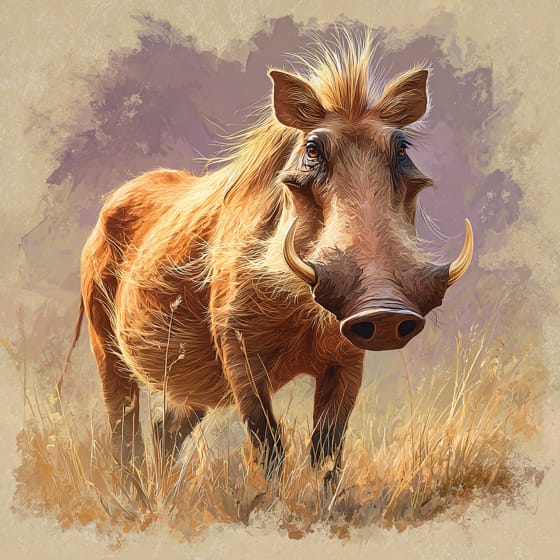
Phacochoerus africanus
Uses abandoned aardvark burrows for shelter.
Furry describes animals possessing a dense covering of soft hair or fur.
Solitary animals live alone for most of their lives, only interacting with others for mating or parental care.
Burrowing animals dig tunnels and chambers in the ground, using these subterranean structures for shelter, hunting, or breeding.
This trait identifies organisms whose diet primarily consists of insects and other small invertebrates.
This habitat trait denotes species native to savannas, which are grasslands with scattered trees, typically found in tropical or subtropical regions with distinct wet and dry seasons.

This trait identifies organisms that exhibit exceptional swiftness in movement for hunting, escape, or travel.

Nocturnal animals are primarily active during the nighttime hours, typically resting or sleeping during the day.
No aliases listed yet.
Danger
2/5 · Low
Aardvarks are shy and prefer to be left alone. It's best to watch them from a distance.
The easiest way to identify aardvark is to use the Snappit nature identifier app.
150-220 cm
40-65 kg
10-18 years
40 km/h
Aardvarks are insect-eating experts, gobbling up ants and termites with their long, sticky tongue!
Savannas
Foraging
Zoom in to split clusters and explore where this object has been snapped.
Recent snaps will appear here as new observations are added.
Take the discovery with you
Snap it with Snappit to identify it, learn what makes it special, and add the discovery to your collection.





.jpg&width=800)



.JPG&width=800)


.jpg&width=800)
