





African Sandalwood
Osyris lanceolata
African Sandalwood is a special plant known for its sweet-smelling wood. It grows in warm places and is loved for its beautiful green leaves and fragrant scent.
Habitat: Savannas
The African Sandalwood is an evergreen shrub or small tree with many slender, often drooping branches. It has small, narrow, lance-shaped leaves that are bright green and sometimes slightly waxy. Its tiny, pale yellow-green flowers are inconspicuous, followed by small, round, red or orange berries.
Category
PlantsRarity
Common
Danger
1/5 · Very low
Snaps
Be the first to snap!
Despite its name, it's not a 'true' sandalwood but smells just as amazing!
Its roots are like secret spies, tapping into other plants for a drink!
People traditionally use its fragrant wood to make beautiful perfumes and incense.
The little berries of this plant change from green to bright red or orange when ripe!
African Sandalwood can connect its roots to other plants to secretly 'borrow' water and nutrients, helping it thrive in dry places.
This plant has tough, leathery leaves that help it lose less water, allowing it to survive long periods without rain.
Its wood contains special oils that give off a pleasant scent, which might help protect it from some plant-eating insects.
Turdus olivaceus
eats its small, ripe berries
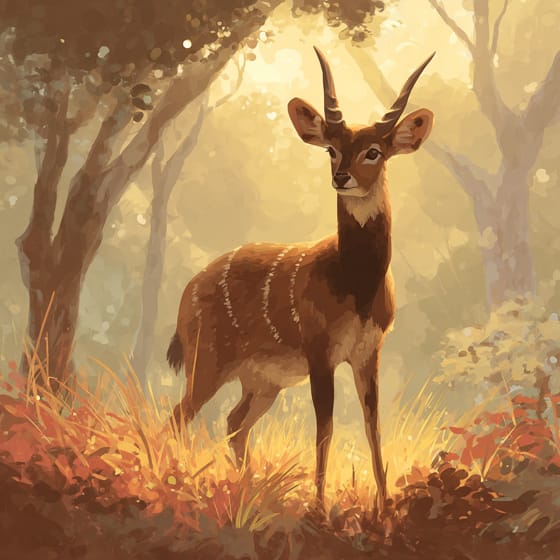
Tragelaphus scriptus
browses its leaves and shoots
Apis mellifera
visits its inconspicuous flowers
Aromatic plants produce and emit fragrant volatile organic compounds, often for defense or to attract pollinators.
Broadleaf trees are angiosperms characterized by flat, wide leaves that are typically shed annually in temperate climates.
Evergreen plants retain their foliage throughout the year, never shedding all their leaves at once.
Fragrant flowers emit a pleasant aroma, often to attract pollinators or for defense.

Medicinal plants possess chemical compounds that can be used for therapeutic purposes to treat illnesses or maintain health.

Timber refers to wood that has been prepared for use in building and carpentry.

This habitat trait denotes species native to savannas, which are grasslands with scattered trees, typically found in tropical or subtropical regions with distinct wet and dry seasons.

This trait characterizes organisms with an exceptionally long lifespan compared to others of their kind.
No aliases listed yet.
Danger
1/5 · Very low
Always look but don't touch plants unless you know they are safe.
The easiest way to identify African Sandalwood is to use the Snappit nature identifier app.
100-500 cm
100-300 cm
0.2-0.5 cm
Spring to Summer
Yes
None
Perennial
Zoom in to split clusters and explore where this object has been snapped.
Recent snaps will appear here as new observations are added.
Take the discovery with you
Snap it with Snappit to identify it, learn what makes it special, and add the discovery to your collection.









.jpg&width=800)

_001.jpg&width=800)


