





Bushbuck
Tragelaphus scriptus
The bushbuck is a shy antelope found in forests and woodlands. It has a reddish-brown coat with white spots and stripes, and only the males have spiral horns.
Habitat: Forests
The Bushbuck has a highly variable coat, ranging from yellowish-brown to dark reddish-brown, often adorned with striking white spots and stripes on its flanks and legs. Males are easily identified by their short, spiraled horns and a distinctive white stripe often near the horn base.
Category
MammalsRarity
Common
Danger
2/5 · Low
Snaps
Be the first to snap!
Bushbucks are Africa's most widespread antelope species!
Male bushbucks rub their spiraled horns on trees to mark their territory!
These shy antelopes often live surprisingly close to humans, staying hidden!
When startled, they often freeze perfectly still, hoping to disappear!
Bushbucks have unique coat patterns that help them blend perfectly into dense vegetation, making them hard to spot.
Bushbucks can run in a confusing zigzag pattern that helps them outwit predators and escape quickly.
Bushbucks can swim across rivers and streams because of their strong legs, helping them escape danger or find new food.
Bushbucks are herbivores, meaning they munch on leaves, shoots, fruits, and flowers from many plants.
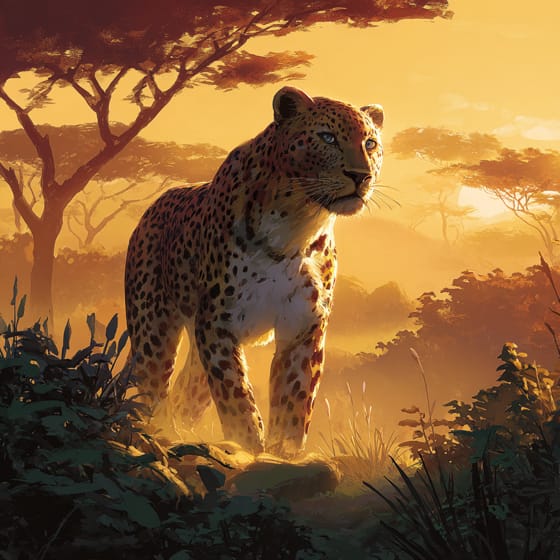
Panthera pardus
A primary predator of bushbucks across their range.

Lycaon pictus
Opportunistically hunts bushbucks, especially younger ones.
Python sebae
Ambushes and preys on young bushbucks.
Marked with spots or patches of a different color.
Solitary animals live alone for most of their lives, only interacting with others for mating or parental care.
Characterized by having one or more hard, permanent, pointed projections on the head.
Camouflaged describes organisms that possess coloring or patterns that allow them to blend into their environment.

This trait characterizes organisms whose diet consists entirely or primarily of plant material.
Thermoregulating organisms maintain a stable internal body temperature despite fluctuations in the external environment.

This trait signifies organisms belonging to a very old evolutionary group with ancestors dating back millions of years.

Forest habitats are terrestrial environments dominated by dense tree cover, supporting a high diversity of plant and animal life.
Danger
2/5 · Low
If you see a bushbuck in the wild, admire it from a distance and never try to approach it.
The easiest way to identify Bushbuck is to use the Snappit nature identifier app.
120-180 cm
25-80 kg
10-15 years
60 km/h
Bushbucks are herbivores, meaning they munch on leaves, shoots, fruits, and flowers from many plants.
Forests
Foraging
Zoom in to split clusters and explore where this object has been snapped.
Recent snaps will appear here as new observations are added.
Take the discovery with you
Snap it with Snappit to identify it, learn what makes it special, and add the discovery to your collection.




.jpg&width=800)


.JPG&width=800)


.jpg&width=800)
