





agave and allies
Asparagaceae
Agave plants are unique and spiky plants that grow in warm, dry places. They are known for their beautiful rosettes of thick, fleshy leaves and can live for many years, sometimes even decades!
Habitat: Desert
The agave and allies has striking rosettes of thick, succulent leaves, often blue-green to gray-green, frequently edged with sharp spines. Their architectural form and sometimes massive flower stalks make them visually distinctive in arid landscapes.
Category
PlantsRarity
Common
Danger
2/5 · Low
Snaps
Be the first to snap!
Agave fibers are incredibly strong, used for ropes, mats, and even weaving cloth since ancient times!
Ancient people used agave sap for soap and its roots for brushes, showing its amazing versatility!
Some agave plants live for decades before blooming, earning them the nickname 'century plant'!
The heart of some agave plants can be cooked and eaten like a sweet vegetable, tasting like molasses!
Agave and allies can store large amounts of water in their thick, fleshy leaves, helping them survive long droughts in dry environments.
Agave and allies use CAM photosynthesis, opening pores only at night to conserve water and grow in hot, sunny deserts.
Agave and allies can grow a giant flower stalk once in their lifetime, sometimes reaching 30 feet, to attract pollinators.
Agave and allies have sharp, spiny leaves that protect them from hungry animals trying to eat their valuable water and nutrients.
Leptonycteris curasoae
Feeds on nectar and pollen
Pecari tajacu
Consumes agave hearts and leaves

Ovis canadensis
Browses on agave leaves
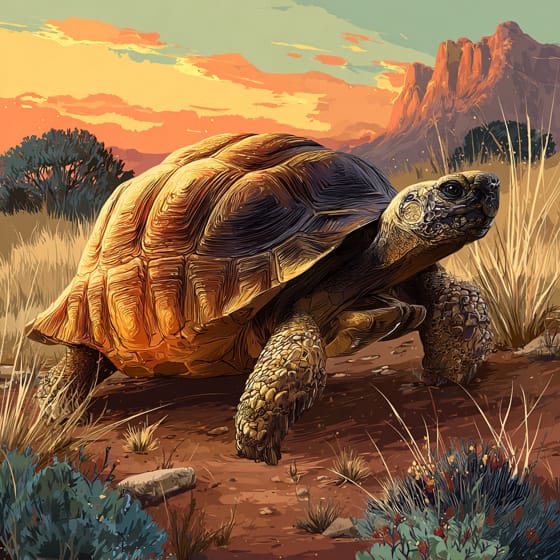
Gopherus agassizii
Eats young agave leaves and flowers
Flowering plants are any plants that produce flowers as part of their reproductive cycle.
Evergreen plants retain their foliage throughout the year, never shedding all their leaves at once.
Drought-tolerant plants can survive and flourish in conditions with limited water availability.
Succulent plants have thickened, fleshy parts, usually leaves or stems, adapted to store water in arid climates.

This human use trait describes species cultivated or domesticated by humans for agricultural purposes, including crops and livestock.

Edible plants are those parts of a plant that are considered safe for human consumption.

Desert habitats are arid regions characterized by extremely low precipitation and often extreme temperatures, supporting specialized flora and fauna.

This trait characterizes organisms with an exceptionally long lifespan compared to others of their kind.

Possessing sharp, pointed projections or spines on the body or surface.
No aliases listed yet.
Danger
2/5 · Low
Always look but don't touch the sharp leaves of agave plants.
The easiest way to identify agave and allies is to use the Snappit nature identifier app.
30-800 cm
30-300 cm
1-8 cm
Late spring to summer
Yes
Mild
Perennial
Zoom in to split clusters and explore where this object has been snapped.
Recent snaps will appear here as new observations are added.
Take the discovery with you
Snap it with Snappit to identify it, learn what makes it special, and add the discovery to your collection.








.jpg&width=800)



_001.jpg&width=800)

