





Agoutis
Dasyprocta
Agoutis are small, furry animals that look a bit like big guinea pigs. They love to eat fruits, nuts, and seeds and are often found in the forests of Central and South America.
Habitat: Forests
The Agoutis has a slender body with a large head, short ears, and long, thin legs. Its coarse fur is typically reddish-brown to orange, often brighter on its rump, and nearly tailless with only a small stub visible. This makes it look like a large, long-legged guinea pig.
Category
MammalsRarity
Common
Danger
1/5 · Very low
Snaps
Be the first to snap!
Agoutis can make a sound like a bark when they are alarmed!
Their fur on their back points backward, then forwards near their rump!
They can leap over nine feet high with a single mighty spring!
Wow, agoutis walk on their tiptoes, like a tiny forest ballerina!
Agoutis can bury excess seeds and sometimes forget them, because this helps new plants grow in the forest.
Agoutis have excellent hearing that helps them detect even the quietest sounds of approaching predators.
Agoutis has strong, continuously growing teeth that help them crack open tough nuts and seeds.
Agoutis love to munch on fallen fruits, nuts, and seeds from the forest floor.
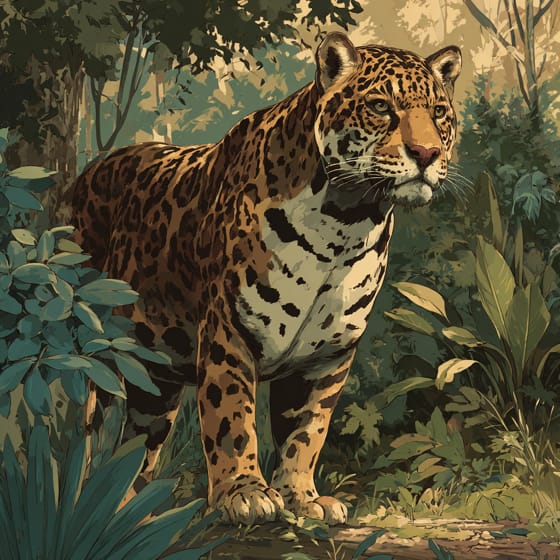
Panthera onca
A main meal for stealthy big cats.
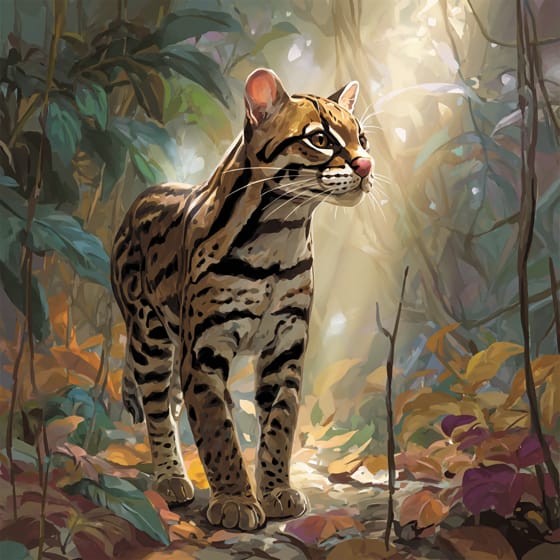
Leopardus pardalis
Small wild cats hunt them in the undergrowth.
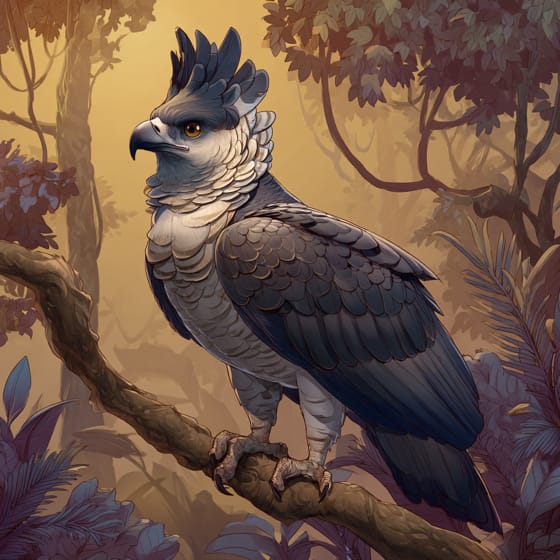
Harpia harpyja
These huge birds of prey snatch them from above.
Bertholletia excelsa
Spreads its hard-shelled seeds for future trees.
Furry describes animals possessing a dense covering of soft hair or fur.
Burrowing animals dig tunnels and chambers in the ground, using these subterranean structures for shelter, hunting, or breeding.
This trait characterizes organisms whose diet consists entirely or primarily of plant material.
Forest habitats are terrestrial environments dominated by dense tree cover, supporting a high diversity of plant and animal life.

Diurnal animals are primarily active during daylight hours, typically resting or sleeping at night.

Describes a species whose presence and role have a disproportionately large effect on its environment.

This trait identifies organisms that exhibit exceptional swiftness in movement for hunting, escape, or travel.
No aliases listed yet.
Danger
1/5 · Very low
Agoutis are friendly but should be watched from a distance in the wild.
The easiest way to identify Agoutis is to use the Snappit nature identifier app.
40-75 cm
2-6 kg
10-15 years
56 km/h
Agoutis love to munch on fallen fruits, nuts, and seeds from the forest floor.
Forests
Foraging
Zoom in to split clusters and explore where this object has been snapped.
Recent snaps will appear here as new observations are added.
Take the discovery with you
Snap it with Snappit to identify it, learn what makes it special, and add the discovery to your collection.




.jpg&width=800)

.JPG&width=800)

.jpg&width=800)
