

Alamo Vine
distimake dissectus
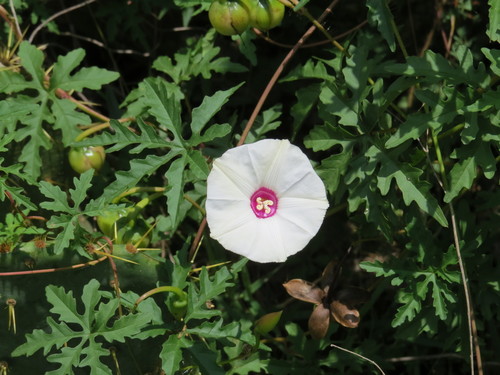
The Alamo Vine (Distimake dissectus), also known as Noyau vine, is a striking perennial climbing vine belonging to the morning glory family, Convolvulaceae. Native to the tropical and subtropical regions of the Americas, this vigorous climber is famous for its intricate, deeply lobed leaves and charming, trumpet-shaped white flowers with contrasting purple-red centers. It thrives in warm climates, often scrambling over fences, shrubs, and trees to secure ample sunlight. While valued for its ornamental appeal, the Alamo Vine is also known for its fast growth rate and ability to quickly colonize open areas. Historically, parts of the plant have been utilized in traditional medicine, although its seeds contain compounds that can be toxic if ingested. Its resilience and unique foliage make it an intriguing subject for native plant enthusiasts and casual nature spotters alike.
Habitat: Found in disturbed areas, forest edges, coastal dunes, and along roadsides, often climbing over fences and native shrubs in warm, sunny regions.
This climbing vine is easily recognized by its deeply palmately divided leaves, which feature 5 to 7 narrow, serrated, or wavy-edged lobes resembling an open hand. The flowers are solitary, funnel-shaped, and roughly 5 to 8 cm in diameter, presenting a stark white or cream petal color punctuated by a vivid, star-patterned ruby-red or dark purple throat. Following pollination, it produces spherical, woody seed capsules surrounded by dry, persistent sepals that resemble miniature wooden roses, each containing hairy, dark-colored seeds.
Category
PlantsRarity
Common
Danger
1/5 · Very low
Snaps
Be the first to snap!
Its historical common name, Noyau Vine, refers to a French liqueur because the crushed leaves smell faintly of almonds or cherry pits.
The dry, woody seed pods resemble small carved roses, leading some people to use them in dried flower arrangements and crafts.
The seeds of the Alamo Vine contain cyanogenic glycosides, making them highly toxic to humans and livestock if consumed.
Uses sensitive stem twining to wrap around nearby structures and vegetation, allowing it to rapidly ascend towards sunlight.
Features a robust root system and waxy leaf coatings that allow it to conserve water and survive periods of moderate drought.
The stems are covered in coarse, spreading hairs that deter crawling insect pests and protect against excessive solar radiation.
Like most plants, the Alamo Vine produces its own organic nutrients through photosynthesis, using sunlight, carbon dioxide, water, and soil minerals.
Apis mellifera
Bees visit the large, open trumpet flowers in search of nectar, facilitating pollination.
Agrius cingulata
The caterpillars of this moth feed on the foliage of the Alamo Vine.

Quercus virginiana
The vine uses the oak's trunk and branches for structural support to reach sunlight.
No trait badges are assigned for this object yet.
No aliases listed yet.
Collections for this object will appear here as more themes are added.
Danger
1/5 · Very low
No special safety notes yet.
The easiest way to identify Alamo Vine is to use the Snappit nature identifier app.
100-600 cm
2-10 years
Like most plants, the Alamo Vine produces its own organic nutrients through photosynthesis, using sunlight, carbon dioxide, water, and soil minerals.
Found in disturbed areas, forest edges, coastal dunes, and along roadsides, often climbing over fences and native shrubs in warm, sunny regions.
Zoom in to split clusters and explore where this object has been snapped.
Recent snaps will appear here as new observations are added.
Take the discovery with you
Snap it with Snappit to identify it, learn what makes it special, and add the discovery to your collection.








.jpg&width=800)



_001.jpg&width=800)




