





pitch pine
Pinus rigida
Pitch pines are tall trees with long, slender needles. They are known for their thick, scaly bark and can grow in sandy soils. These trees are great for wildlife and help keep the environment healthy.
Habitat: Forests
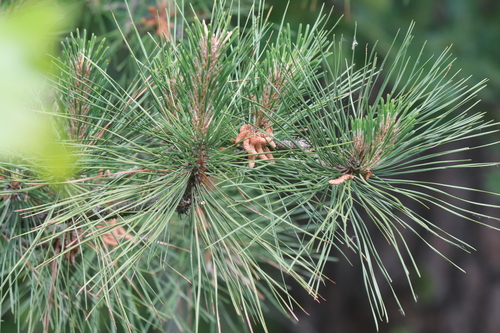
The pitch pine has a distinctively irregular, often gnarled shape with thick, reddish-brown bark that's deeply furrowed and scaly. Its stiff, yellowish-green needles grow in bundles of three, and its prickly cones often remain on the branches for years.
Category
PlantsRarity
Common
Danger
1/5 · Very low
Snaps
13
Its name comes from its sticky resin, once used to seal old wooden ships!
Some pitch pines can live for over 300 years, standing tall through many storms!
These tough trees are often the *first* to grow back after a forest fire!
You can always tell a pitch pine by its needles, which grow in bundles of *three*!
Pitch pine has super thick bark and dormant buds that help it survive forest fires and quickly sprout new growth.
Pitch pine cones are serotinous, meaning intense heat like a fire helps them open to release their seeds.
Dryobates borealis
nests in living pine trees, including pitch pines.

Odocoileus virginianus
browses on the needles and twigs, especially in winter.
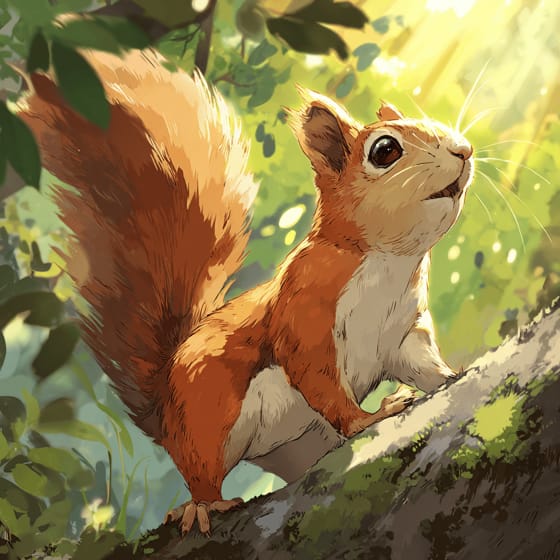
Sciurus carolinensis
feasts on the nutrient-rich seeds from the pine cones.
Broadleaf trees are angiosperms characterized by flat, wide leaves that are typically shed annually in temperate climates.
Coniferous plants are typically evergreen, bearing needles or scales and reproductive cones.
Evergreen plants retain their foliage throughout the year, never shedding all their leaves at once.
Drought-tolerant plants can survive and flourish in conditions with limited water availability.

Describes plants that are particularly attractive and beneficial to a wide range of pollinating organisms.
Timber refers to wood that has been prepared for use in building and carpentry.

This trait signifies organisms belonging to a very old evolutionary group with ancestors dating back millions of years.

Forest habitats are terrestrial environments dominated by dense tree cover, supporting a high diversity of plant and animal life.

This trait characterizes organisms with an exceptionally long lifespan compared to others of their kind.

Describes a species whose presence and role have a disproportionately large effect on its environment.
No aliases listed yet.
Danger
1/5 · Very low
Stay on paths when exploring forests and don't touch the trees too hard.
The easiest way to identify pitch pine is to use the Snappit nature identifier app.
1000-2000 cm
600-1200 cm
Spring
No
None
Perennial
Wind
Zoom in to split clusters and explore where this object has been snapped.
Jun 7, 2026
East Windsor Hill Historic DistrictPhoto attribution
(c) Mark Apgar, some rights reserved (CC BY)
License: CC BY 4.0 ↗
Image may be shown cropped inside the card frame.

New York, US
You might spot Sundial Lupine, Spotted Horsemint, and New Jersey Tea.
View guide →

Maine, US
You might spot American Bullfrog and Three-Toothed Cinquefoil.
View guide →

Connecticut, US
You might spot Eastern Gray Squirrel, Dark-Eyed Junco, and House Sparrow.
View guide →

Connecticut, US
You might spot Osprey, Diamondback Terrapin, and Monarch.
View guide →

US
You might spot Common Eider and American Herring Gull.
View guide →

New Jersey, US
You might spot Rock Harlequin, Pink Lady's Slipper, and Eastern Hemlock.
View guide →
Take the discovery with you
Snap it with Snappit to identify it, learn what makes it special, and add the discovery to your collection.








.jpg&width=800)


_001.jpg&width=800)


