

American Bladdernut
staphylea trifolia
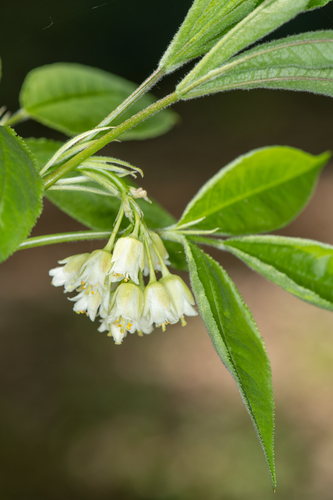
The American Bladdernut is a charming deciduous shrub or small tree native to the moist woodlands and stream banks of eastern North America. Known for its elegant, drooping clusters of bell-shaped white flowers in late spring, it transitions to a truly distinctive feature in late summer: inflated, paper-like seed capsules that resemble miniature lanterns. These three-sided "bladders" rattle softly in the autumn breeze, giving the plant its whimsical common name. Growing as an understory plant, it plays a vital role in its woodland communities, offering shelter and resources for native wildlife. It is highly regarded by native plant enthusiasts for its structural interest, shade tolerance, and ornamental appeal throughout the changing seasons.
Habitat: Typically found in moist, deciduous forests, rich alluvial soils, stream banks, and wooded slopes.
This plant typically grows as a multi-stemmed shrub or small tree reaching 1.5 to 6 meters in height. It features opposite, trifoliate leaves—divided into three finely-toothed leaflets—that turn a warm pale yellow in autumn. The bark is distinctive, featuring greenish-brown to gray coloration with white, vertical fissures. In spring, delicate white-to-greenish flowers dangle in pendulous clusters, succeeded by light-green, papery, air-filled capsules that mature to a tan or brown color and contain hard, shiny brown seeds.
Category
PlantsRarity
Common
Danger
1/5 · Very low
Snaps
2
Historically, Native Americans and early settlers used the exceptionally hard, smooth seeds to make decorative beads and buttons.
Its scientific species name 'trifolia' refers directly to its compound leaves, which always grow in distinct groups of three.
The inflated seed pods can function as natural rattles, as the hard, glossy seeds loosen inside the dry bladder during autumn.
The paper-like, air-filled bladder capsule acts as a flotation device, allowing the seeds to disperse via streams and rivers during flood events.
Thrives under the heavy canopy of mature forests, optimizing low light levels to photosynthesize and grow efficiently where other plants struggle.
Readily produces root suckers to form dense thickets, helping to stabilize banks and recover quickly from physical damage.
As a photoautotrophic plant, the American Bladdernut produces its own organic nutrients using sunlight, carbon dioxide, water, and soil minerals.
Bombus impatiens
Bees visit the bell-shaped white flowers in late spring to gather nectar and pollen, acting as primary pollinators.
Odocoileus virginianus
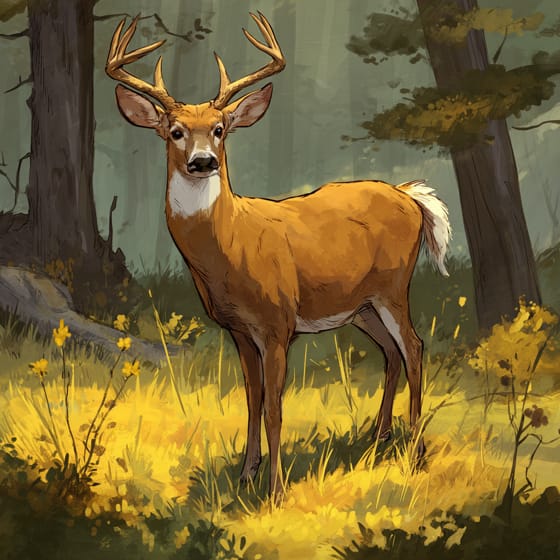
Deer browse on the foliage and tender young twigs, especially during the spring and summer.
.jpg&width=800)
Tamias striatus
Small mammals collect and consume the hard, nut-like seeds that fall from the mature bladder pods.
No trait badges are assigned for this object yet.
No aliases listed yet.
Collections for this object will appear here as more themes are added.
Danger
1/5 · Very low
No special safety notes yet.
The easiest way to identify American Bladdernut is to use the Snappit nature identifier app.
150-600 cm
20-50 years
As a photoautotrophic plant, the American Bladdernut produces its own organic nutrients using sunlight, carbon dioxide, water, and soil minerals.
Typically found in moist, deciduous forests, rich alluvial soils, stream banks, and wooded slopes.
1-4
Zoom in to split clusters and explore where this object has been snapped.

Wisconsin, US
You might spot Eastern Redcedar, Rock Polypody, and Vulture.
View guide →
Kentucky, US
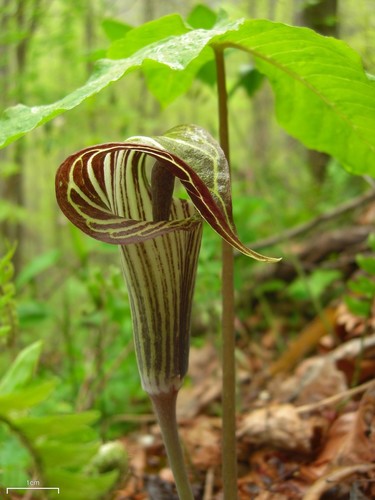
You might spot Jack-In-The-Pulpit and Prairie Trillium.
View guide →

Indiana, US
You might spot Eastern Newt and Dwarf Larkspur.
View guide →
Take the discovery with you
Snap it with Snappit to identify it, learn what makes it special, and add the discovery to your collection.











.jpg&width=800)



_001.jpg&width=800)




