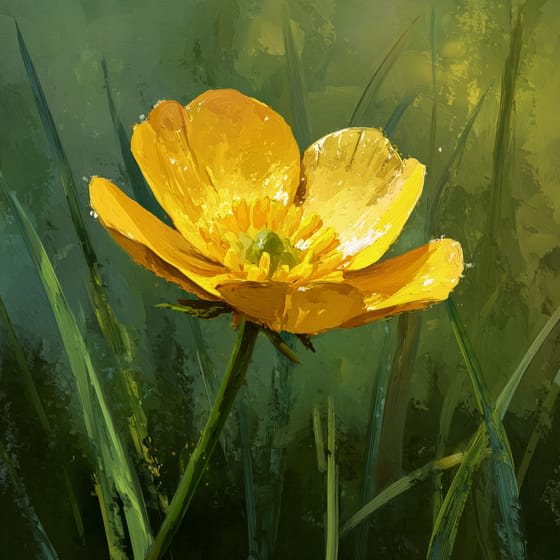





buttercups
Ranunculus
Buttercups are bright yellow flowers that bloom in the spring and summer. They grow in fields and meadows, bringing a splash of color to nature's canvas.
Habitat: Grasslands
The buttercups has bright, cup-shaped yellow flowers with a distinctive waxy, glossy sheen on its petals, making them appear to shimmer in the sun. Its leaves are deeply lobed and often grow in a rosette at the base of the plant. Unlike other yellow wildflowers, its petals look almost lacquered.
Category
PlantsRarity
Common
Danger
2/5 · Low
Snaps
Be the first to snap!
If you hold a buttercup under your chin, a yellow glow means you like butter!
Some buttercup species can grow underwater, changing their leaf shape to breathe!
The word 'buttercup' might come from how its bright color looks like golden butter!
Their glossy petals heat up fast, which helps the flowers ripen their seeds quickly!
Buttercups have super shiny petals that reflect sunlight, acting like a beacon to attract insects for pollination.
Buttercups contain a mild irritant called protoanemonin, which makes them taste bad to deter hungry animals.
Apis mellifera
Honey bees visit flowers for nectar and pollen.
Aphis fabae
Aphids can sometimes feed on the sap of buttercup plants.
Coccinella septempunctata
Ladybirds hunt aphids that feed on buttercup leaves.
Flowering plants are any plants that produce flowers as part of their reproductive cycle.
Spring blooming plants produce their flowers during the spring season, often signifying the end of winter and the start of new growth.
Summer blooming plants produce their flowers during the summer season, often providing vibrant color when many other plants have finished.
Fragrant flowers emit a pleasant aroma, often to attract pollinators or for defense.

Colorful describes organisms or objects displaying a wide range of bright and distinct colors.

Edible plants are those parts of a plant that are considered safe for human consumption.

Grassland habitats are terrestrial biomes dominated by grasses and herbaceous plants, supporting a variety of grazing animals.

Describes plants that are particularly attractive and beneficial to a wide range of pollinating organisms.
Danger
2/5 · Low
Don't eat buttercups, as they can make you feel sick!
The easiest way to identify buttercups is to use the Snappit nature identifier app.
15-50 cm
10-30 cm
1-3 cm
Spring, Summer
No
Mild
Perennial
Zoom in to split clusters and explore where this object has been snapped.
Recent snaps will appear here as new observations are added.
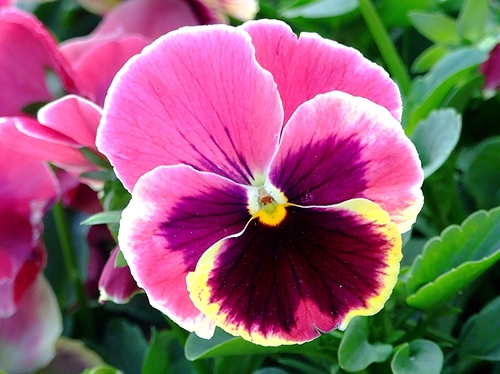
Delaware, US
You might spot Garden Pansy, Southern Magnolia, and Low Pricklypear.
View guide →

Pennsylvania, US
You might spot Partridgeberry, Eastern Hemlock, and American Beech.
View guide →

California, US
You might spot Conifers, Buttercups, and Gourd Family.
View guide →
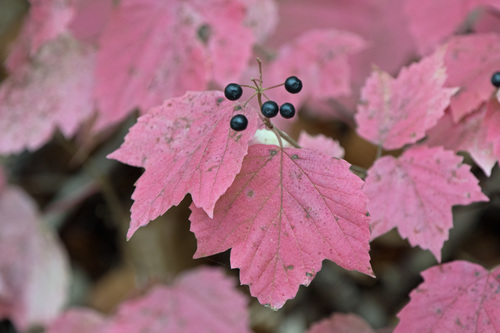
Virginia, US
You might spot Mapleleaf Viburnum, Japanese Holly, and Common Bonnet.
View guide →
Take the discovery with you
Snap it with Snappit to identify it, learn what makes it special, and add the discovery to your collection.









.jpg&width=800)


_001.jpg&width=800)



