





American marram grass
Calamagrostis breviligulata
American marram grass is a tall, green plant that grows in sandy areas. It helps keep the sand in place and provides a home for little animals and insects.
Habitat: Coastal areas
The American marram grass has stiff, upright, blue-green leaves that often curl inwards, giving them a needle-like appearance. Its sturdy stems hold feathery, pale brown to purplish flower spikes, which emerge in late summer, contrasting with its dense, mat-forming base.
Category
PlantsRarity
Common
Danger
1/5 · Very low
Snaps
1
It's a natural protector, guarding shorelines from strong winds and ocean waves!
Its deep, spreading roots are like a giant net, holding the beach together!
Marram grass can even sprout new shoots after being completely buried by sand!
This amazing grass helps coastal sand dunes grow bigger and stronger!
American marram grass can grow extensive root systems and rhizomes that help it stabilize shifting sand dunes and prevent erosion.
American marram grass has tough, waxy leaves that help it survive salty winds and ocean spray found in coastal environments.
American marram grass can grow upwards through accumulating sand, which helps it thrive and build dunes even when buried.
Microtus pennsylvanicus
provides shelter and some food for voles

Peromyscus maniculatus
dense grass offers protection from predators
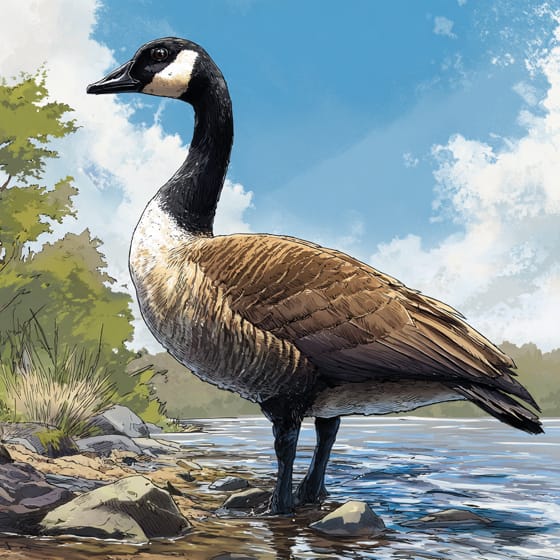
Branta canadensis
geese sometimes graze on its tough leaves
Grass-like plants are herbaceous plants that visually resemble true grasses, typically having long, narrow leaves.
Evergreen plants retain their foliage throughout the year, never shedding all their leaves at once.
Drought-tolerant plants can survive and flourish in conditions with limited water availability.
Rapid growing plants exhibit accelerated growth rates, quickly increasing in size and biomass within a short period.

Coastal habitats are dynamic environments located along the interface between land and sea, influenced by tides, waves, and saltwater.

Describes a species whose presence and role have a disproportionately large effect on its environment.
No aliases listed yet.
Danger
1/5 · Very low
Be careful not to pull out plants when exploring. They help the environment!
The easiest way to identify American marram grass is to use the Snappit nature identifier app.
60-120 cm
30-90 cm
0.5-1.5 cm
Summer
No
None
Perennial
Zoom in to split clusters and explore where this object has been snapped.
Take the discovery with you
Snap it with Snappit to identify it, learn what makes it special, and add the discovery to your collection.










.jpg&width=800)



_001.jpg&width=800)



