





American Royal Fern
Osmunda spectabilis
The American Royal Fern is a beautiful plant with long, feathery leaves. It loves to grow in wet places like swamps and along streams, making it a special part of nature's garden.
Habitat: Wetlands
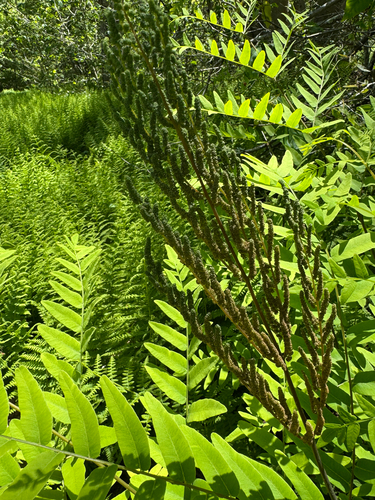
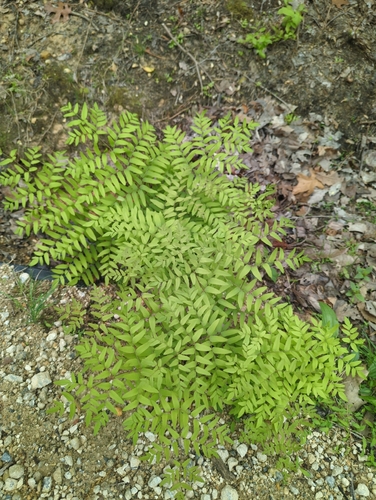
The American Royal Fern is a majestic plant with large, upright fronds that can reach impressive heights. Its bright green, feathery leaves grow in a fountain-like cluster, often featuring separate, dark brown fertile fronds that stand tall in the center. It looks like a giant green feather plume rising from the forest floor.
Category
PlantsRarity
Common
Danger
1/5 · Very low
Snaps
38
Before its leaves unfurl, people can cook and eat its tasty curled-up shoots called fiddleheads!
It grows two different kinds of leaves: one for food, and one just for making spores!
It's called 'Royal' because of its grand size and majestic appearance, fit for a king!
This fern is a living fossil; its ancestors thrived alongside dinosaurs millions of years ago!
American Royal Fern can spread far and wide by releasing tiny spores that are carried by the wind, helping it colonize new areas.
American Royal Fern has curled fiddleheads that protect its delicate young leaves from pests and frost as they unfurl in spring.
American Royal Fern can grow a strong underground stem called a rhizome, which helps it survive winters and regrow year after year.
Spodoptera frugiperda
Its fronds are sometimes nibbled by caterpillars.
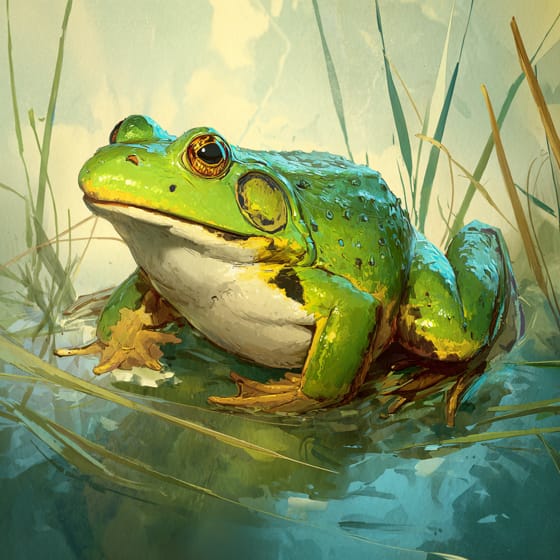
Lithobates clamitans
Its dense fronds provide cool, moist cover for amphibians.
Glomus intraradices
Partners with fungi in the soil to absorb essential nutrients.
Feathered describes animals, primarily birds, possessing a covering of feathers.
Deciduous plants periodically shed all their leaves, typically during autumn or dry seasons.
Spore-producing organisms reproduce by releasing small, often single-celled, reproductive units called spores.
Describes plants that are particularly attractive and beneficial to a wide range of pollinating organisms.

Describes organisms that break down dead organic material, recycling nutrients back into the ecosystem.

This habitat trait identifies species found in wetlands, which are areas of land saturated with water, either permanently or seasonally, including marshes, swamps, and bogs.
No aliases listed yet.
Danger
1/5 · Very low
Always look but don't touch plants unless you know they are safe.
The easiest way to identify American Royal Fern is to use the Snappit nature identifier app.
100-150 cm
60-90 cm
Yes
None
Perennial
Wetlands
Zoom in to split clusters and explore where this object has been snapped.
Jun 3, 2026
Tiverton Four Corners Historic DistrictPhoto attribution
no rights reserved
License: CC0 1.0 ↗
Image may be shown cropped inside the card frame.
Apr 28, 2026
Elk Neck State ForestPhoto attribution
(c) Tom Field, some rights reserved (CC BY)
License: CC BY 4.0 ↗
Image may be shown cropped inside the card frame.

South Carolina, US
You might spot American Alligator, Anole, and Great Blue Heron.
View guide →

Rhode Island, US
You might spot Common Mugwort, Duck, and Azure Bluet.
View guide →
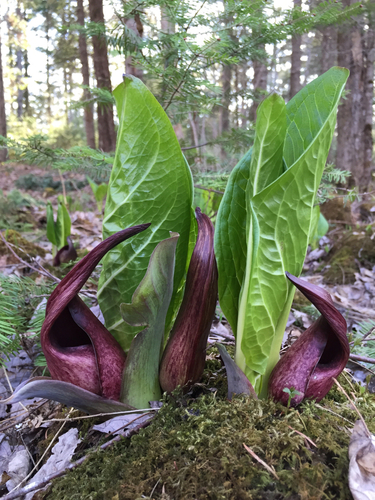
Connecticut, US
You might spot Eastern Skunk Cabbage and Eastern White Pine.
View guide →

Vermont, US
You might spot Japanese Knotweed and Red-Bellied Woodpecker.
View guide →

New York, US
You might spot Dame's Rocket, American Pokeweed, and American Toad.
View guide →

Pennsylvania, US
You might spot Eastern Tiger Swallowtail and Slowpoke Moth.
View guide →
Take the discovery with you
Snap it with Snappit to identify it, learn what makes it special, and add the discovery to your collection.








.jpg&width=800)



_001.jpg&width=800)




