

Apes
hominoidea
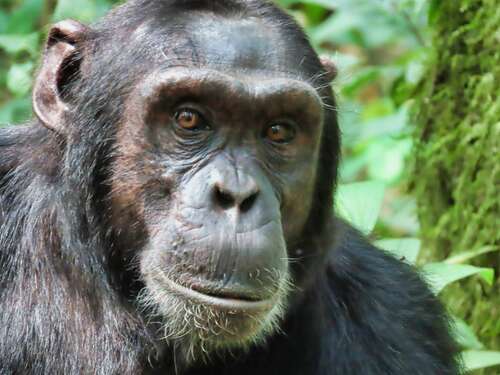
Apes, belonging to the superfamily Hominoidea, are a diverse group of tailless primates found in Africa and Asia. They are renowned for their high intelligence, complex social structures, and remarkable problem-solving abilities. This group includes both the 'lesser apes' (gibbons and siamangs) and the 'great apes' (orangutans, gorillas, chimpanzees, bonobos, and humans). Apes play crucial roles in their ecosystems, often acting as seed dispersers and influencing forest regeneration. Their advanced cognitive capabilities allow for sophisticated communication, tool use, and cultural transmission within their groups, making them some of the most fascinating creatures on Earth.
Habitat: Apes are primarily found in tropical and subtropical forests, ranging from dense rainforests to montane forests, and occasionally venturing into savannas or swamp forests.
Apes typically exhibit robust bodies with a lack of external tails, a key distinguishing feature from monkeys. Their fur color varies widely by species, from the black coats of gorillas and chimpanzees to the reddish-brown of orangutans, and varied patterns in gibbons. They generally possess broad chests, mobile shoulder joints adapted for brachiation (swinging through trees), and hands and feet capable of grasping. Facial features are often expressive, with prominent brow ridges in some species. Size ranges significantly, from the smaller gibbons (around 5-15 kg) to the much larger gorillas (up to 200 kg).
Category
MammalsRarity
Common
Danger
1/5 · Very low
Snaps
Be the first to snap!
Apes do not have tails, a feature that distinguishes them from monkeys.
Chimpanzees are known to create and use tools, such as 'fishing' for termites with sticks or cracking nuts with stones.
Orangutans are the largest arboreal animals and spend most of their lives in trees.
Some ape species, like gorillas, construct nests called 'beds' nightly, either in trees or on the ground, for sleeping.
Many ape species, particularly gibbons and orangutans, are highly adapted for arboreal life, employing brachiation to move swiftly and efficiently through the tree canopy. This involves swinging from branch to branch using their long arms.
Apes exhibit exceptional cognitive abilities, including problem-solving, self-recognition, complex communication, and the capacity for learning and cultural transmission. This enables them to use and even make tools, plan future actions, and understand complex social dynamics.
Most ape species live in intricate social groups, ranging from the monogamous pairs of gibbons to the large, hierarchical communities of chimpanzees and gorillas. These structures facilitate cooperation, learning, and the raising of young.
Apes have a highly varied diet, predominantly herbivorous but supplemented with animal protein, reflecting their omnivorous nature. Their diet can shift based on seasonal availability and species-specific adaptations.
Age differences: Infant apes rely solely on mother's milk; juveniles gradually incorporate solid foods as they mature, mimicking adult diets.

Ficus carica
Acts as a primary food source for some ape species, and apes aid in seed dispersal.

Panthera pardus
A significant predator of younger or isolated apes, particularly chimpanzees and gorillas.

Homo sapiens
Habitat destruction and poaching by humans represent the most significant threats to ape populations.
Durio zibethinus
Apes disperse the seeds of various fruit-bearing plants after consumption, aiding in forest regeneration.
No trait badges are assigned for this object yet.
No aliases listed yet.
Collections for this object will appear here as more themes are added.
Danger
1/5 · Very low
No special safety notes yet.
Compare ears, muzzle, tail, feet and coat markings. Size is hard to judge without something nearby for scale, and young mammals may not have adult coloring yet. Mammal Identifier: upload a photo and compare the visible details.
40-180 cm
5-200 kg
30-60 years
40 km/h
Apes have a highly varied diet, predominantly herbivorous but supplemented with animal protein, reflecting their omnivorous nature. Their diet can shift based on seasonal availability and species-specific adaptations.
Apes are primarily found in tropical and subtropical forests, ranging from dense rainforests to montane forests, and occasionally venturing into savannas or swamp forests.
Foraging
Zoom in to split clusters and explore where this object has been snapped.
Recent snaps will appear here as new observations are added.

New York, US
You might spot Osprey, Diamondback Terrapin, and Clapper Rail.
View guide →

California, US
You might spot Gorilla, Asian Elephant, and Chimpanzee.
View guide →

North Dakota, US
You might spot Red Panda, Pallas's Cat, and Sichuan Takin.
View guide →

Massachusetts, US
You might spot Beluga Whale, Seal, and African Lion.
View guide →

British Columbia, CA
You might spot Harbor Seal, Bald Eagle, and Osprey.
View guide →

North Carolina, US
You might spot American Alligator, Sturgeon, and Striped Bass.
View guide →
Take the discovery with you
Snap it with Snappit to identify it, learn what makes it special, and add the discovery to your collection.