





Arctic Loon
Gavia arctica
The Arctic Loon is a beautiful bird that loves to swim in cold waters. It has a striking black and white pattern and can dive deep to catch fish. These birds are known for their lovely, haunting calls.
Habitat: Coastal areas
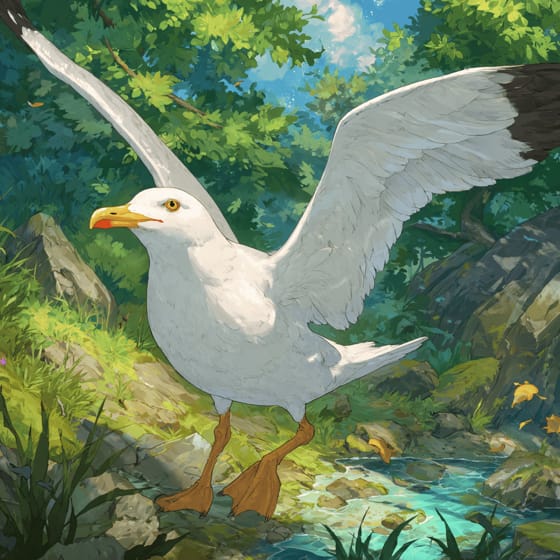
The Arctic Loon has a striking black head and neck, a grey back, and a crisp white belly. Its most distinctive feature is the finely striped black-and-white patch on the sides of its neck, and it also sports bright red eyes.
Category
BirdsRarity
Common
Danger
1/5 · Very low
Snaps
Be the first to snap!
Arctic Loons need a long 'runway' on the water to take off into flight due to their heavy bones.
Baby loons often ride on their parents' backs to stay warm and safe from predators.
Their haunting wails and yodels can be heard for miles across the vast open waters.
Their legs are set far back on their body, making them clumsy on land but perfect for swimming!
Arctic Loons can dive deep underwater because their powerful webbed feet act like propellers, helping them swim incredibly fast.
Arctic Loons have dense bones that help them sink quickly and dive up to 60 meters to catch fish.
Arctic Loons have special salt glands that allow them to drink ocean water, which helps them stay hydrated in coastal areas.
Arctic Loons are expert fish-eaters, catching their meals by diving deep in the water!
Age differences: Young chicks start with small invertebrates before transitioning to fish as they grow.
Feathered describes animals, primarily birds, possessing a covering of feathers.
Characterized by having toes connected by a membrane, typically aiding in swimming.
Social animals live in organized groups, cooperating for survival benefits such as foraging, defense, and raising offspring.
Singing animals produce complex vocalizations, often for purposes of attracting mates, defending territory, or communicating within their species.

Piscivorous organisms are animals that primarily subsist on a diet of fish.

Coastal habitats are dynamic environments located along the interface between land and sea, influenced by tides, waves, and saltwater.

This trait identifies organisms whose diet consists entirely or primarily of animal tissue.

Aquatic habitats encompass environments where organisms live predominantly in water, including oceans, rivers, lakes, and wetlands.

Migratory animals undertake seasonal movements from one region to another, typically in response to changes in climate or food availability.

Threatened status denotes a species likely to become endangered in the foreseeable future without effective conservation interventions.
No aliases listed yet.
Danger
1/5 · Very low
Always watch birds from a distance and don't disturb their nests.
The easiest way to identify Arctic Loon is to use the Snappit nature identifier app.
60-75 cm
110-130 cm
1.3-3.4 kg
15-20 years
120 km/h
Arctic Loons are expert fish-eaters, catching their meals by diving deep in the water!
Coastal areas
Zoom in to split clusters and explore where this object has been snapped.
Recent snaps will appear here as new observations are added.
Take the discovery with you
Snap it with Snappit to identify it, learn what makes it special, and add the discovery to your collection.




.jpg&width=800)








