




Arctic Lupine
Lupinus arcticus
The Arctic Lupine is a beautiful flower that grows in cold places. It has bright purple petals and can be found in the tundra, bringing color to the snowy landscape.
Habitat: Tundra
The Arctic Lupine has distinctive palmate leaves and tall, dense spikes of pea-like flowers, typically in vibrant blue or purple hues. Its compact form and sturdy stems help it stand out against the sparse Arctic landscape.
Category
PlantsRarity
Common
Danger
1/5 · Very low
Snaps
1
Arctic bumblebees 'buzz' to shake pollen from its flowers, like a tiny earthquake!
Its flowers can change color after pollination, signaling bees to visit other fresh blooms!
Its seeds are famous for sprouting after being frozen for over 10,000 years in permafrost!
The unique shape of its leaves helps collect precious water droplets from the Arctic air.
Arctic Lupine can germinate after thousands of years of dormancy, allowing it to re-establish in changing environments.
Arctic Lupine has special root nodules that fix nitrogen from the air, enriching poor Arctic soils for itself and other plants.
Arctic Lupine can grow a long taproot, helping it find water and nutrients in shallow, often frozen, Arctic ground.
Bombus polaris
Vital pollinator in the harsh Arctic environment
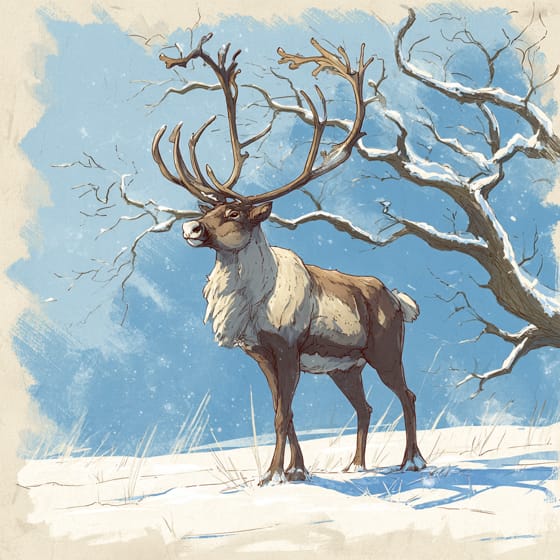
Rangifer tarandus
Leaves and shoots are part of their diet
Urocitellus parryii
Eats seeds and young plant parts
Flowering plants are any plants that produce flowers as part of their reproductive cycle.
Describes organisms capable of converting atmospheric nitrogen into compounds usable by plants.
Spring blooming plants produce their flowers during the spring season, often signifying the end of winter and the start of new growth.
Cold hardy plants are able to withstand low temperatures and freezing conditions without significant damage.

Fragrant flowers emit a pleasant aroma, often to attract pollinators or for defense.

Describes plants that are particularly attractive and beneficial to a wide range of pollinating organisms.

This habitat trait refers to species inhabiting tundras, which are treeless biomes characterized by permafrost, cold temperatures, and low-growing vegetation.

Describes a species whose presence and role have a disproportionately large effect on its environment.
No aliases listed yet.
Danger
1/5 · Very low
Don't pick the flowers; they are important for nature and help other plants grow.
The easiest way to identify Arctic Lupine is to use the Snappit nature identifier app.
10-50 cm
15-30 cm
1-2 cm
Summer
No
Moderate
Perennial
Zoom in to split clusters and explore where this object has been snapped.

Alaska, US
You might spot Cliff Swallow, Pretty Jacob's-Ladder, and Dwarf Fireweed.
View guide →

British Columbia, CA
You might spot White Twisted-Stalk and Western Skunk Cabbage.
View guide →

British Columbia, CA
You might spot Sitka Valerian, Leafy Aster, and Pearly Everlasting.
View guide →
Take the discovery with you
Snap it with Snappit to identify it, learn what makes it special, and add the discovery to your collection.








.jpg&width=800)


_001.jpg&width=800)




