





arrowweed
Pluchea sericea
Arrowweed is a tall, bushy plant that grows in wet areas. It has long, slender leaves and pretty purple flowers that attract butterflies and bees.
Habitat: Wetlands
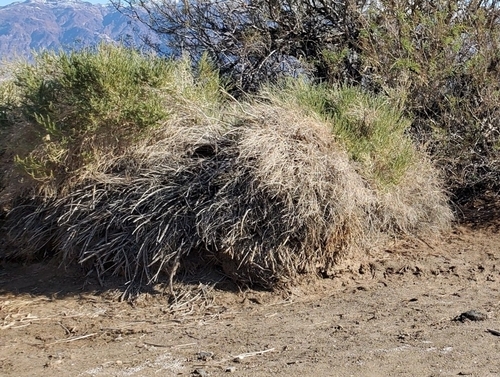
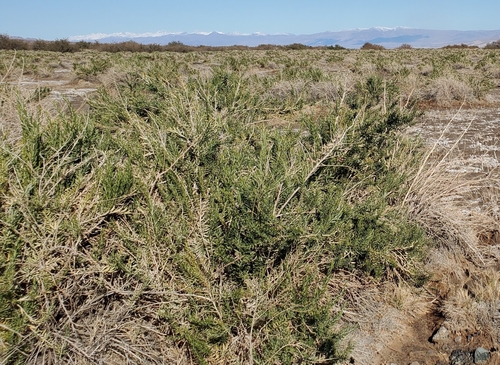
The arrowweed is a tall, upright shrub with many slender, gray-green branches. Its narrow, fuzzy leaves often have silvery undersides. In late summer, it produces clusters of small, pinkish-purple to white flowers at the branch tips, looking fluffy.
Category
PlantsRarity
Common
Danger
1/5 · Very low
Snaps
2
Even after a fire, arrowweed often sprouts back quickly from its roots, ready to regrow!
Its straight, strong stems were historically used by Native Americans to make actual arrows!
The dense thickets it forms offer safe hiding spots for many small desert creatures.
Tiny hairs on its leaves help the arrowweed reflect sunlight and save precious water in hot deserts.
Arrowweed has super deep roots that help it find water far underground, letting it thrive in dry places.
Arrowweed can quickly resprout from its robust root system after floods, helping it survive turbulent river environments.
Arrowweed can tolerate salty soil, allowing it to grow in places where many other plants cannot survive.

Danaus plexippus
visits flowers for nectar
Apis mellifera
collects nectar and pollen
Chaetodipus penicillatus
builds burrows among its roots
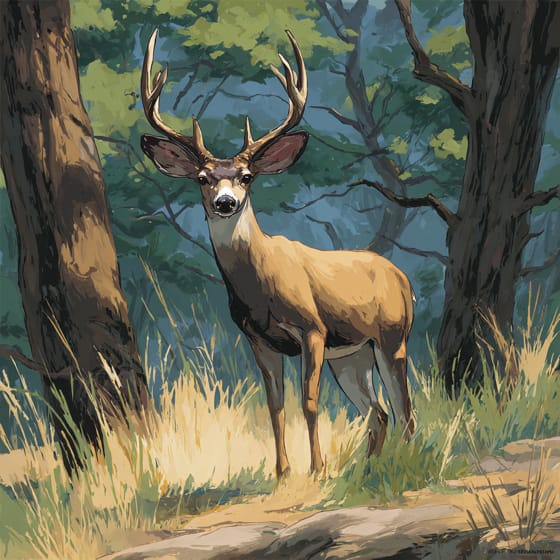
Odocoileus hemionus
browses on leaves and stems
Flowering plants are any plants that produce flowers as part of their reproductive cycle.
A shrub is a woody plant smaller than a tree, typically with multiple stems branching from or near the ground.
Summer blooming plants produce their flowers during the summer season, often providing vibrant color when many other plants have finished.
Fragrant flowers emit a pleasant aroma, often to attract pollinators or for defense.

Colorful describes organisms or objects displaying a wide range of bright and distinct colors.

Describes plants that are particularly attractive and beneficial to a wide range of pollinating organisms.

This habitat trait identifies species found in wetlands, which are areas of land saturated with water, either permanently or seasonally, including marshes, swamps, and bogs.

Describes a species whose presence and role have a disproportionately large effect on its environment.
No aliases listed yet.
Danger
1/5 · Very low
Always look but don't touch plants without asking an adult.
The easiest way to identify arrowweed is to use the Snappit nature identifier app.
100-300 cm
50-200 cm
0.3-0.8 cm
Late summer to fall
No
None
Perennial
Zoom in to split clusters and explore where this object has been snapped.
Dec 27, 2019
Eagle Borax WorksPhoto attribution
(c) Bob Miller, some rights reserved (CC BY)
License: CC BY 4.0 ↗
Image may be shown cropped inside the card frame.
Dec 27, 2019
Eagle Borax WorksPhoto attribution
(c) Bob Miller, some rights reserved (CC BY)
License: CC BY 4.0 ↗
Image may be shown cropped inside the card frame.
Take the discovery with you
Snap it with Snappit to identify it, learn what makes it special, and add the discovery to your collection.









.jpg&width=800)


_001.jpg&width=800)




