Common Side Blotched Lizard

Explore the remnants of Death Valley's first borax refinery.
Explore the remnants of Death Valley's first borax refinery. Nestled within the stark beauty of Death Valley National Park, Eagle Borax Works offers a tangible connection to the rugged frontier of 19th-century industry. This historic site, established in 1882, represents the pioneering, yet ultimately challenging, efforts to extract "white gold" from the desert, playing a significant role in the region's early economic development.
Visitors can wander amidst the weathered structural remains, including the visible boiler firebox and an earth mound marking the site of former workers' housing. Glimpse the famous borax windrows, which appear much as they did when operations ceased over a century ago, offering a stark visual of the processed mineral. Interpretive signs placed by the National Park Service provide rich historical context, detailing the arduous process of borax extraction and the lives of those who toiled in this unforgiving landscape.
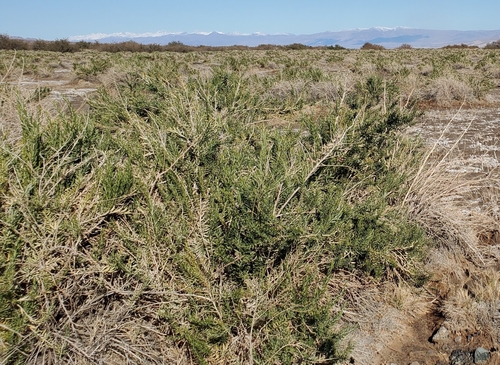
A visit to Eagle Borax Works is more than just a walk through ruins; it's an immersive journey into a pivotal chapter of Death Valley's past. It's a testament to human perseverance against extreme odds and a poignant reminder of the harsh realities of desert life and industry. The desolate beauty of the surrounding salt marsh and native desert flora further enhances the experience, making it a memorable stop for history buffs, photographers, and anyone intrigued by the spirit of the Old West. Planning to visit? Download the Snappit app to identify the wildlife you spot in real-time.
The story of Eagle Borax Works began in 1880 when Frenchman Isadore Daunet, having endured a harrowing near-death experience crossing Death Valley, discovered borate deposits near Bennetts Well. Two years later, in 1882, Daunet partnered with J.M. McDonald, M. Harmon, and C.C. Blanch to establish the Eagle Borax Works, marking it as the first borax refinery in Death Valley. The operation involved extracting borax from the marsh and partly refining it on-site before it was hauled a formidable 160 miles by 12-mule teams to the nearest railhead in Daggett, California. Despite initial efforts, the Eagle Borax Works faced significant challenges, including inefficient refining methods, which resulted in low-grade borax, and the intense summer heat that prevented the necessary crystallization process. After producing approximately 130 to 150 tons of borax, the enterprise ultimately failed by 1884 due to mounting business difficulties, personal setbacks, and intense competition from other operations like Harmony Borax Works. Daunet tragically took his own life, and the property eventually changed hands multiple times, including ownership by the U.S. Borax Company, before being acquired by the National Park Service in 1956. The site was officially added to the National Register of Historic Places on December 31, 1974.
Walk among the ruins, imagine the challenging conditions of early borax mining, observe the unique geological features of the surrounding area, and read the informative signs to understand the site's significance. You can also venture towards the nearby salt marsh.
Death Valley experiences extremely hot summers, with temperatures that historically halted borax production due to the inability to cool crystallization vats. Winter and spring offer pleasant temperatures, making them the best times for exploration.
The site is located off West Side Road, which is a dirt road and may require a high-clearance vehicle. The specific spur road leading to the works is also a dirt track. While access to the ruins is generally "unrestricted," the natural, unpaved terrain means limited accessibility for wheelchairs or those with mobility challenges.
The visible remains of the boiler firebox, the earth mound where workers' housing once stood, and the historical borax windrows are central features. Interpretive plaques provide detailed historical context.
Each card links to a full Explore page with photos, traits, and fun facts.
Start with the big picture, then zoom in to explore individual wildlife observations around this place.
Bring ample water and sun protection
Death Valley's arid climate demands that visitors carry plenty of water, wear wide-brimmed hats, sunglasses, and sunscreen, especially outside of peak winter months.
Use a high-clearance vehicle
Access to Eagle Borax Works is via West Side Road, a dirt road for which a high-clearance vehicle is recommended, particularly if there have been recent rains.
Read the interpretive signs
Take time to read the National Park Service plaques at the site; they provide invaluable historical context and bring the ruins to life.
Visit in the cooler months
To fully enjoy exploring the outdoor site, plan your visit between October and May, avoiding the dangerously high summer temperatures.
Watch for changing road conditions
Dirt roads in Death Valley can change rapidly due to weather; check with the park service for current conditions before venturing out.
Leashed pets are allowed
If traveling with pets, they are permitted on leash at the Eagle Borax Works site.
Mar 25, 2024
Photo attribution
no rights reserved
License: CC0 1.0 ↗
Image may be shown cropped inside the card frame.
Mar 12, 2023
Photo attribution
(c) River Ahlquist, some rights reserved (CC BY)
License: CC BY 4.0 ↗
Image may be shown cropped inside the card frame.
Dec 27, 2019
Photo attribution
(c) Bob Miller, some rights reserved (CC BY)
License: CC BY 4.0 ↗
Image may be shown cropped inside the card frame.
Dec 27, 2019
Photo attribution
(c) Bob Miller, some rights reserved (CC BY)
License: CC BY 4.0 ↗
Image may be shown cropped inside the card frame.
Dec 27, 2019
Photo attribution
(c) Bob Miller, some rights reserved (CC BY)
License: CC BY 4.0 ↗
Image may be shown cropped inside the card frame.

Maryland, US
You might spot White-Tailed Deer and Eastern Gray Squirrel.
View guide →
.jpg)
District of Columbia, US
You might spot Eastern Gray Squirrel, Duck, and House Sparrow.
View guide →

Illinois, US
You might spot American Robin, Canada Goose, and House Sparrow.
View guide →

Virginia, US
You might spot Spotted Lanternfly and Northern Cardinal.
View guide →
Take the discovery with you
Identify the wildlife you spot, learn as you go, and keep a collection of the adventure.