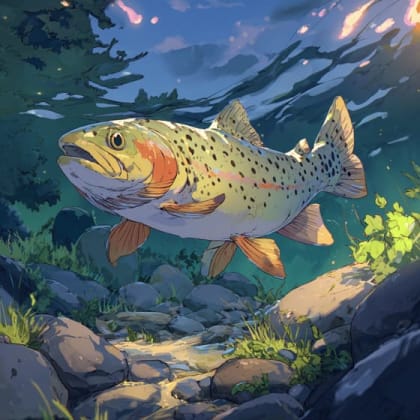
Asian arowana
Scleropages formosus
The Asian arowana is a beautiful fish known for its shiny scales and long fins. It can swim gracefully in the water and is often called the 'dragon fish' because of its shape.
Habitat: Freshwater rivers and lakes
The Asian arowana has a long, slender body covered in large, metallic scales that shimmer in shades of gold, red, or green. Its large mouth is upturned, and it features prominent barbels near its jaw, giving it a distinctive, ancient look.
Category
FishRarity
Rare
Danger
1/5 · Very low
Snaps
Be the first to snap!
Fossils prove arowanas are 'living fossils,' hardly changing for millions of years!
Males protect their young by holding hundreds of eggs inside their mouths for weeks!
Often called 'dragon fish' due to their ancient look and shimmering, large scales!
They have a bony tongue that helps them crush and hold onto their slippery prey!
Asian arowana can leap high out of the water to snatch prey from overhanging branches, helping them catch food.
Asian arowana has reflective, iridescent scales that help them blend into their watery surroundings, avoiding predators.
Asian arowana can guard its eggs and fry in its mouth, protecting them from dangers until they hatch.
They are active hunters that eat insects, fish, and other small animals.
Age differences: Young eat mostly insects; adults consume larger fish and amphibians.
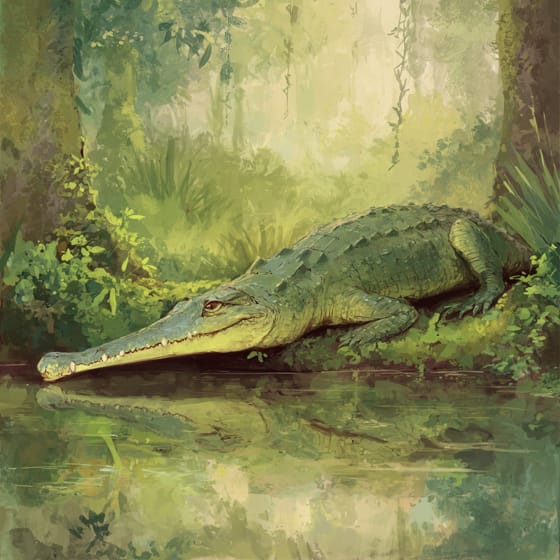
Tomistoma schlegelii
A large crocodile that preys on fish.
Lutra sumatrana
Otters are clever hunters of fish.

Locusta migratoria
Jumps to snatch these insects from branches.

Rasbora heteromorpha
Preys on smaller fish near surface.
Solitary animals live alone for most of their lives, only interacting with others for mating or parental care.
Colorful describes organisms or objects displaying a wide range of bright and distinct colors.
Piscivorous organisms are animals that primarily subsist on a diet of fish.
This trait signifies organisms belonging to a very old evolutionary group with ancestors dating back millions of years.

This trait characterizes organisms with an exceptionally long lifespan compared to others of their kind.

Diurnal animals are primarily active during daylight hours, typically resting or sleeping at night.

Freshwater habitats include non-saline aquatic environments such as rivers, lakes, ponds, and wetlands, vital for numerous species.

Endangered status indicates a species is at a very high risk of extinction in the wild in the near future.
Danger
1/5 · Very low
Always watch fish from a distance and never try to touch them in the water.
The easiest way to identify Asian arowana is to use the Snappit nature identifier app.
60-90 cm
2-7 kg
15-20 years
They are active hunters that eat insects, fish, and other small animals.
12 km/h
Freshwater rivers and lakes
Ambush
Zoom in to split clusters and explore where this object has been snapped.
Recent snaps will appear here as new observations are added.
Take the discovery with you
Snap it with Snappit to identify it, learn what makes it special, and add the discovery to your collection.