_(6161748652).jpg&width=800)





Bahamian Racer
Cubophis vudii
The Bahamian Racer is a beautiful snake that lives in the Bahamas. It has shiny scales and loves to climb trees and bushes. This friendly snake helps keep the environment healthy by eating pests.
Habitat: Coastal areas
The Bahamian Racer is a slender, medium-sized snake, typically displaying a light brown to olive-green body adorned with irregular dark blotches or stripes along its back. Its head often features a dark mask-like band through the eye, contrasting with a creamy or yellowish belly. This pattern provides excellent camouflage.
Category
ReptilesRarity
Rare
Danger
1/5 · Very low
Snaps
Be the first to snap!
Bahamian Racers can flatten their bodies to look much larger and scarier to predators!
Each baby racer is born ready to hunt on its own, needing no help from its parents!
These speedy island snakes are important natural pest controllers, eating many insects and rodents!
They sometimes vibrate their tail rapidly in dry leaves to sound like a rattlesnake!
Bahamian Racers can dart away from danger or ambush prey at impressive speeds because of their powerful, flexible bodies.
Bahamian Racers have special scales and flexible bodies that help them climb trees and bushes for food or escape.
Bahamian Racers possess large eyes that provide excellent daytime vision for spotting fast-moving prey.
Speedy hunters, Bahamian Racers mostly eat lizards, frogs, and sometimes small mammals and insects.
Age differences: Younger racers often eat more insects and smaller prey than adults.
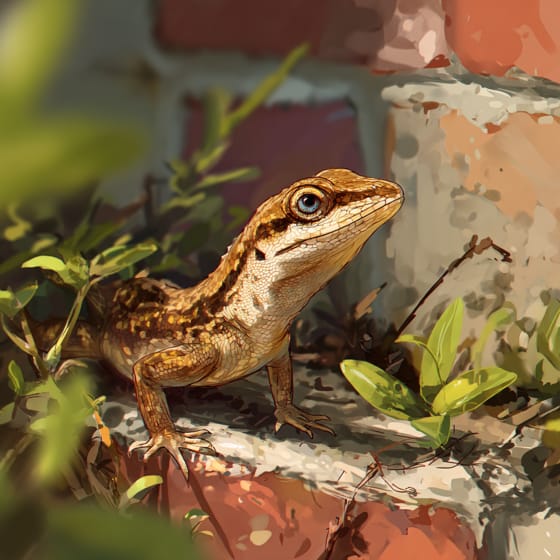
Anolis sagrei
A very common lizard prey item in their habitat.

Eleutherodactylus planirostris
Preys on these small frogs, especially in moist areas.

Falco sparverius
A swift bird of prey that can catch smaller racers.

Felis catus
Feral cats are a significant introduced predator.
Solitary animals live alone for most of their lives, only interacting with others for mating or parental care.
Arboreal animals live primarily in trees, utilizing them for shelter, food, and protection from predators.
Colorful describes organisms or objects displaying a wide range of bright and distinct colors.
Coastal habitats are dynamic environments located along the interface between land and sea, influenced by tides, waves, and saltwater.

This trait identifies organisms whose diet consists entirely or primarily of animal tissue.

Diurnal animals are primarily active during daylight hours, typically resting or sleeping at night.

Describes a species whose presence and role have a disproportionately large effect on its environment.

This trait identifies organisms that exhibit exceptional swiftness in movement for hunting, escape, or travel.
No aliases listed yet.
Danger
1/5 · Very low
If you see a snake, it's best to admire it from a distance and not touch it.
The easiest way to identify Bahamian Racer is to use the Snappit nature identifier app.
70-100 cm
0.1-0.3 kg
5-8 years
12 km/h
Speedy hunters, Bahamian Racers mostly eat lizards, frogs, and sometimes small mammals and insects.
Coastal areas
Pursuit
Zoom in to split clusters and explore where this object has been snapped.
Recent snaps will appear here as new observations are added.
Take the discovery with you
Snap it with Snappit to identify it, learn what makes it special, and add the discovery to your collection.














