

Baltimore Snout
hypena baltimoralis
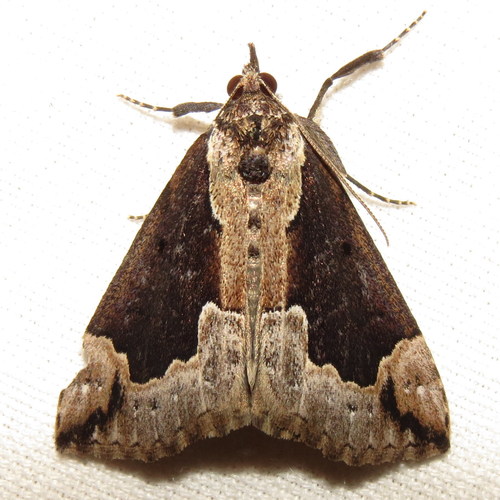
The Baltimore Snout (Hypena baltimoralis) is a fascinating, small-to-medium-sized moth native to the deciduous forests of eastern North America. Named for its elongated, snout-like mouthparts (palpi) that extend prominently from its head, this species is a master of camouflage. When at rest among leaf litter or tree bark, its cryptic patterns allow it to blend seamlessly into its surroundings, protecting it from daytime predators. While it may easily go unnoticed by the casual observer, the Baltimore Snout plays a quiet but vital role in its ecosystem. Its caterpillars rely heavily on maple trees, processing foliage and converting it into a food source for local birds and predatory insects, while the adults serve as nighttime pollinators and prey for bats. For moth enthusiasts, spotting their distinctively scalloped, two-toned wings near a porch light is always a delightful find.
Habitat: Found primarily in deciduous woodlands, forest edges, and suburban habitats where their maple tree host plants are abundant.
The Baltimore Snout is characterized by its elongated, prominent labial palpi that project forward like a snout. It has a wingspan ranging from 2.6 to 3.2 centimeters. The forewings display a striking, contrasting pattern: the inner two-thirds are typically dark brown or purplish-black, bordered by a sharp, wavy, whitish line, while the outer third is a much lighter grayish-brown or tan. This disruptive coloration breaks up the moth's outline, mimicking a dead leaf or a piece of peeling bark. The hindwings are generally a uniform, plain grayish-brown.
Category
InsectsRarity
Common
Danger
1/5 · Very low
Snaps
5
Despite its common name, the snout of the Baltimore Snout is not a nose, but rather a pair of highly developed mouthparts called labial palpi.
The Baltimore Snout is highly dependent on maples; where there are no maple trees, you are highly unlikely to ever find this moth.
They belong to a subfamily of moths often called snout moths, which includes dozens of species that all sport similarly impressive, elongated palpi.
When resting on a tree trunk, this moth angles its body and wings to perfectly mimic a curled, dead leaf that has stuck to the bark.
The contrasting, wavy patterns on its forewings and its habit of resting flat against surfaces allow it to perfectly camouflage as a dead leaf or bark.
Its prominent, snout-like palpi are covered in sensory receptors that help it navigate, locate food sources, and detect chemical cues in the environment.
When disturbed by predators such as bats, the moth employs an erratic, zig-zagging flight pattern to quickly dive into the underbrush and escape.
Caterpillars feed exclusively on the foliage of maple trees, while adult moths consume flower nectar and tree sap.
Age differences: Larvae are leaf-eating herbivores, whereas adults transition to a liquid diet of nectar and sap.

Acer rubrum
Provides a crucial larval food source for the moth's caterpillars.
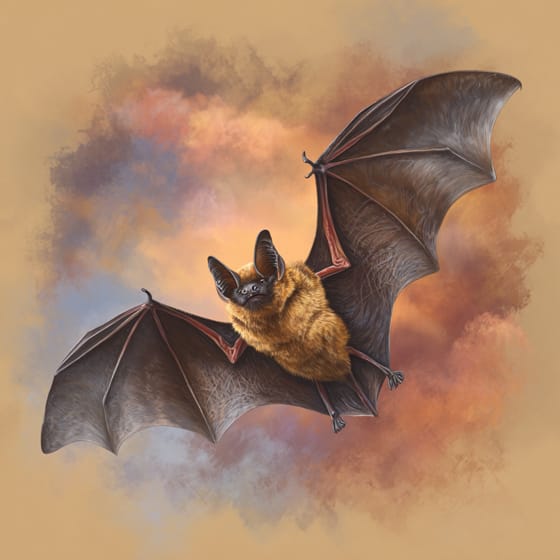
Eptesicus fuscus
Hunts and consumes adult Baltimore Snouts during the night.
Trichogramma minutum
Parasitizes the eggs of the Baltimore Snout, preventing them from hatching.
No trait badges are assigned for this object yet.
No aliases listed yet.
Collections for this object will appear here as more themes are added.
Danger
1/5 · Very low
No special safety notes yet.
The easiest way to identify Baltimore Snout is to use the Snappit nature identifier app.
1-2 cm
2-4 cm
0.0001-0.0005 kg
0-1 years
Caterpillars feed exclusively on the foliage of maple trees, while adult moths consume flower nectar and tree sap.
Found primarily in deciduous woodlands, forest edges, and suburban habitats where their maple tree host plants are abundant.
Foraging
Zoom in to split clusters and explore where this object has been snapped.

Rhode Island, US
You might spot Common Mugwort, Duck, and Azure Bluet.
View guide →
Delaware, US
You might spot Northern Cricket Frog, Fan Clubmoss, and Fowler's Toad.
View guide →

West Virginia, US
You might spot Great Rhododendron and Mountain Laurel.
View guide →

Vermont, US
You might spot Northern Cardinal, Wood Frog, and White-Breasted Nuthatch.
View guide →

Massachusetts, US
You might spot Red Trillium, Round-Leaved Sundew, and Pitch Pine.
View guide →

Connecticut, US
You might spot Eastern Bluebird, Polyphemus Moth, and Rosy Maple Moth.
View guide →
Take the discovery with you
Snap it with Snappit to identify it, learn what makes it special, and add the discovery to your collection.













.jpg&width=800)




