





bear's foot
Smallanthus uvedalia
Bear's foot is a fun plant with big, soft leaves that look like a bear's paw! It grows in shady places and is loved by many little critters in the forest.
Habitat: Forests
The bear's foot has distinctively large, broad, and deeply lobed leaves that often resemble a bear's paw. Its sturdy stems are frequently purplish-red, supporting bright yellow, daisy-like flowers with 8-10 ray florets that appear in clusters.
Category
PlantsRarity
Common
Danger
1/5 · Very low
Snaps
3
Its giant leaves really do look like a bear's paw print!
Its seeds have tiny hooks that hitch rides on animals, helping them travel far!
Native Americans once used bear's foot for various traditional medicines.
This plant is a cousin to sunflowers and dandelions, all part of the daisy family!
Bear's foot has huge leaves that help it capture lots of sunlight, even in the dappled shade of the forest floor.
Bear's foot produces special chemicals in its leaves to deter hungry insects and animals from eating them.
Its bright yellow flowers are like a colorful advertisement, attracting many different kinds of busy bees and butterflies.
Apis mellifera
collects nectar and pollen
Bombus impatiens
visits flowers for nectar

Odocoileus virginianus
browses its foliage
Furry describes animals possessing a dense covering of soft hair or fur.
Flowering plants are any plants that produce flowers as part of their reproductive cycle.
Shade tolerant plants are adapted to grow and thrive in areas with low light levels, requiring less direct sunlight.
Broadleaf trees are angiosperms characterized by flat, wide leaves that are typically shed annually in temperate climates.

Medicinal plants possess chemical compounds that can be used for therapeutic purposes to treat illnesses or maintain health.

Edible plants are those parts of a plant that are considered safe for human consumption.

Describes plants that are particularly attractive and beneficial to a wide range of pollinating organisms.

Forest habitats are terrestrial environments dominated by dense tree cover, supporting a high diversity of plant and animal life.
No aliases listed yet.
Danger
1/5 · Very low
Always look but don't touch plants unless you know they are safe.
The easiest way to identify bear's foot is to use the Snappit nature identifier app.
100-300 cm
60-120 cm
2-4 cm
Summer
No
Mild
Perennial
Zoom in to split clusters and explore where this object has been snapped.

Georgia, US
You might spot Striped Wintergreen, Devil's Dipstick, and Golden Reishi.
View guide →

Tennessee, US
You might spot Pond Slider, Blue Phlox, and Mayapple.
View guide →
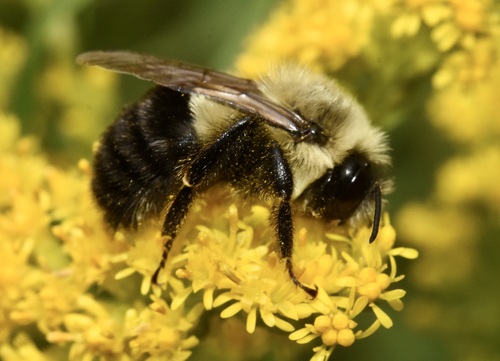
Georgia, US
You might spot Common Eastern Bumble Bee and Bee.
View guide →
.jpg)
Maryland, US
You might spot Common Pawpaw, Huron Skipper, and Orchard Orbweaver.
View guide →
Take the discovery with you
Snap it with Snappit to identify it, learn what makes it special, and add the discovery to your collection.







.jpg&width=800)


_001.jpg&width=800)


