





Bicknell's Thrush
Catharus bicknelli
Bicknell's Thrush is a small, shy bird that loves to sing in the mountains. It has a beautiful, soft brown color and is often found hiding in the bushes.
Habitat: Mountain regions
The Bicknell's Thrush is a small, secretive songbird with olive-brown upperparts and a grayish-brown head, which subtly blends into a paler throat. It has a distinctive pale eye-ring and grayish flanks, setting it apart from similar thrushes.
Category
BirdsRarity
Rare
Danger
1/5 · Very low
Snaps
Be the first to snap!
It often builds its nest deep inside dense conifer branches, making it super hard to find!
Male thrushes sometimes help raise two families with different females in one summer!
Scientists use tiny backpacks to track their amazing long-distance flights.
This bird's favorite winter vacation spot is the misty cloud forests of Hispaniola.
Bicknell's Thrush can thrive in high-altitude, cold spruce-fir forests because of its specialized adaptations.
Bicknell's Thrush has a complex, flute-like song that helps it communicate through dense forest at dawn and dusk.
Bicknell's Thrush can migrate thousands of kilometers across open ocean to specific Caribbean islands.
Bicknell's Thrush has adapted to live year-round in misty cloud forests, both breeding and wintering.
This small bird enjoys a mix of tasty insects, spiders, and juicy berries depending on the season!
Age differences: Yes, adults eat more insects during breeding for protein and more fruits for energy during migration and winter.

Accipiter striatus
Quick hawks sometimes hunt it in its dense forest home.
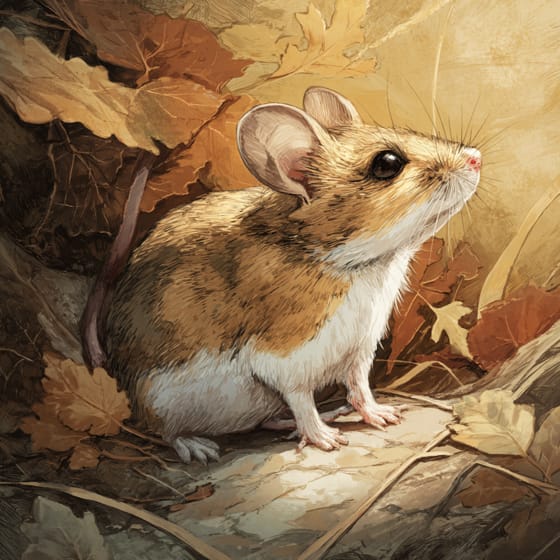
Peromyscus maniculatus
Small mice can raid nests for precious eggs or tiny chicks.
Sambucus canadensis
Feeds on sweet berries from this plant in fall for energy.
Picea rubens
Builds its hidden nest deep within spruce tree branches for safety.
Feathered describes animals, primarily birds, possessing a covering of feathers.
Solitary animals live alone for most of their lives, only interacting with others for mating or parental care.
Singing animals produce complex vocalizations, often for purposes of attracting mates, defending territory, or communicating within their species.
This trait identifies organisms whose diet primarily consists of insects and other small invertebrates.

This habitat trait identifies species found in mountainous regions, characterized by high elevation, steep slopes, and varying climate zones.

Migratory animals undertake seasonal movements from one region to another, typically in response to changes in climate or food availability.

Threatened status denotes a species likely to become endangered in the foreseeable future without effective conservation interventions.

Endangered status indicates a species is at a very high risk of extinction in the wild in the near future.
No aliases listed yet.
Danger
1/5 · Very low
Always watch birds from a distance and be quiet so you don't scare them away.
The easiest way to identify Bicknell's Thrush is to use the Snappit nature identifier app.
16-18 cm
28-30 cm
0.025-0.03 kg
3-7 years
40 km/h
This small bird enjoys a mix of tasty insects, spiders, and juicy berries depending on the season!
Mountain regions
Zoom in to split clusters and explore where this object has been snapped.
Recent snaps will appear here as new observations are added.
Take the discovery with you
Snap it with Snappit to identify it, learn what makes it special, and add the discovery to your collection.




.jpg&width=800)










