





Bicolored Carpenter Ant
Camponotus vicinus
The Bicolored Carpenter Ant is a busy little insect that loves to build its home in wood! They are black and red, making them easy to spot. These ants work together to find food and keep their nest safe.
Habitat: Forests
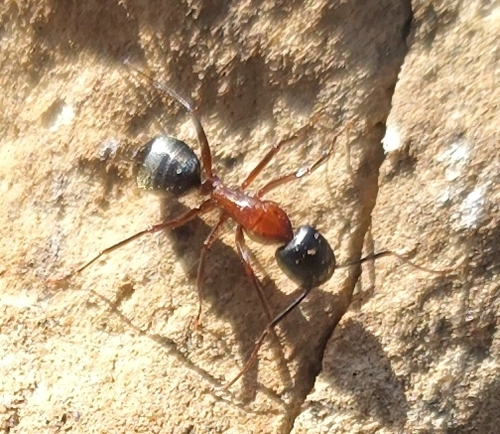
The Bicolored Carpenter Ant has a distinctive appearance with a reddish-brown head and thorax, contrasting sharply with its dark brown or black abdomen. Its body is relatively large and robust for an ant, and it possesses strong mandibles.
Category
InsectsRarity
Common
Danger
2/5 · Low
Snaps
3
Bicolored Carpenter Ants often march in lines, following scent trails to food.
Some queen ants can live for over 15 years, laying thousands of eggs.
They are mostly active at night, foraging for food under cover of darkness.
They don't eat wood, just tunnel through it to build their homes!
Bicolored Carpenter Ant can carve intricate nests inside wood because of its powerful jaws that help them create safe homes.
Bicolored Carpenter Ant has an amazing sense of smell that helps them find sugary liquids like honeydew from aphids, even from far away.
Bicolored Carpenter Ant has different sized workers, majors and minors, which helps them perform specialized tasks for the colony's survival.
These ants enjoy sweet sugary liquids and protein from other insects.
Aphis gossypii
for their sugary honeydew.
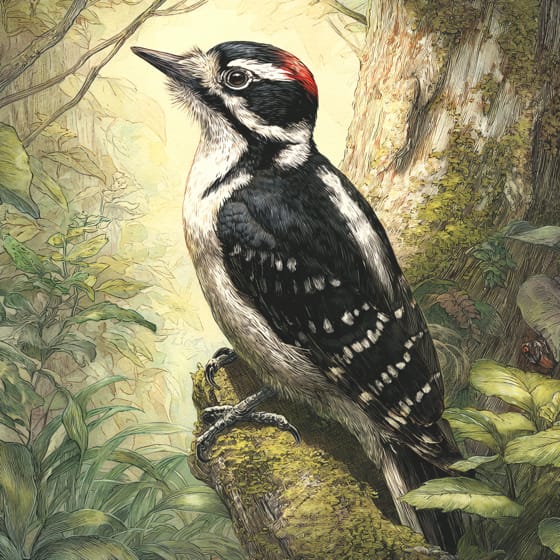
Picoides villosus
when foraging for them in wood.
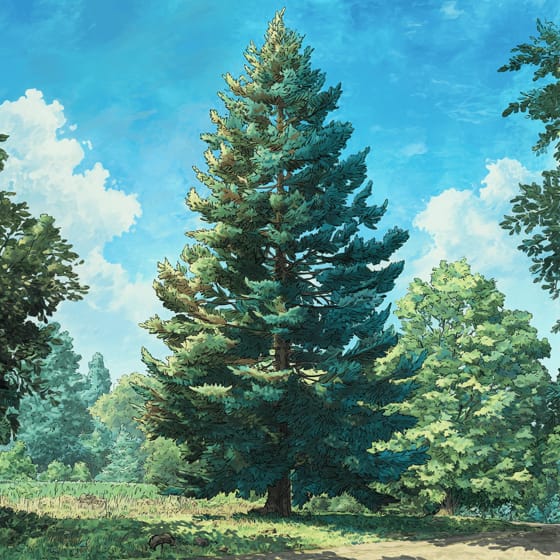
Pseudotsuga menziesii
by excavating nests in decaying trees.
Marked with parallel bands or lines of color.
Social animals live in organized groups, cooperating for survival benefits such as foraging, defense, and raising offspring.
This trait identifies organisms whose diet includes both plant and animal matter.
Colorful describes organisms or objects displaying a wide range of bright and distinct colors.

Describes organisms that break down dead organic material, recycling nutrients back into the ecosystem.

Forest habitats are terrestrial environments dominated by dense tree cover, supporting a high diversity of plant and animal life.

Diurnal animals are primarily active during daylight hours, typically resting or sleeping at night.

Describes a species whose presence and role have a disproportionately large effect on its environment.
No aliases listed yet.
Danger
2/5 · Low
Don't disturb ants or their nests, as they can bite if they feel threatened.
The easiest way to identify Bicolored Carpenter Ant is to use the Snappit nature identifier app.
12-20 mm
6-20 mm
2555-7300 days
These ants enjoy sweet sugary liquids and protein from other insects.
Forests
Foraging
6
Zoom in to split clusters and explore where this object has been snapped.
Mar 1, 2026
Sioux County CourthousePhoto attribution
(c) Colin Croft, some rights reserved (CC BY)
License: CC BY 4.0 ↗
Image may be shown cropped inside the card frame.

New Mexico, US
You might spot Tree Cholla, Colorado Pinyon, and House Finch.
View guide →

Utah, US
You might spot Eastern Fox Squirrel, Black-Billed Magpie, and Bee.
View guide →

Nebraska, US
You might spot Nine-Spotted Lady Beetle and Convergent Lady Beetle.
View guide →
Take the discovery with you
Snap it with Snappit to identify it, learn what makes it special, and add the discovery to your collection.








.jpg&width=800)

