





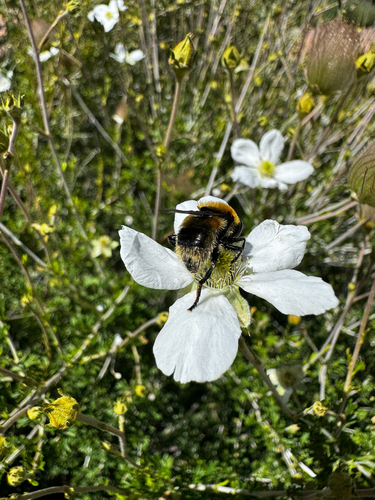
Bee

Red Butte Garden and Arboretum is Utah's largest botanical garden and a vibrant natural oasis.
Red Butte Garden and Arboretum is Utah's largest botanical garden and a vibrant natural oasis. Nestled in the foothills of Salt Lake City, this sprawling 100-acre botanical garden and arboretum, affiliated with the University of Utah, offers breathtaking panoramic views of the Wasatch Mountains and the Salt Lake Valley below. With 22 acres of meticulously cultivated display gardens and a vast natural area, it serves as a stunning showcase for over 3,000 species of plants and trees, providing a tranquil escape and educational experience for all ages.
Visitors can explore a diverse array of themed gardens, each offering unique botanical wonders. Highlights include the lively Children's Garden with its interactive play areas and splash pad, the fragrant Sarah J. McCarthey & Family Rose Garden boasting hundreds of varieties, and the innovative Water Conservation Garden featuring native Utah plants and drought-tolerant species. Winding paths lead through the tranquil Fragrance Garden, the educational Medicinal Garden, the year-round beauty of the Four Seasons Garden, and the scenic Floral Walk.
Beyond its horticultural splendor, Red Butte Garden is a dynamic community hub, hosting a renowned outdoor concert series in its scenic amphitheater and a variety of workshops and seasonal events throughout the year. Whether you're seeking a peaceful stroll, an inspiring educational experience, or a picturesque backdrop for photography, the garden's ever-changing beauty across all seasons makes it a memorable destination. It offers a unique blend of natural beauty, scientific research, and cultural enrichment, making it a must-visit in the Intermountain West. Turn your visit into a safari! Use the Snappit app to scan and log wildlife sightings here.
The origins of Red Butte Garden and Arboretum trace back to 1930, when Dr. Walter P. Cottam, a botany professor at the University of Utah and co-founder of The Nature Conservancy, began researching and planting native and exotic trees across campus to assess their adaptability to the region. His extensive collection led the Utah State Legislature to formally recognize the university's landscape as the State Arboretum in 1961. The vision for a dedicated botanical garden gained momentum in 1983, with efforts led by philanthropist Ezekiel R. Dumke Jr. and Richard Hildreth, then the full-time Arboretum director. They successfully campaigned for the University to dedicate 100 acres at the mouth of Red Butte Canyon for a regional botanical garden. Red Butte Garden officially opened to the public in 1985, initially featuring daylily and conifer gardens. Over the years, numerous additions, including the Walter P. Cottam Visitor Center (1994) and various themed gardens, have been funded through community donations, expanding its mission of conservation, education, and public enjoyment.
Stroll through the numerous themed gardens, hike the natural area trails, enjoy the stunning views of the Salt Lake Valley, attend a summer concert, participate in workshops (e.g., yoga, bird walks), or explore art exhibits.
Spring (March-May): Witness an explosion of color with over half a million blooming bulbs, including 250,000 daffodils, snowdrops, and irises, peaking from late March through April.
Summer (June-August): Enjoy lush gardens, the Rose Garden in full bloom, and the popular outdoor concert series. The garden may close early on concert days.
Fall (September-November): Experience vibrant fall foliage and cooler temperatures perfect for hiking. Look out for seasonal events like "Garden After Dark."
Winter (December-February): A quieter time to appreciate the structural beauty of plants, colorful bark, and berries that attract birds. Half-price admission is often offered.
Most main garden paths, the Visitor Center, Sprout House, Rose House, Orangerie, and Amphitheatre are wheelchair and stroller accessible. The Visitor Center has ramps, push-to-open buttons, and elevators. Complimentary tram tours, including a wheelchair-accessible cart, are available from May to September. Free wheelchairs can be borrowed on a first-come, first-served basis. ADA parking and a dedicated accessible gate are provided for concerts.
A magnificent collection of hundreds of rose varieties, particularly stunning in June.
Features interactive elements like a splash pad, grapevine-covered "snake" tunnel, and whimsical sculptures.
Showcases beautiful drought-tolerant and native Utah plants, demonstrating water-wise landscaping.
Designed to offer visual interest throughout the entire year.
Each card links to a full Explore page with photos, traits, and fun facts.
Start with the big picture, then zoom in to explore individual wildlife observations around this place.
Wear Comfortable Shoes and Hydrate
The garden is expansive with miles of walking paths and trails, so comfortable footwear is essential. Bring a water bottle, especially during warmer months.
Check Seasonal Hours and Events
Garden hours change seasonally, and the garden may close early on days with concerts or special events. Always check the official website before your visit.
Bring a Camera
Red Butte Garden is incredibly photogenic year-round, with stunning floral displays, themed gardens, and panoramic views, making it a paradise for photographers.
Utilize the Free Map
Pick up a garden map at the Visitor Center to help navigate the numerous themed gardens and hiking trails.
Consider Public Transport/Shuttles for Concerts: While free parking is available, it can be limited, especially during popular events like the summer concert series. Consider carpooling, ridesharing, or using public transport and the University of Utah's free campus shuttle (weekdays).
Explore the Children's Garden
If visiting with kids, dedicate ample time to the Children's Garden for interactive play and exploration.
Jun 5, 2026
Photo attribution
(c) Parker James Lloyd, some rights reserved (CC BY)
License: CC BY 4.0 ↗
Image may be shown cropped inside the card frame.
Jun 8, 2026
Jun 7, 2026
Jun 7, 2026
Jun 7, 2026

Maryland, US
You might spot White-Tailed Deer and Eastern Gray Squirrel.
View guide →
.jpg)
District of Columbia, US
You might spot Eastern Gray Squirrel, Duck, and House Sparrow.
View guide →

Illinois, US
You might spot American Robin, Canada Goose, and House Sparrow.
View guide →

Virginia, US
You might spot Spotted Lanternfly and Northern Cardinal.
View guide →
Take the discovery with you
Identify the wildlife you spot, learn as you go, and keep a collection of the adventure.






















.jpg&width=800)

