





bird cherry
Prunus padus
The bird cherry tree is a lovely tree that grows small, sweet cherries. It has beautiful white flowers in spring that attract bees and butterflies, making it a favorite in gardens and parks.
Habitat: Forests
The bird cherry has numerous white, five-petaled flowers hanging in long, fragrant clusters. Its small, round fruits mature from red to glossy black. The bright green leaves are finely toothed and slightly glossy, making it visually distinct.
Category
PlantsRarity
Common
Danger
1/5 · Very low
Snaps
2
Historically, its tough wood was sometimes used to make bows and tool handles!
Its stunning white flowers are sometimes called 'May Day trees' in parts of Europe!
Scratch its bark gently to smell a distinct almond-like fragrance!
The small, shiny black cherries look like tiny polished beads hanging from the branches!
Bird cherry can release a powerful, sweet fragrance to attract many busy insect pollinators from far away.
It provides abundant small, dark cherries that are a vital food source for many bird species, helping them thrive.
Bird cherry has a strong root system allowing it to grow in poor soils and wet areas where other trees struggle.
Its bark and leaves contain compounds that give them a bitter taste, discouraging some hungry plant-eaters.
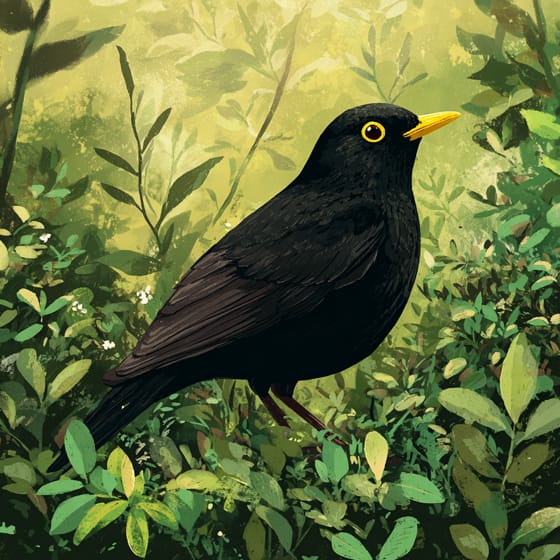
Turdus merula
Relies on its small, dark cherries for food.
Apis mellifera
Visits fragrant flowers to collect nectar and pollen.
Yponomeuta evonymella
Its caterpillars feed on the leaves.
%2C_Parc_de_Woluw%C3%A9%2C_Brussels_(13042792905).jpg&width=800)
Parus major
Often builds its nest among the branches.
Deciduous plants periodically shed all their leaves, typically during autumn or dry seasons.
Flowering plants are any plants that produce flowers as part of their reproductive cycle.
Spring blooming plants produce their flowers during the spring season, often signifying the end of winter and the start of new growth.
Broadleaf trees are angiosperms characterized by flat, wide leaves that are typically shed annually in temperate climates.

Fragrant flowers emit a pleasant aroma, often to attract pollinators or for defense.

Fruit-bearing plants produce fruits, which are the mature ovaries of flowering plants containing seeds.

Edible plants are those parts of a plant that are considered safe for human consumption.

Describes plants that are particularly attractive and beneficial to a wide range of pollinating organisms.

Timber refers to wood that has been prepared for use in building and carpentry.

Forest habitats are terrestrial environments dominated by dense tree cover, supporting a high diversity of plant and animal life.
No aliases listed yet.
Danger
1/5 · Very low
Do not eat the cherries without asking an adult first, as they can be sour!
The easiest way to identify bird cherry is to use the Snappit nature identifier app.
800-1500 cm
600-1000 cm
1-1.5 cm
Spring
Yes
Mild
Perennial
Zoom in to split clusters and explore where this object has been snapped.
Take the discovery with you
Snap it with Snappit to identify it, learn what makes it special, and add the discovery to your collection.







.jpg&width=800)

_001.jpg&width=800)



