





Bird-in-a-bush
Corydalis solida
The Bird-in-a-bush is a lovely flower that blooms in spring. It has beautiful purple and pink flowers that look like little birds peeking out from the leaves!
Habitat: Forests
The Bird-in-a-bush has delicate, fern-like leaves emerging from the ground. Its vibrant flowers, typically purple, pink, or white, grow in dense clusters at the top of slender stems, each with a distinctive curved spur at the back.
Category
PlantsRarity
Common
Danger
1/5 · Very low
Snaps
Be the first to snap!
It disappears completely by summer, only to reappear next spring.
Its tiny underground tuber looks like a miniature potato!
It’s one of the first flowers many insects get to see in spring!
Some varieties can even change flower color as they get older!
Bird-in-a-bush stores food in an underground tuber, letting it sleep through winter and pop up super early in spring.
Bird-in-a-bush can flower before trees leaf out, capturing precious sunlight when others are still waking up.
Bird-in-a-bush has seeds with a tasty treat called an elaiosome, which ants carry away to help spread new plants.
Bombus terrestris
Drinks nectar from its spurred flowers.
Apis mellifera
Gathers early spring nectar for the colony.
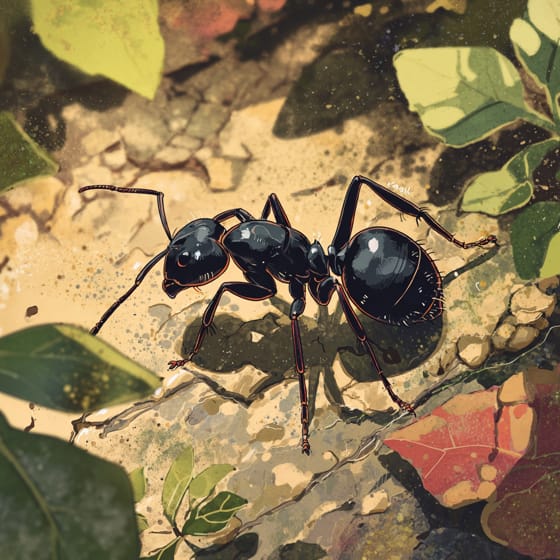
Lasius niger
Carries seeds with elaiosomes for food and dispersal.
Deciduous plants periodically shed all their leaves, typically during autumn or dry seasons.
Flowering plants are any plants that produce flowers as part of their reproductive cycle.
Shade tolerant plants are adapted to grow and thrive in areas with low light levels, requiring less direct sunlight.
Spring blooming plants produce their flowers during the spring season, often signifying the end of winter and the start of new growth.

Fragrant flowers emit a pleasant aroma, often to attract pollinators or for defense.

Colorful describes organisms or objects displaying a wide range of bright and distinct colors.

Describes plants that are particularly attractive and beneficial to a wide range of pollinating organisms.

Rapid growing plants exhibit accelerated growth rates, quickly increasing in size and biomass within a short period.

Forest habitats are terrestrial environments dominated by dense tree cover, supporting a high diversity of plant and animal life.
No aliases listed yet.
Danger
1/5 · Very low
Do not touch or eat any flowers without asking an adult first.
The easiest way to identify Bird-in-a-bush is to use the Snappit nature identifier app.
10-30 cm
10-15 cm
1-2 cm
Early spring
No
Mild
Perennial
Zoom in to split clusters and explore where this object has been snapped.
Recent snaps will appear here as new observations are added.
Take the discovery with you
Snap it with Snappit to identify it, learn what makes it special, and add the discovery to your collection.






.jpg&width=800)


_001.jpg&width=800)



