





bird's-nest orchid
Neottia nidus-avis
The bird's-nest orchid is a special plant that doesn't have green leaves! It grows in shady forests and gets its food from a special relationship with fungi in the soil.
Habitat: Forests
The bird's-nest orchid is a peculiar plant entirely lacking green pigment, instead sporting a uniform yellowish-brown to reddish-brown color. Its stem rises straight, topped by a spire of small, hood-shaped flowers, giving it a ghost-like appearance among the forest floor.
Category
PlantsRarity
Rare
Danger
1/5 · Very low
Snaps
Be the first to snap!
It's a master of disguise, blending perfectly with fallen leaves and twigs on the forest floor!
Its root mass looks like a tangled bird's nest, giving this unique orchid its common name!
Sometimes, scientists can't find this orchid for years until it suddenly pops up to bloom!
This spooky plant is entirely brown because it doesn't need green chlorophyll to make its own food!
The bird's-nest orchid can grow without sunlight because it gets all its food and energy from special fungi living in the soil.
This orchid has no green leaves and can thrive in deep, dark forests where most plants struggle to find enough light to survive.
Its entire life cycle can spend many years underground as a small rhizome, only emerging to flower when conditions are just right.
Tomentella sublilacina
Provides essential nutrients to the orchid through its roots.
Mycetophila fungorum
Attracted to the orchid's scent and helps transfer pollen.
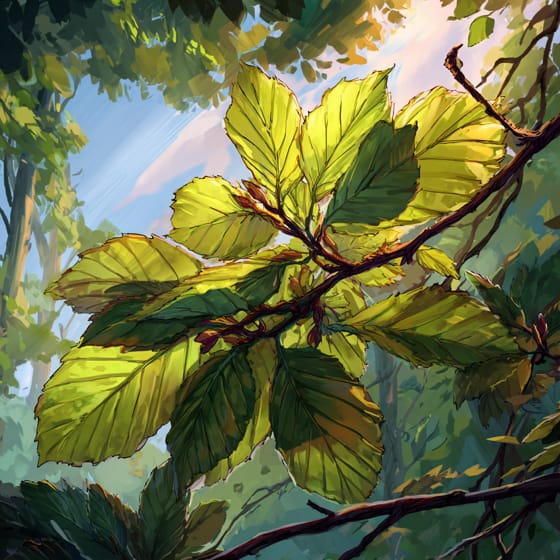
Fagus sylvatica
The orchid often grows where its fungal partners connect to beech trees.
This trait describes a symbiotic relationship between a fungus and the roots of a plant, benefiting both organisms.
Flowering plants are any plants that produce flowers as part of their reproductive cycle.
This trait characterizes plants lacking specialized vascular tissues (xylem and phloem) for transporting water and nutrients.
Shade tolerant plants are adapted to grow and thrive in areas with low light levels, requiring less direct sunlight.

Spring blooming plants produce their flowers during the spring season, often signifying the end of winter and the start of new growth.

Describes a relationship between two different species where they live in close association, often benefiting one or both.

Forest habitats are terrestrial environments dominated by dense tree cover, supporting a high diversity of plant and animal life.

Endangered status indicates a species is at a very high risk of extinction in the wild in the near future.
No aliases listed yet.
Danger
1/5 · Very low
Always look but don't touch plants in the wild, as some can be delicate.
The easiest way to identify bird's-nest orchid is to use the Snappit nature identifier app.
15-60 cm
0.8-1.2 cm
Late spring to early summer
No
None
Perennial
Insect
Zoom in to split clusters and explore where this object has been snapped.
Recent snaps will appear here as new observations are added.
Take the discovery with you
Snap it with Snappit to identify it, learn what makes it special, and add the discovery to your collection.








.jpg&width=800)



_001.jpg&width=800)



