

Black-Billed Cuckoo
coccyzus erythropthalmus
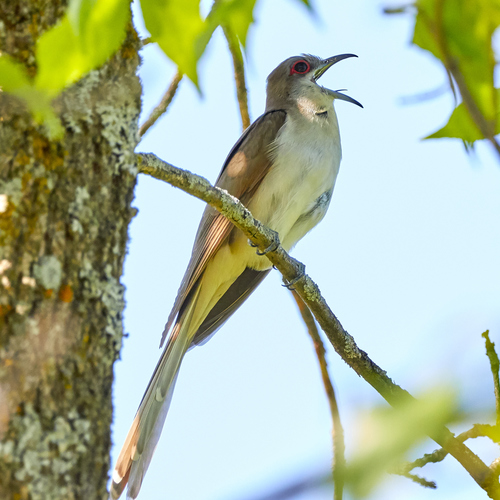
The Black-Billed Cuckoo is a slender, stealthy bird of eastern North American woodlands, famous for its secretive habits and distinctive, rhythmic 'cu-cu-cu' calls. Often heard but rarely seen, this elusive insectivore spends its time deep within dense thickets and deciduous canopies, where it plays a crucial role in regulating pest populations. Unlike its European relatives, the Black-Billed Cuckoo typically builds its own nest and rears its own young, though it occasionally engages in opportunistic brood parasitism. Underneath its quiet demeanor lies an incredibly efficient hunter, highly adapted to preying on spiny caterpillars that most other birds avoid. Its arrival in late spring is a welcome sign for gardeners and foresters alike, signaling the natural control of seasonal caterpillar outbreaks.
Habitat: Found in dense deciduous forests, thickets, and riparian woodlands, often near lakes or marshes where caterpillar populations are abundant.
This medium-sized, slender bird is characterized by its olive-brown upperparts and clean, white underparts. It features a long tail with subtle white tips on the undersides of the feathers, a slim black bill, and a striking, bright red ring of bare skin around its dark eyes, which is a key identifier for adults. Its wingspan reaches up to 40 centimeters, allowing it to glide silently through dense foliage.
Category
BirdsRarity
Common
Danger
1/5 · Very low
Snaps
Be the first to snap!
Their nesting cycle is incredibly rapid; chicks can leave the nest just six to seven days after hatching, climbing through branches before they can even fly.
They are famous for eating thousands of spiny caterpillars; to deal with the sharp, toxic hairs, they periodically shed and regrow their entire stomach lining.
While they usually build their own nests, they will occasionally lay eggs in the nests of other birds, especially when there is a massive outbreak of caterpillars.
They are able to consume spiny, toxic caterpillars by lining their stomach with the insects' hairs and periodically shedding the entire stomach lining to expel the dangerous spines.
Utilizes a highly flexible skeletal structure and soft plumage to glide silently through dense undergrowth without rustling leaves.
Chicks develop at an exceptionally rapid pace, often leaving the nest to climb in nearby branches just six to seven days after hatching.
Feeds primarily on large insects, specializing in hairy and spiny caterpillars that other bird species cannot tolerate.
Malacosoma americanum
The Black-Billed Cuckoo acts as a major biological controller of this forest pest, devouring them in huge quantities.

Accipiter cooperii
This bird of prey occasionally ambushes and feeds on adult Black-Billed Cuckoos within dense forest canopies.

Coccyzus americanus
Both cuckoo species share similar nesting habitats and diets, competing directly for food resources during caterpillar outbreaks.
No trait badges are assigned for this object yet.
No aliases listed yet.
Collections for this object will appear here as more themes are added.
Danger
1/5 · Very low
No special safety notes yet.
Compare the silhouette, bill shape, tail length, wing bars and markings around the eyes. The same small brown bird at your feeder can look quite different in breeding plumage, winter plumage or its first year. Bird Identifier: upload a photo and compare the visible details.
Feeds primarily on large insects, specializing in hairy and spiny caterpillars that other bird species cannot tolerate.
Found in dense deciduous forests, thickets, and riparian woodlands, often near lakes or marshes where caterpillar populations are abundant.
Foraging Gleaningtargeted Search Through Dense Foliage, Remaining Completely Still For Long Periods Before Snapping Up Prey With Its Curved Bill.
Zoom in to split clusters and explore where this object has been snapped.
Recent snaps will appear here as new observations are added.
Take the discovery with you
Snap it with Snappit to identify it, learn what makes it special, and add the discovery to your collection.