.jpg&width=800)





Yellow-billed Cuckoo
Coccyzus americanus
The Yellow-billed Cuckoo is a beautiful bird known for its bright yellow bill and soft, cooing sounds. It loves to hide in trees and is often seen flitting about in search of tasty insects.
Habitat: Forests
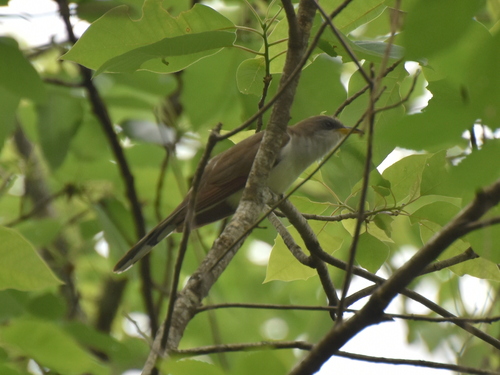
The Yellow-billed Cuckoo has a slender, elegant body with a long tail. It features a bright yellow lower mandible, dark brown upperparts, and clean white underparts. Distinctive rufous patches flash on its wings during flight, and its long tail shows bold white spots from below.
Category
BirdsRarity
Common
Danger
1/5 · Very low
Snaps
19
During outbreaks of cicadas or caterpillars, cuckoos can gorge themselves, eating hundreds in a single day!
If food is scarce, a female cuckoo will lay fewer eggs, making sure each chick has enough to eat!
Their unusual call is often heard just before a summer rain, earning them the nickname "Rain Crow"!
These birds are incredible long-distance flyers, migrating thousands of miles from North America to South America!
Yellow-billed Cuckoos can eat many hairy caterpillars because they shed their stomach lining to remove irritating spines.
Yellow-billed Cuckoos have soft feathers that allow them to fly almost silently, helping them ambush insect prey.
Yellow-billed Cuckoos can raise their young from egg to flight in a remarkably short 17 days, especially when food is abundant.
These birds are insect-eating champions, especially loving caterpillars!
Malacosoma americanum
devours large numbers of these fuzzy pests.
Magicicada septendecim
gorges during their infrequent, noisy outbreaks.
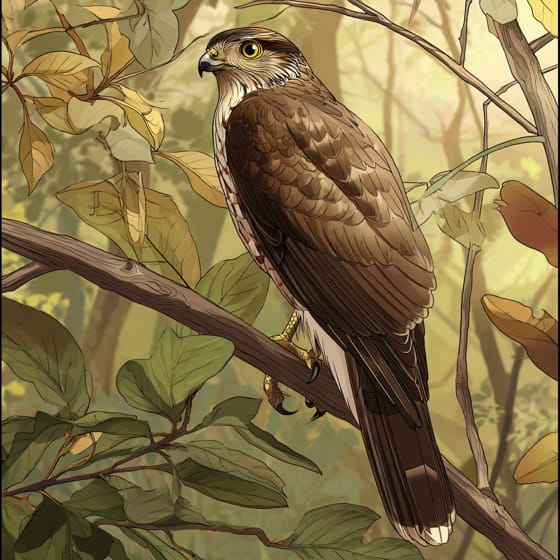
Accipiter cooperii
a swift avian predator that may catch cuckoos.
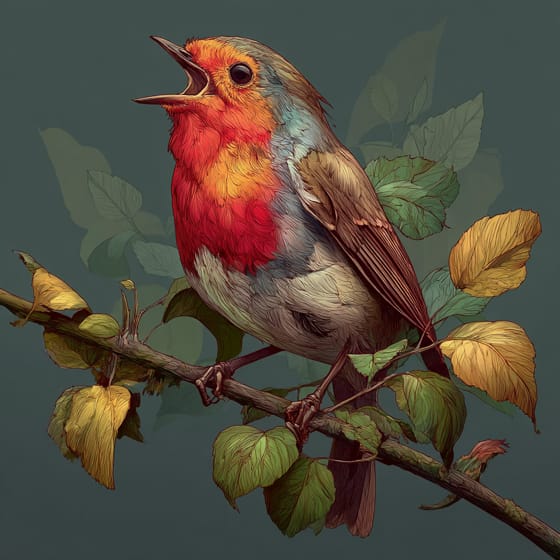
Turdus migratorius
sometimes lays eggs in their nests for others to raise.
Feathered describes animals, primarily birds, possessing a covering of feathers.
Solitary animals live alone for most of their lives, only interacting with others for mating or parental care.
Singing animals produce complex vocalizations, often for purposes of attracting mates, defending territory, or communicating within their species.
Colorful describes organisms or objects displaying a wide range of bright and distinct colors.

This trait identifies organisms whose diet primarily consists of insects and other small invertebrates.

Forest habitats are terrestrial environments dominated by dense tree cover, supporting a high diversity of plant and animal life.

Diurnal animals are primarily active during daylight hours, typically resting or sleeping at night.

Migratory animals undertake seasonal movements from one region to another, typically in response to changes in climate or food availability.

Threatened status denotes a species likely to become endangered in the foreseeable future without effective conservation interventions.
No aliases listed yet.
Danger
1/5 · Very low
Enjoy watching birds from a distance, and be quiet so you don't scare them away!
The easiest way to identify Yellow-billed Cuckoo is to use the Snappit nature identifier app.
28-32 cm
40-48 cm
0.05-0.07 kg
3-7 years
60 km/h
These birds are insect-eating champions, especially loving caterpillars!
Forests
Zoom in to split clusters and explore where this object has been snapped.
May 9, 2026
Francis Beidler ForestPhoto attribution
(c) Ryan Watson, some rights reserved (CC BY)
License: CC BY 4.0 ↗
Image may be shown cropped inside the card frame.
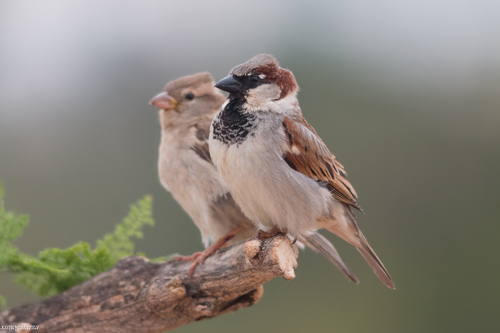
Pennsylvania, US
You might spot House Sparrow, Spotted Lanternfly, and American Robin.
View guide →

Texas, US
You might spot Texas Hedgehog Cactus, Ornate Tree Lizard, and Cactus Wren.
View guide →
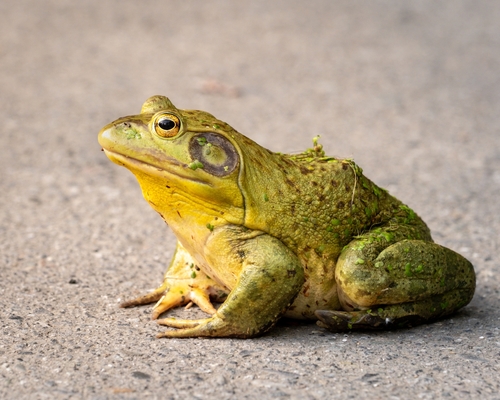
Virginia, US
You might spot American Bullfrog, Snapping Turtle, and Great Blue Heron.
View guide →

Connecticut, US
You might spot Brant, American Herring Gull, and Double-Crested Cormorant.
View guide →

Connecticut, US
You might spot Common Mugwort, Canada Goose, and American Herring Gull.
View guide →

Pennsylvania, US
You might spot Downy Rattlesnake Plantain and Striped Wintergreen.
View guide →
Take the discovery with you
Snap it with Snappit to identify it, learn what makes it special, and add the discovery to your collection.




.jpg&width=800)






