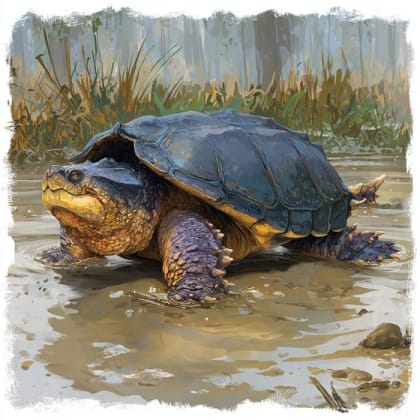





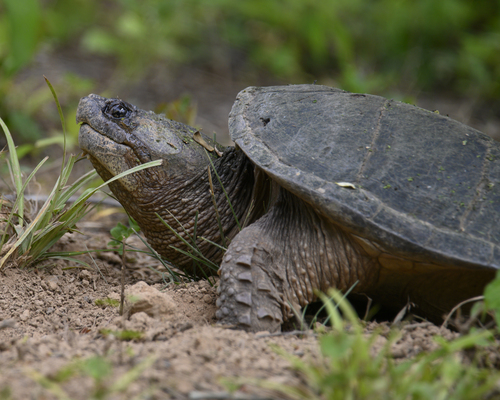
Snapping Turtle
The Namur Historic District preserves a vibrant Belgian-American legacy in rural Wisconsin.
The Namur Historic District preserves a vibrant Belgian-American legacy in rural Wisconsin.
This National Historic Landmark, located in southwestern Door County, is the first rural area in the United States to be recognized for its profound cultural and architectural significance. It offers a unique window into the lives of Belgian immigrants who settled the region in the mid-19th century, creating a distinctive landscape that reflects their Walloon heritage, architectural traditions, and agricultural practices. Visitors can explore a living history, where the echoes of a distant past resonate through preserved farmsteads, sacred chapels, and a community deeply rooted in its ethnic origins.
The district's charm lies in its collection of traditional Belgian-American architecture, including distinctive red brick and limestone homes, sturdy log barns, and remnants of summer kitchens with outdoor bake ovens. Scattered throughout the pastoral landscape are numerous roadside votive chapels, miniature shrines built by devout settlers, such as the accessible St. Roch Votive Chapel, offering moments of quiet contemplation. The Belgian Heritage Center, a central hub within the district, houses engaging exhibits, artifacts, and oral histories, providing deeper context to the architectural marvels and cultural traditions, including the enduring Walloon language.
Visiting the Namur Historic District is an immersive journey into a uniquely preserved cultural enclave. It's a memorable experience for those seeking to understand immigrant narratives, appreciate vernacular architecture, and connect with a community that has fiercely maintained its identity across generations. From its significant religious sites like the St. Mary of the Snows Catholic Church to its rolling agricultural fields, the district offers a compelling and picturesque exploration of a rare piece of American history. Take the ultimate field guide with you: use the Snappit app to identify birds, plants, and animals on your trip.
The story of the Namur Historic District begins in the 1850s when Belgian immigrants, primarily from the provinces of Namur and Brabant, sought new opportunities in Wisconsin. They were drawn by the promise of land and settled along the eastern shore areas of Brown, Kewaunee, and Door counties, bringing with them unique building practices and cultural traditions from their homeland. These settlers adapted indigenous materials like local limestone and timber, constructing homes and farm buildings that fused Belgian design with American pioneer methods. A pivotal moment in the district's history was the Great Peshtigo Fire of 1871, which devastated large portions of the settlement. Following this catastrophic event, much of the rebuilding efforts saw the widespread use of locally made red brick, further defining the architectural character of the area. In recognition of its outstanding national significance as the largest and most intact concentration of Belgian-American settlement in the United States, the Namur Historic District was officially designated a National Historic Landmark in 1990. The Belgian Heritage Center was established later, preserving and sharing this rich cultural narrative.
Take a narrated driving tour, participate in a Belgian Heritage Center program, sample traditional Belgian foods if available during events, or simply enjoy the unique rural scenery.
Spring/Summer: Ideal for driving and walking tours. The Belgian Heritage Center hosts events like the Belgian Waffle Breakfast.
Fall: Enjoy scenic fall foliage alongside the historic architecture.
Winter: Some facilities, like the Belgian Heritage Center, may operate by appointment or for special events during winter.
The Namur Historic District is a large rural area. Driving tours are the primary way to experience it. The Belgian Heritage Center likely offers accessible facilities, but specific details for all historic farmsteads are not available.
Explore museum exhibits, interactive displays, and artifacts detailing Belgian immigration and culture. It includes a restored 1894 school/convent building and the St. Roch Votive Chapel.
Drive or bike through the district to observe the distinctive red brick and limestone houses, log barns, and agricultural structures dating from 1880-1930.
Discover the charming small chapels dedicated to saints, a tradition brought from Belgium, many of which are still accessible.
A central religious landmark within the community, offering insight into the spiritual life of the early settlers.
Each card links to a full Explore page with photos, traits, and fun facts.
Start with the big picture, then zoom in to explore individual wildlife observations around this place.
Begin your visit at the Belgian Heritage Center to gain valuable context and historical insights before exploring the wider district.
Plan for a driving tour to cover the expansive 3,500-acre district and its scattered historic farmsteads and chapels.
Bring a camera to capture the unique architecture, such as the red brick homes with "bull's-eye" windows and the charming roadside chapels.
Consider attending one of the special events hosted by the Belgian Heritage Center, like the Kermiss festival, for an authentic cultural experience and to try traditional Belgian foods.
Respect private property as you explore; many historic buildings are still part of active farms and residences.
Don't forget to visit the nearby National Shrine of Our Lady of Champion for a deeper understanding of the religious history intertwined with the Belgian settlement.
Jul 8, 2025
Photo attribution
(c) miel00, some rights reserved (CC BY)
License: CC BY 4.0 ↗
Image may be shown cropped inside the card frame.
Jul 5, 2025
Photo attribution
no rights reserved
License: CC0 1.0 ↗
Image may be shown cropped inside the card frame.
May 16, 2026
Aug 25, 2025
Jul 20, 2025

Maryland, US
You might spot White-Tailed Deer and Eastern Gray Squirrel.
View guide →
.jpg)
District of Columbia, US
You might spot Eastern Gray Squirrel, Duck, and House Sparrow.
View guide →

Illinois, US
You might spot American Robin, Canada Goose, and House Sparrow.
View guide →

Virginia, US
You might spot Spotted Lanternfly and Northern Cardinal.
View guide →
Take the discovery with you
Identify the wildlife you spot, learn as you go, and keep a collection of the adventure.